How Does Draft Control Work on a Tractor?
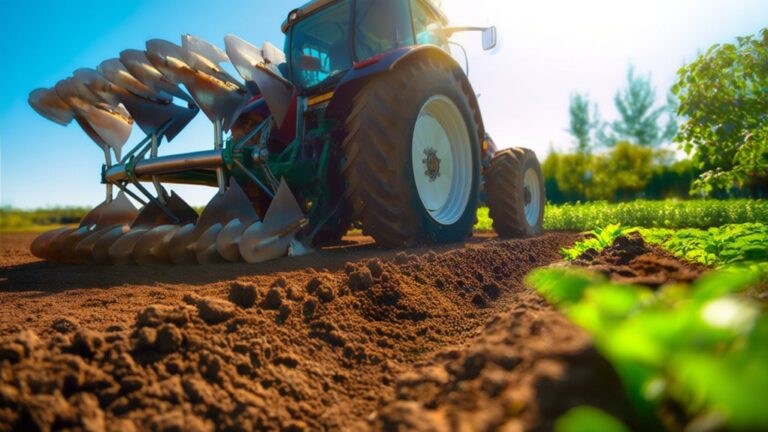
Draft control works by automatically adjusting your tractor’s implement depth based on real-time soil resistance. It senses when the soil gets harder or softer, then raises or lowers the tool to maintain steady effort and consistent penetration. This keeps your engine from overloading and improves fuel efficiency, while ensuring uniform soil preparation and better crop growth. If you want to understand how different systems and sensors make this happen, there’s plenty more to explore.
Key Takeaways
- Draft control senses soil resistance through sensors measuring draft force on the implement.
- It automatically adjusts implement depth via hydraulic or mechanical systems to maintain consistent soil penetration.
- The system prevents tractor overload by reducing implement depth when excessive soil resistance is detected.
- Real-time adjustments improve fuel efficiency, reduce slippage, and optimize field work quality.
- Draft control integrates with the three-point hitch for precise, automatic implement positioning based on soil conditions.
What Is Draft Control on a Tractor
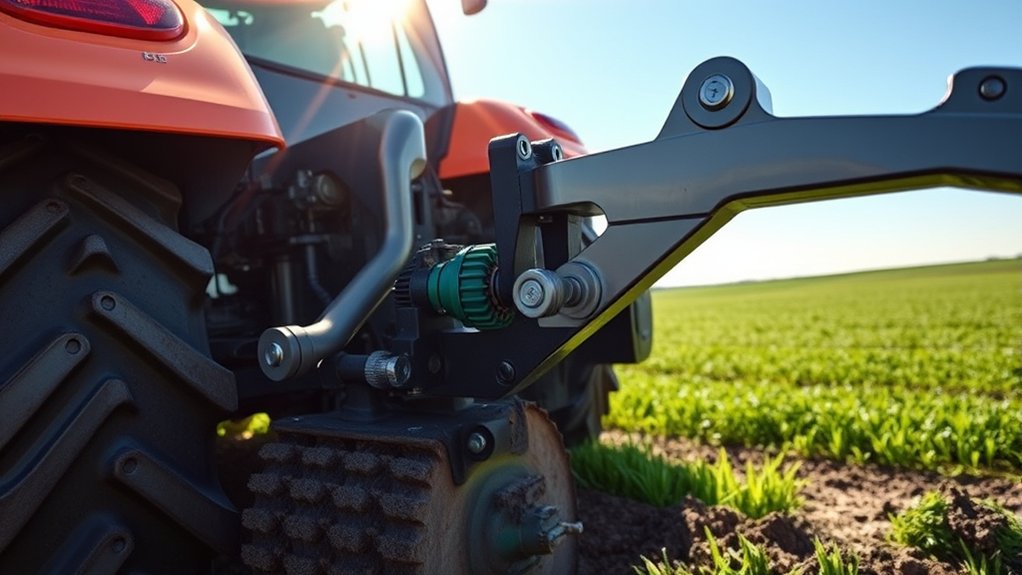
What exactly does draft control on a tractor do? It automatically adjusts the depth of the implement attached to your tractor based on the soil resistance it senses.
When you’re plowing or tilling, the soil can vary in hardness, and draft control helps your tractor maintain consistent effort by raising or lowering the implement to match that resistance. You don’t have to manually change settings or guess the right depth; the system reacts in real time.
This keeps your tractor running smoothly and prevents overloading the engine or stalling. Fundamentally, draft control lets you focus on steering and speed while the tractor manages implement depth, making your work more precise and less physically demanding.
Why Draft Control Matters for Farming Efficiency
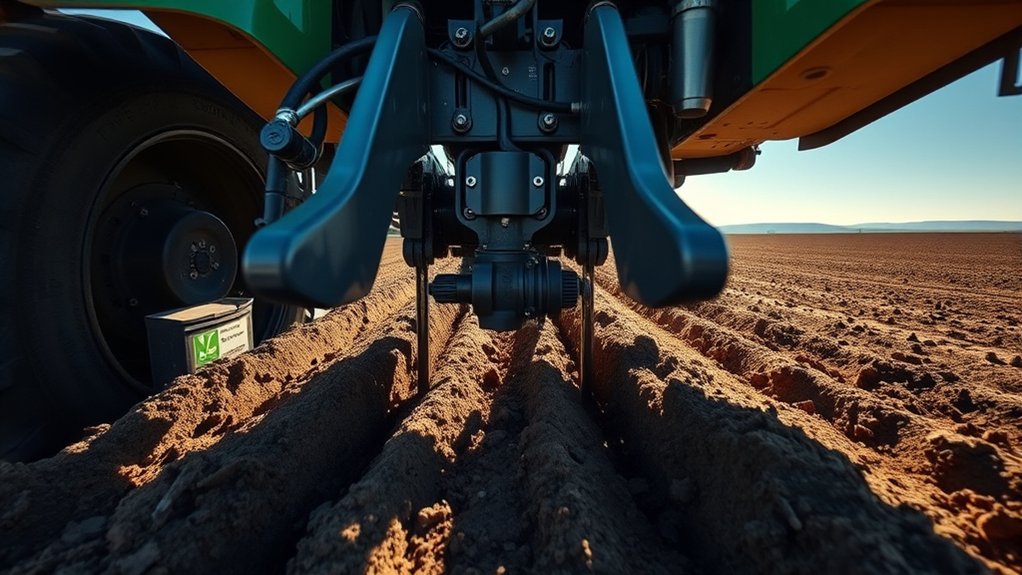
Because draft control automatically adjusts implement depth based on soil resistance, it considerably boosts your farming efficiency. You won’t have to constantly monitor and manually adjust your equipment, saving you time and effort.
Draft control boosts efficiency by auto-adjusting implement depth, saving you time and effort in the field.
This system keeps your tractor working at peak power, preventing engine overload and reducing fuel consumption. By maintaining consistent soil engagement, you achieve more uniform seedbeds and better crop emergence.
Draft control also minimizes soil compaction by avoiding unnecessary deep digging, which improves long-term soil health. Ultimately, this means you get higher yields with less wear on your machinery.
When you rely on draft control, your operations become smoother, more precise, and cost-effective—helping you get the most out of every acre you farm.
Types of Tractor Draft Control Systems
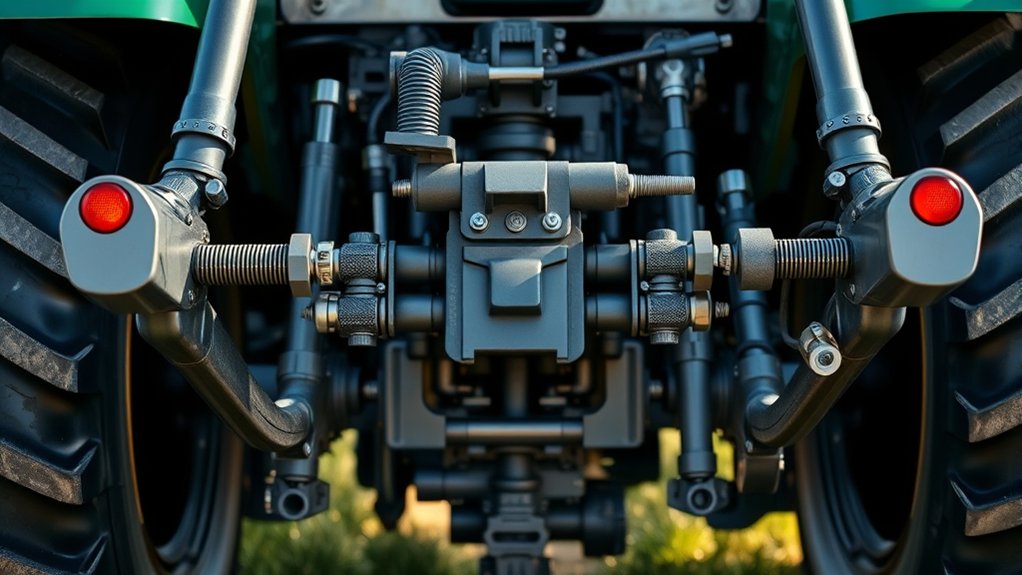
Understanding how draft control improves efficiency sets the stage for exploring the different systems that make this possible. When you operate a tractor, knowing the type of draft control system it uses helps you optimize performance. Here are the main types:
- Mechanical Draft Control – It uses a spring and lever system to sense draft force and adjust the hitch height. It’s simple but effective for basic tasks.
- Hydraulic Draft Control – This system relies on hydraulic sensors and valves to automatically regulate the draft, offering smoother and more precise control.
- Electronic Draft Control – The most advanced type, using electronic sensors and computers to monitor and adjust the draft in real-time, maximizing efficiency and reducing operator effort.
Each system lets you maintain consistent soil engagement, enhancing your productivity.
How the Three-Point Hitch Helps Draft Control
Since the three-point hitch connects your tractor to implements, it plays a crucial role in draft control by allowing precise adjustments to the implement’s position. This system automatically raises or lowers the implement based on soil resistance, helping maintain consistent depth and reducing strain on your tractor. You can easily control the hitch’s height and angle, optimizing performance and fuel efficiency.
Here’s how the three-point hitch aids draft control:
| Feature | Function | Benefit |
|---|---|---|
| Adjustable Linkage | Changes implement height | Maintains consistent working depth |
| Draft Sensing | Detects soil resistance | Automatically adjusts implement position |
| Hydraulic Lift | Raises/lowers implements smoothly | Reduces tractor load and fuel use |
Using this system, you get better control and efficiency in your fieldwork.
How Draft Control Measures Soil Resistance
You’ll see that draft control measures soil resistance by using sensors to detect the force between the implement and the ground. These sensors send real-time data to adjust the hitch.
This helps keep your tractor running smoothly. Understanding this mechanism helps you maintain consistent performance and reduce strain on your equipment.
Measuring Soil Resistance
Although soil resistance varies with conditions, draft control systems measure it continuously to adjust the tractor’s power output. You’ll notice the system responds to changes in soil hardness, moisture, and terrain by monitoring the pulling force needed to drag implements.
Here’s how it breaks down:
- Load Detection: The system gauges the force exerted on the hitch as the implement moves through soil.
- Real-Time Feedback: This force data updates constantly, helping the tractor adapt instantly.
- Power Adjustment: Based on the measured resistance, the tractor tweaks engine power and hydraulic pressure to maintain steady implement depth and efficiency.
Sensors and Mechanisms
When the tractor encounters varying soil conditions, sensors detect changes in the draft force by measuring the tension on the hitch and the position of the implement. These sensors relay real-time data to the draft control system, allowing it to respond instantly.
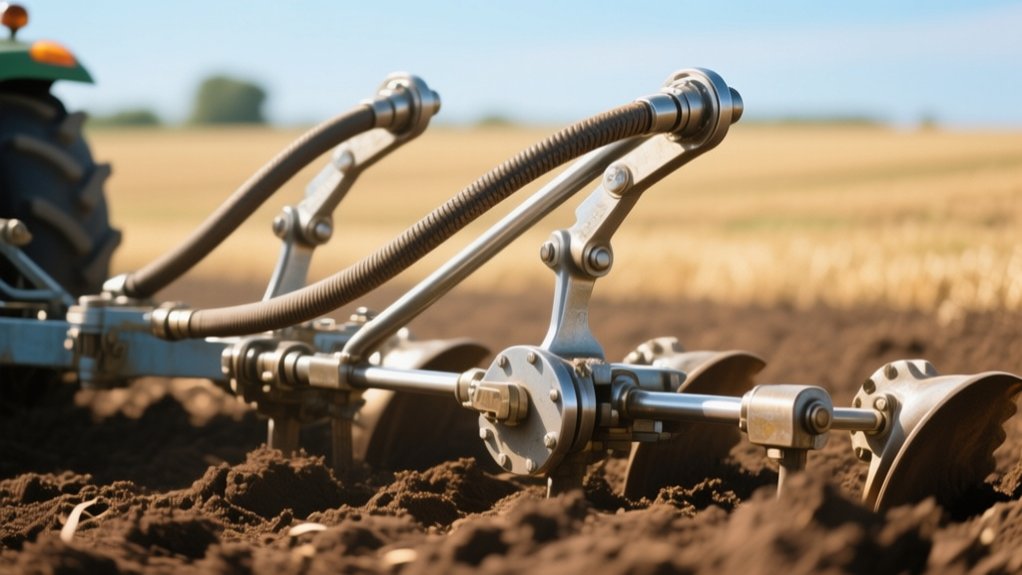
Typically, strain gauges or load cells measure the pull force, while position sensors monitor how deep the implement is working. This data feeds into a control mechanism, often a hydraulic valve or an electronic controller, which adjusts the implement’s height or angle accordingly.
Impact on Draft Control
Sensors and mechanisms don’t just collect data; they help the draft control system measure soil resistance directly. When you operate your tractor, the draft control gauges how much force the soil pushes back against the implement. This feedback lets the system adjust the hitch height and power automatically.
Here’s how it impacts your work:
- Increased Efficiency: By sensing soil resistance, draft control optimizes power use, preventing wasted fuel.
- Consistent Depth: It keeps your implement at the right depth, even when soil conditions change.
- Reduced Wear: Adjusting for resistance minimizes strain on your tractor and equipment, extending their lifespan.
How Tractors Adjust Power Using Draft Control
How does a tractor know when to adjust its power while working? It uses the draft control system to maintain consistent performance.
When you lower an implement into the soil, the tractor senses the pull or resistance. If the soil gets tougher, the tractor automatically increases engine power and hydraulic pressure to keep the implement operating smoothly.
Conversely, if resistance decreases, the tractor reduces power to avoid wasting fuel and prevent excessive wear. You can set the desired draft level, and the system continuously fine-tunes the power output to match conditions.
This adjustment happens seamlessly, so you don’t have to manually change settings. By doing this, your tractor optimizes fuel efficiency and maintains steady operation, making your work easier and more effective.
How Draft Control Sensors Detect Resistance
You’ll find that draft control sensors come in different types, each designed to detect soil resistance in its own way. These sensors monitor the force the soil exerts on the implement and send signals to the tractor’s system.
Understanding how these signals are processed helps you see how the tractor adjusts power automatically.
Sensor Types Explained
Ever wondered what allows a tractor to adjust its draft automatically? It’s all thanks to different sensor types that detect resistance and help the system respond. Here are the main ones you’ll find:
- Strain Gauges – These sensors measure the stress on the tractor’s hitch by detecting slight deformations in metal parts. When resistance increases, the strain gauge signals the draft control to lift or lower the implement.
- Hydraulic Pressure Sensors – These monitor changes in hydraulic pressure, which correlate with the load on the implement. If pressure spikes, the system adjusts accordingly.
- Position Sensors – These track the position of the implement or lift arms, ensuring the tractor maintains the desired draft by comparing position changes against load data.
Each sensor plays a vital role in keeping your tractor working efficiently without manual adjustments.
Detecting Soil Resistance
Sensors like strain gauges and hydraulic pressure monitors work together to detect changes in soil resistance as your tractor pulls an implement. Strain gauges measure the tension or force exerted on the draft arm, directly reflecting how hard the soil resists the implement’s movement.
Meanwhile, hydraulic pressure sensors monitor pressure variations in the lift arms’ hydraulic system, which shift as soil conditions change. When the soil becomes tougher, these sensors pick up increased force or pressure, signaling higher resistance.
Signal Processing Mechanism
Although detecting soil resistance is essential, the real power lies in how your tractor processes these signals. The draft control sensors send electrical signals reflecting the load on your implement to the tractor’s control unit.
Here’s what happens next:
- The control unit converts these signals into digital data, interpreting the resistance level your tractor faces.
- It compares this data against preset thresholds to decide if adjustments are necessary.
- The system then commands the hydraulic lift to raise or lower the implement, maintaining ideal draft force.
This rapid signal processing lets your tractor respond instantly to changing soil conditions, improving efficiency and preventing unnecessary strain on your equipment.
How Draft Control Maintains Consistent Implement Depth
When you operate a tractor with draft control, it automatically adjusts the implement’s depth to match soil resistance. This system senses changes in draft force and signals the hydraulic system to raise or lower the implement, keeping depth steady. By maintaining consistent depth, you improve work quality and reduce fuel consumption.
Here’s how draft control responds to varying soil conditions:
| Soil Resistance | Draft Force Detected | Action Taken | Result |
|---|---|---|---|
| Light soil | Low | Lowers implement | Maintains proper depth |
| Medium soil | Moderate | Keeps implement steady | Consistent operation |
| Heavy soil | High | Raises implement | Prevents overloading |
| Rocky soil | Fluctuating | Adjusts rapidly | Protects equipment |
How to Set Up Draft Control for Different Soils
Maintaining consistent implement depth through draft control relies on properly setting the system for the soil you’re working in. Different soils require adjustments to guarantee your tractor responds correctly to resistance changes. Here’s how you set it up:
Proper draft control settings are essential for consistent implement depth across varying soil types.
- Assess Soil Type: Identify whether the soil is loose, medium, or heavy. Loose soils need less sensitive draft control, while heavy soils demand more responsiveness.
- Adjust Draft Control Sensitivity: In loose soils, set lower sensitivity to avoid constant depth changes. Increase sensitivity in heavy soils to maintain consistent depth despite resistance spikes.
- Test and Fine-Tune: Start working a small area, observe implement depth, and tweak settings as needed. This helps you avoid overcorrection and ensures smooth operation tailored to your field conditions.
Common Draft Control Mechanical and Sensor Issues
You’ll often run into issues with mechanical linkages that affect your draft control’s performance. Sensor calibration errors can throw off the system’s accuracy, so it’s essential to check them regularly.
Don’t forget to inspect wiring and connections, as loose or damaged parts can cause unexpected problems.
Mechanical Linkage Problems
How can you tell if your tractor’s draft control isn’t working right? Mechanical linkage problems are often the culprit. You might notice the control arm feels loose or the implement doesn’t lift or lower smoothly.
Here are three common signs to watch for:
- Loose or worn linkages: These cause slack that leads to delayed or erratic response.
- Bent or damaged rods: Physical damage can restrict movement, making draft control unreliable.
- Stuck or corroded joints: Dirt and rust can freeze components, preventing proper adjustment.
If you spot any of these, it’s crucial to inspect and repair the mechanical connections. Keeping linkages clean, lubricated, and properly adjusted ensures your draft control performs smoothly and accurately in the field.
Sensor Calibration Errors
Although draft control systems rely heavily on mechanical linkages, sensor calibration plays a crucial role in their accuracy and responsiveness. If the sensors measuring draft force or position aren’t properly calibrated, you’ll notice erratic hitch movements or delayed adjustments.
Calibration errors often stem from incorrect zero-point settings or sensor drift over time, causing the system to misinterpret the load on the implement. When this happens, the tractor may either lift too high or let the implement dig too deep, reducing efficiency and potentially causing damage.
To avoid these issues, you need to regularly check sensor readings against known standards and recalibrate according to the manufacturer’s instructions. Keeping your sensors properly calibrated ensures smooth, reliable draft control performance every time you work in the field.
Wiring And Connection Issues
Sensor calibration sets the foundation for accurate draft control, but even perfectly calibrated sensors can’t perform well if wiring and connections falter. You need to inspect these areas regularly to avoid unexpected breakdowns.
Here are three common wiring and connection issues you might face:
- Loose or corroded connectors – These can cause intermittent signals, leading to erratic draft control responses.
- Damaged wiring insulation – Exposure to dirt, moisture, or heat can wear down insulation, causing short circuits.
- Faulty sensor connectors – Bent pins or poor contact inside connectors disrupt sensor data transmission.
Troubleshooting Draft Control Problems
When your tractor’s draft control isn’t working properly, you’ll want to identify the root cause quickly to avoid downtime. Start by checking the hydraulic system for leaks or low fluid levels, as these can affect the control’s responsiveness.
Inspect the draft control sensor and linkage for damage or misalignment that might send incorrect signals. Don’t overlook electrical connections—loose or corroded wires can disrupt system communication.
If the problem persists, test the control valve to ensure it’s functioning correctly. You can also consult the tractor’s manual for specific diagnostic codes or procedures related to draft control.
Taking these steps systematically helps you pinpoint issues and get your tractor back to efficient operation without unnecessary delays.
Benefits of Draft Control for Plowing, Harrowing, and Seeding
When you use draft control, your tractor adjusts automatically to maintain consistent implement depth. This helps improve soil penetration during plowing, harrowing, and seeding.
This means your work stays even and efficient across different field conditions. You’ll save time and get better results with less effort.
Enhanced Soil Penetration
Although soil conditions often vary across a field, draft control helps your tractor maintain consistent depth and pressure during plowing, harrowing, and seeding. This means your implements penetrate the soil more effectively, improving overall performance.
With draft control, you can expect:
- Better breaking of compacted soil layers, allowing roots to grow deeper and stronger.
- More uniform seed placement as your seeder maintains steady pressure, enhancing germination rates.
- Reduced slippage and fuel consumption because your tractor adjusts power based on soil resistance.
Consistent Implement Depth
Many farmers find that draft control systems keep their implements at a consistent depth, which is essential for effective plowing, harrowing, and seeding. When you maintain a steady depth, your soil preparation becomes uniform, ensuring seeds are planted evenly and crops grow consistently.
Draft control automatically adjusts the implement’s position as soil resistance changes, so you don’t have to constantly monitor or manually correct depth. This saves you time and reduces operator fatigue.
Plus, consistent depth improves fuel efficiency by preventing the tractor from working harder than necessary. With draft control, you can trust your equipment to deliver precise results, leading to better crop yields and healthier soil structure.
It’s a smart investment that takes the guesswork out of fieldwork.
Comparing Mechanical vs. Electronic Draft Control Systems
Because you rely on precise control to optimize your tractor’s performance, choosing between mechanical and electronic draft control systems matters. Mechanical systems use physical linkages and springs, giving you simplicity and reliability but limited adjustment flexibility. Electronic systems, on the other hand, use sensors and computer controls, offering more precise and adaptable operation.
Consider these key differences:
- Accuracy: Electronic systems adjust more quickly and precisely than mechanical ones.
- Maintenance: Mechanical systems are easier and cheaper to maintain, with fewer electronic parts to fail.
- Cost and Complexity: Mechanical draft control is generally less expensive and simpler to operate, while electronic systems come with higher upfront costs but improve efficiency in varied field conditions.
Knowing these points helps you pick the system that fits your farming needs best.
What’s Next for Tractor Draft Control?
As technology continues to evolve, you’ll see tractor draft control systems becoming smarter and more integrated with other farming equipment.
Future systems will likely use advanced sensors and AI to adjust settings in real-time, optimizing performance for varying soil conditions and crop types.
You’ll benefit from seamless communication between your tractor, implements, and farm management software, making your operations more efficient and data-driven.
Expect improvements in user interfaces, making controls more intuitive and accessible even on the go.
Additionally, enhanced automation will reduce your workload by predicting and adapting to field challenges without constant manual input.
Choosing the Right Draft Control System for Your Farm
How do you determine which draft control system fits your farm’s unique needs? Start by evaluating your equipment and soil conditions to ensure compatibility. Then, consider your budget and desired technology level. Finally, think about ease of use and maintenance.
Evaluate equipment, soil, budget, and ease of use to choose the right draft control system for your farm.
- Match with Implements: Check if the draft control system works seamlessly with your existing tools, preventing damage and improving efficiency.
- Budget and Features: Decide if you want a basic mechanical system or an advanced electronic one offering precise control and monitoring.
- User-Friendliness: Choose a system you can easily manage and maintain, reducing downtime and repair costs.
Frequently Asked Questions
Can Draft Control Systems Be Retrofitted to Older Tractors?
Yes, you can retrofit draft control systems to older tractors, but it often requires custom installation and compatible parts. You’ll need to consult a specialist to guarantee proper integration and functionality with your tractor’s existing hydraulic and mechanical setup.
How Does Draft Control Impact Tractor Fuel Consumption?
You might expect draft control to boost fuel use, but it actually saves fuel by adjusting the implement’s depth precisely. This reduces engine strain, letting you work smarter, not harder, and cut overall fuel consumption.
Are There Any Safety Concerns With Using Draft Control?
Yes, you should be cautious using draft control. Sudden changes in load can cause the tractor to jerk or stall, risking injury. Always monitor your equipment and avoid distractions to stay safe while operating draft control.
What Maintenance Routines Are Recommended for Draft Control Components?
To keep draft control in tip-top shape, you’ll want to regularly check hydraulic fluid levels, clean sensors, inspect linkages for wear, and tighten bolts. Don’t let things slip through the cracks—routine care prevents costly breakdowns.
Can Draft Control Systems Be Integrated With GPS Technology?
Yes, you can integrate draft control systems with GPS technology. This lets you automatically adjust implement depth based on location, improving precision farming, reducing soil compaction, and enhancing overall efficiency during field operations.
Conclusion
Think of draft control like the unseen hand guiding your tractor through a dance with the earth—adjusting every step to match the soil’s rhythm. Just as a skilled dancer responds to the music, draft control senses resistance and fine-tunes your tractor’s power, making your work smoother and more efficient. By choosing the right system, you’re not just farming; you’re partnering with the land, turning tough tasks into graceful moves that save time and energy.