How to Mow a Lawn With a Riding Mower in 10 Easy Steps
To mow your lawn with a riding mower, start by checking fuel, oil, and blade sharpness. Adjust the mower height to suit the season and grass type. Walk your lawn to clear debris and mark hazards. Plan a mowing pattern, usually starting along the perimeter and moving inward. Drive carefully, especially around edges and obstacles. Clean the mower deck after use, then lubricate moving parts and store the mower properly. Follow these basics, and you’ll soon find smarter ways to enhance your mowing routine.
Key Takeaways
- Inspect and prepare the mower by checking fuel, oil, air filter, blade sharpness, and tire pressure before starting.
- Walk and clear the lawn of debris, mark obstacles, and plan an efficient mowing pattern starting from the perimeter.
- Adjust the mower deck height according to the season, typically between 2.5 to 3.5 inches, to protect grass health.
- Mow at a steady, slow speed, maintaining straight lines and making gentle turns around curves and obstacles.
- Perform safety checks before use, disengage blades and park securely after mowing, then clean and store the mower properly.
Prepare Your Riding Mower
Before you start mowing, make certain your riding mower is in top shape. Check the fuel level and fill the tank with fresh gas if needed.
Inspect the oil and add or change it according to the manufacturer’s recommendations.
Look over the air filter; a clean filter keeps the engine running smoothly.
Examine the tires for proper inflation to ensure even cutting and safe operation.
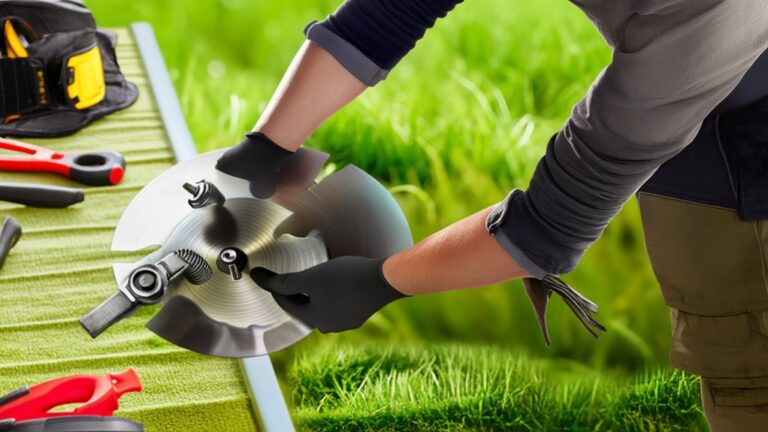
Make sure the blades are sharp—dull blades tear grass, leading to an unhealthy lawn.
Tighten any loose bolts or screws and clear away debris from under the mower deck.
Finally, test the controls, including the brakes and steering, to confirm everything responds correctly.
Taking these steps will help your mower work efficiently and give your lawn a clean, professional cut.
Adjust Mower Height for Healthy Grass
You’ll want to set your mower to the ideal cutting height to keep your grass healthy and strong. Remember, different seasons call for adjusting the height to protect your lawn from stress.
Let’s go over how to make these adjustments easily.
Optimal Cutting Height
Although it might be tempting to cut your grass as short as possible, adjusting your mower to the ideal cutting height is crucial for maintaining a healthy lawn.
Generally, setting your riding mower between 2.5 to 3.5 inches works well for most grass types. This height allows the grass to develop strong roots and shades the soil, reducing water loss and weed growth.
Cutting too short stresses your lawn, making it vulnerable to pests and drought.
Before mowing, check your mower’s deck settings and adjust the height accordingly. Make sure the blades are sharp to ensure a clean cut.
Seasonal Height Adjustments
Adjusting your mower’s cutting height throughout the year helps your lawn thrive in changing conditions.
In early spring, set your mower higher—around 3.5 to 4 inches—to protect new grass shoots and encourage strong root growth.
During the hot summer months, raise the deck to 4 inches or more to shade the soil, retain moisture, and reduce stress.
As fall arrives, gradually lower the height to about 2.5 to 3 inches, which helps your lawn prepare for winter by promoting even growth.
Avoid cutting too short in any season, as scalping can damage grass and invite weeds.
Check Your Lawn for Obstacles Before Mowing
Before you start mowing, walk your lawn carefully to spot hidden hazards like rocks or holes.
Clear away any debris, branches, and sticks that could get caught in your mower.
Don’t forget to mark permanent fixtures like sprinkler heads or garden ornaments to avoid damaging them.
Identify Hidden Lawn Hazards
When you start mowing with a riding mower, you need to scan your lawn carefully to spot any hidden hazards like rocks, branches, or toys. These obstacles can damage your mower or cause accidents.
Walk your lawn slowly, paying close attention to uneven ground, holes, or dips that could tip your mower or make the ride uncomfortable. Look out for sprinkler heads or garden ornaments that sit low and might be easy to miss.
Also, watch for pet waste or wet patches that could create slippery conditions. By identifying these hazards beforehand, you’ll protect your equipment and keep yourself safe while mowing.
Taking a few extra minutes to inspect your lawn guarantees a smoother, trouble-free mowing experience every time.
Remove Debris And Branches
Since debris and branches can damage your mower or cause accidents, you need to clear them from your lawn before you start mowing. Walk your entire lawn carefully, scanning for sticks, stones, toys, or any other objects that could get caught in the mower blades.
Pick up larger branches and place them in a pile away from your mowing path. Smaller debris like twigs and leaves can be raked or blown off the grass.
Removing these obstacles prevents blade damage and protects you from potential flying objects. Taking this extra step guarantees a smoother, safer mowing experience and helps maintain your mower’s longevity.
Don’t rush this process—it’s a small effort that saves time and frustration later.
Mark Permanent Lawn Fixtures
Although you’ve cleared loose debris, you still need to identify and mark permanent fixtures like sprinkler heads, garden lights, or decorative stones. These obstacles can damage your mower or get damaged themselves if you don’t spot them beforehand.
Walk your lawn slowly, looking for anything fixed in place. Use bright flags, stakes, or cones to mark these spots clearly. This way, you’ll see them easily while mowing and avoid accidents.
Marking helps you navigate safely around these objects and prevents costly repairs. Taking a few extra minutes now saves time and frustration later.
Don’t skip this step—it’s essential for a smooth, safe mowing experience with your riding mower.
Plan Your Riding Mower Pattern for Efficiency
To mow your lawn efficiently, you’ll want to plan a clear pattern before you start. Begin by deciding whether to mow in straight lines, concentric circles, or a back-and-forth pattern based on your lawn’s shape. Straight lines work well for rectangular yards, while curves suit irregular areas.
Plan your mowing pattern—straight lines for rectangles, curves for irregular shapes—to mow efficiently and neatly.
Plan your route to minimize sharp turns and avoid overlapping. Start mowing along the perimeter, then work inward systematically. Consider the sun’s position to reduce glare and track visibility.
Also, factor in obstacles like trees or flower beds to navigate smoothly. By mapping out your mowing pattern ahead, you’ll save time, reduce fuel use, and achieve a cleaner cut.
A well-planned approach makes your mowing experience quicker and less stressful.
Start Mowing Safely With Your Riding Mower
Before you start mowing, make sure you’ve completed all safety checks on your riding mower. Check the fuel level, inspect the blades for damage, and verify all guards and shields are in place.
Wear sturdy shoes and avoid loose clothing that could get caught. Start the mower in an open area away from obstacles.
Engage the blades only when you’re ready to begin cutting. Keep your hands and feet inside the mower at all times.
As you start, maintain a steady speed, and stay alert for any unexpected objects or uneven terrain.
If you need to stop, disengage the blades and set the parking brake before dismounting.
Following these steps will help you mow safely and efficiently without risking injury or damage.
Turn Your Riding Mower Properly to Avoid Damage
Once you’ve started mowing safely, mastering how you turn your riding mower can prevent damage to both your lawn and the equipment. Always slow down before making a turn to maintain control and avoid tearing up the grass.
Use wide, gradual turns instead of sharp, abrupt ones; this reduces strain on the mower’s tires and blade system. When possible, turn on the grass rather than on bare soil to protect your lawn from ruts and damaged turf.
Avoid spinning the wheels, as this can gouge the ground and wear down your mower’s components. By turning smoothly and carefully, you’ll keep your lawn looking neat and extend the life of your riding mower.
Stay mindful of your turning technique throughout your entire mowing session.
Carefully Mow Edges and Tight Spots
When mowing edges and tight spots, move slowly and precisely to avoid missing patches or damaging plants.
Adjust your cutting deck height to navigate uneven areas smoothly.
If your mower has attachments designed for edges, use them to get a cleaner, more accurate cut.
Use Slow Precise Movements
Although riding mowers cover large areas quickly, you’ll need to slow down and use precise movements when tackling edges and tight spots. This helps avoid damaging flower beds, fences, or uneven terrain. Taking your time lets you maintain control and guarantees a clean, even cut near boundaries. Use gentle turns and avoid sudden stops to keep the mower steady.
Here’s a quick guide to help you maneuver effectively:
| Area Type | Recommended Speed | Movement Tip |
|---|---|---|
| Straight Edges | Slow | Steady, straight line |
| Curves | Very slow | Small, careful turns |
| Tight Corners | Slowest | Use gradual pivots |
| Obstacles | Slow | Navigate around gently |
Following these tips makes mowing edges safer and your lawn look neater.
Adjust Cutting Deck Height
Because mowing edges and tight spots requires extra care, you’ll want to modify your mower’s cutting deck height accordingly. Lowering the deck slightly helps you trim grass close to sidewalks and flower beds without scalping the lawn. However, avoid setting it too low, which can damage your grass and mower blades.
Start by raising the deck a notch or two when approaching tricky areas, then lower it when on open, even ground. This adjustment gives you better control and prevents accidental damage to delicate plants or hard surfaces.
Always check your mower’s manual for the recommended height settings. Making these small changes ensures a clean, even cut while protecting your lawn’s health in those difficult-to-reach spots.
Utilize Attachments For Edges
To tackle edges and tight spots effectively, you’ll want to use mower attachments designed for precision. These tools help you reach areas your riding mower’s deck can’t, ensuring a clean, uniform cut. Common attachments include side cutters and trimmers that glide along fences, flower beds, and walkways without damaging them. Using these attachments saves time and prevents the frustration of manual trimming afterward.
| Attachment Type | Best For |
|---|---|
| Side Cutter | Along fences, walls |
| Edger | Driveways, sidewalks |
| Trimmer | Around flower beds |
| Brush Guard | Thick vegetation |
Choose the right attachment for your terrain, and always operate at a safe speed to maintain control in tight spots.
Clean the Mower Deck to Keep It Running Smoothly
When you finish mowing, you’ll want to clean the mower deck to prevent grass clippings and debris from building up. A clean deck improves cutting performance and extends your mower’s life. Here’s how to do it efficiently:
- Safety first: Turn off the engine and disconnect the spark plug to avoid accidental starts.
- Remove debris: Use a brush or scraper to clear grass clumps and dirt from the underside of the deck.
- Wash the deck: Rinse with a garden hose to remove stubborn residue, then dry thoroughly to prevent rust.
Cleaning your mower deck regularly keeps the blades sharp and ensures smooth operation every time you mow. Make it a habit to maintain your mower right after each use.
Check and Care for Your Riding Mower Regularly
Although your riding mower is built to handle tough jobs, you’ll get the best performance and longest lifespan by checking and caring for it regularly.
Begin by inspecting the oil level and changing it according to the manufacturer’s schedule.
Check the air filter often and replace it if it’s dirty to keep the engine running smoothly.
Sharpen or replace dull blades to ensure a clean cut and avoid stressing the mower.
Don’t forget to examine the tires for proper inflation and wear to maintain good traction.
Keep belts tight and replace any that show signs of cracking or fraying.
Finally, lubricate moving parts like the steering and wheel bearings to reduce friction and wear.
Regular care prevents breakdowns and keeps your mower ready for action.
Store Your Riding Mower After Use
Regular maintenance keeps your riding mower in top shape, but properly storing it after use helps protect your investment even further. Once you finish mowing, follow these three essential steps to store your mower safely:
- Clean the mower thoroughly. Remove grass clippings and debris from the deck and blades to prevent rust and buildup.
- Check and top off fluids. Ensure fuel levels are adequate or empty the tank if storing for an extended period. Also, check oil and other fluids.
- Store in a dry, sheltered spot. Keep your mower in a garage or shed to safeguard it from weather damage and extend its lifespan.
Frequently Asked Questions
What Type of Fuel Is Best for a Riding Mower?
You’ll want to use fresh unleaded gasoline with an octane rating of 87 or higher for your riding mower. Avoid old fuel or ethanol blends above 10%, as they can damage the engine and reduce performance.
How Often Should I Sharpen the Mower Blades?
Think of your mower blades as a knight’s sword—sharpness wins battles. You should sharpen them every 20-25 hours of mowing or when grass looks ragged. Don’t wait; a dull blade hurts your lawn’s health.
Can I Use a Riding Mower on Wet Grass?
You shouldn’t use a riding mower on wet grass because it can clog the blades and damage the mower. Plus, wet grass can be slippery, making it unsafe for you to operate the mower. Wait until it’s dry.
What Safety Gear Should I Wear While Mowing?
You should wear sturdy closed-toe shoes, long pants, safety glasses, and hearing protection while mowing. Gloves help protect your hands, and a dust mask can prevent inhaling debris. Always stay alert and safe!
How Do I Troubleshoot Common Mower Engine Problems?
When your mower’s engine sputters like a tired horse, check the spark plug, clean the air filter, and make sure there’s fresh fuel. Tighten loose wires and drain old gas to get it running smoothly again.
Conclusion
By following these steps, you’ll keep your lawn looking great and your riding mower running smoothly. For example, Sarah, a busy homeowner, avoided costly repairs by regularly cleaning her mower deck and checking for obstacles before mowing. Taking a few extra minutes each time saves you time and money in the long run. So, get started confidently and enjoy a healthy, well-maintained lawn with your riding mower!