Are John Deere Lawn Tractor Tires Tubeless and How to Check or Replace Them
Most John Deere lawn tractor tires are tubeless, sealing directly to the rim without inner tubes. You can check by looking for “Tubeless” on the sidewall or inspecting the valve stem, which should be fixed, not removable. To replace tires, loosen lug nuts, safely lift the tractor, remove the tire, and mount the new one, ensuring the bead seats properly before inflating to the correct pressure. Learn essential tips and safety steps to keep your tires in top shape.
Key Takeaways
- Most John Deere lawn tractor tires are tubeless, sealing airtight directly against the rim without inner tubes.
- Confirm tubeless tires by checking sidewall markings for “Tubeless” or inspecting the valve stem type.
- Use a jack, wrench, valve core remover, and safety gear to safely remove and replace tires.
- Loosen lug nuts, lift the tractor, remove the tire, and inspect before installing a new tubeless tire properly seated and inflated.
- Regularly check tire pressure, inspect for leaks with soapy water, and follow safety precautions during maintenance.
Are John Deere Lawn Tractor Tires Tubeless?
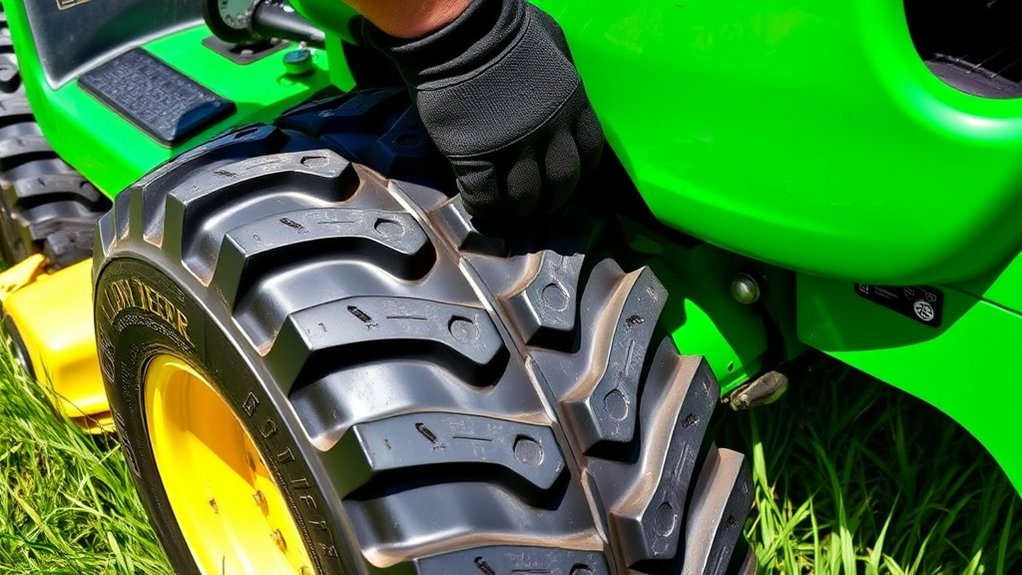
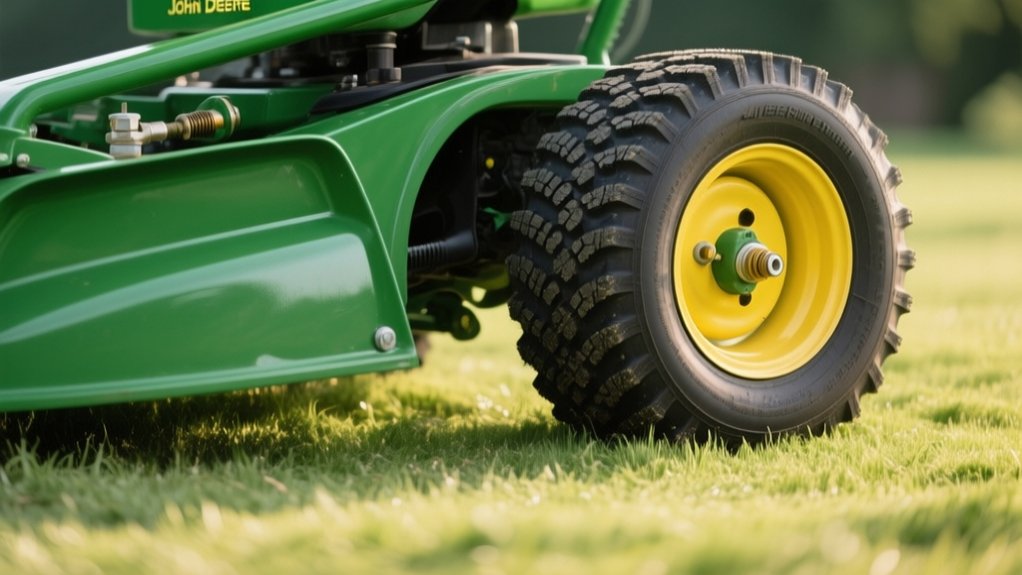
Although not all models are the same, John Deere lawn tractor tires are generally tubeless. When you look at your tractor’s tires, you’ll often find they don’t have an inner tube inside. Instead, the tire forms an airtight seal directly against the rim.
This design helps simplify maintenance and reduces the chance of sudden flats caused by tube punctures. To confirm if your tires are tubeless, check the sidewall markings or refer to your tractor’s manual.
You might also notice the absence of a valve stem typical of tube-type tires. If you’re inspecting the tires yourself, removing the wheel and examining the rim for a smooth surface can help determine if your tires are tubeless.
This step guarantees you know exactly what type you’re dealing with.
Why Tubeless Tires Are Better for John Deere Lawn Tractors
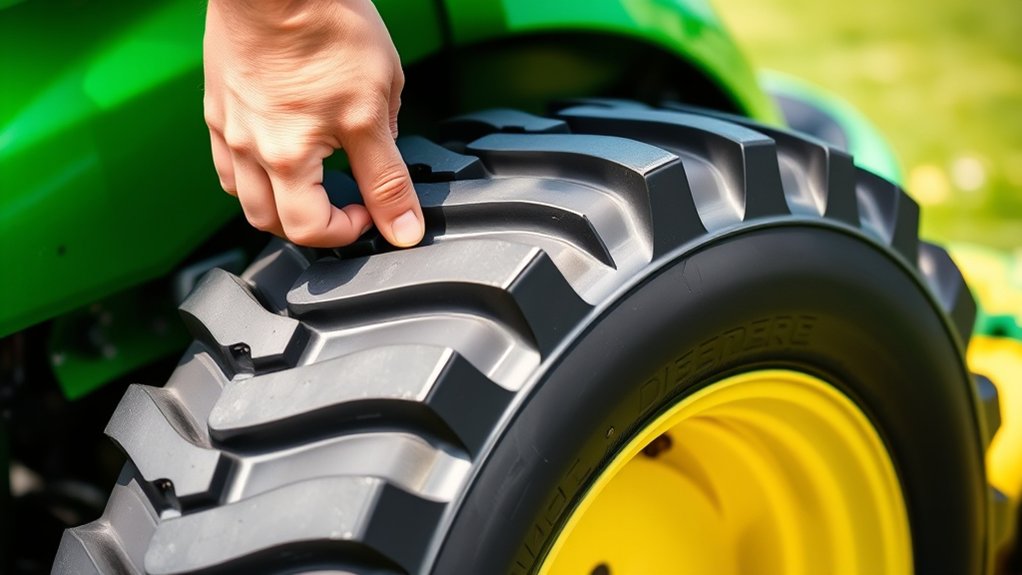
You’ll find tubeless tires offer enhanced durability, making them less prone to damage during tough mowing jobs. They also simplify maintenance since you won’t have to deal with inner tubes that can pinch or puncture.
Let’s explore how these benefits make tubeless tires a smart choice for your John Deere lawn tractor.
Enhanced Durability Benefits
Because tubeless tires lack an inner tube, they offer greater resistance to punctures and leaks, which means you spend less time fixing flats on your John Deere lawn tractor. Without an inner tube, the tire’s structure is more robust, absorbing impacts better and reducing the chance of sudden blowouts.
This durability translates into longer tire life, so you won’t need replacements as often. Additionally, tubeless tires maintain pressure more consistently, giving you stable performance during mowing tasks.
When you work on rough or debris-filled terrain, these tires stand up better to sharp objects, helping you avoid unexpected downtime. Choosing tubeless tires ensures your tractor stays ready to go, letting you tackle your lawn without worrying about frequent tire issues.
Improved Maintenance Convenience
The increased durability of tubeless tires also makes maintenance simpler and less frequent. Since tubeless tires don’t have inner tubes, you don’t have to worry about tube punctures or replacements. You can quickly patch small holes directly on the tire, saving you time and effort. Plus, tubeless tires maintain air pressure better, so you won’t need to check or inflate them as often. This convenience means less downtime for your John Deere lawn tractor and more time mowing. Here’s a quick comparison to help you see why tubeless tires are easier to maintain:
| Maintenance Aspect | Tubeless Tires | Tube Tires |
|---|---|---|
| Puncture Repair | Patch tire directly | Replace or patch inner tube |
| Air Pressure Retention | Better | More frequent checks needed |
| Inflation Frequency | Less frequent | More frequent |
| Risk of Sudden Deflation | Lower | Higher |
| Maintenance Time | Shorter | Longer |
How to Identify Tubeless Tires on Your John Deere Tractor
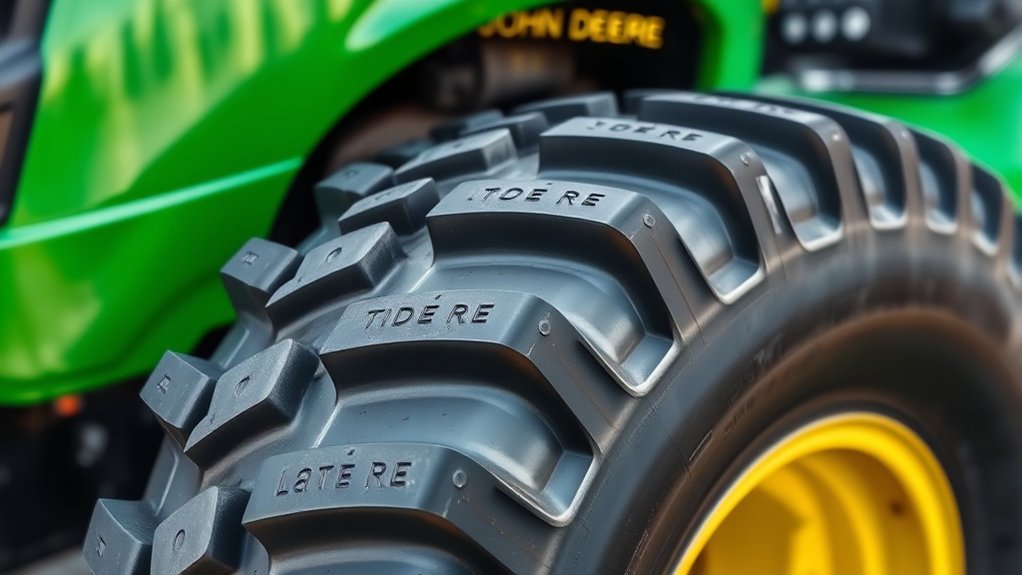
How can you quickly tell if your John Deere lawn tractor tires are tubeless? First, check the tire sidewall for markings. Tubeless tires usually have “Tubeless” printed clearly, while tube-type tires often say “Tube Type.”
Next, inspect the valve stem. Tubeless tires have a valve stem that’s directly mounted to the rim, often made of metal or rubber without a removable core housing. If you see a valve core that screws in and out, it’s likely tubeless.
Also, look at the tire bead area where the tire meets the rim; tubeless tires have a tighter seal without visible gaps. If your tire doesn’t require an inner tube and has these features, it’s tubeless.
This quick check helps you know what you’re working with before maintenance or replacement.
Tools You Need to Check and Replace John Deere Tires
To check and replace your John Deere lawn tractor tires, you’ll need a few essential tools like a tire pressure gauge, a jack, and a wrench.
Don’t forget safety gear such as gloves and eye protection to keep yourself secure during the process.
Having these ready will make the job smoother and safer.
Essential Tire Tools
Before you start checking or replacing John Deere lawn tractor tires, you’ll want to gather a few essential tools that make the process smoother and safer.
First, a reliable tire pressure gauge helps you accurately check tire pressure. You’ll also need a tire jack or tractor lift to safely raise the machine. A lug wrench or socket set is necessary to remove and tighten lug nuts.
Don’t forget a valve core remover to deflate or service tubeless tires if needed. For replacements, a tire iron or pry bar helps remove old tires from rims.
Finally, have some soapy water handy to spot leaks or ease tire mounting. With these tools ready, you’ll handle tire maintenance with confidence and efficiency.
Safety Equipment Needed
Why should you never overlook safety equipment when checking or replacing John Deere lawn tractor tires? Because tire maintenance involves handling heavy parts and pressurized air, which can cause injuries if you’re not careful.
Always wear safety glasses to protect your eyes from debris or sudden bursts. Use sturdy gloves to guard your hands against sharp edges and chemicals. Consider wearing steel-toed boots to protect your feet from falling tools or tires.
A reliable jack and jack stands are essential to securely lift and support the tractor, preventing accidental drops. Finally, have a tire pressure gauge handy to safely monitor inflation.
How to Inspect Your John Deere Tires for Damage and Wear
Although John Deere lawn tractor tires are built tough, you should regularly check them for signs of damage and wear to guarantee safe and efficient operation.
Start by inspecting the tire tread for uneven wear or bald spots. Next, examine the sidewalls carefully for cracks, cuts, or bulges that could weaken the tire structure.
Then, check the tire pressure with a reliable gauge and adjust it to the manufacturer’s recommended level.
Finally, look for embedded objects like nails or stones that might cause slow leaks or punctures.
Signs Your John Deere Lawn Tractor Tires Need Replacement
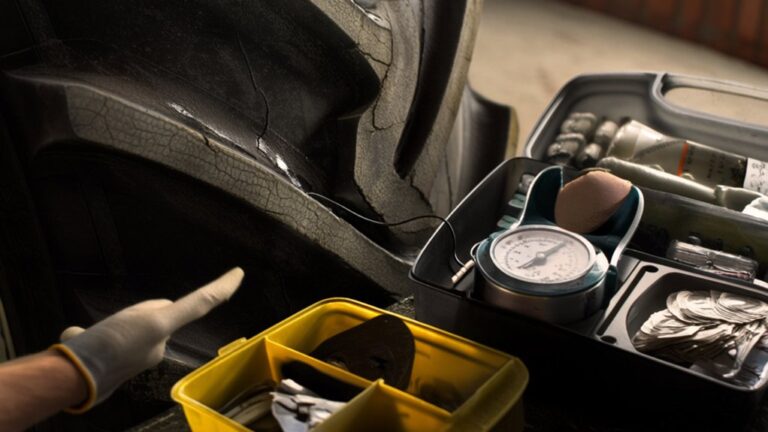
How can you tell when it’s time to replace your John Deere lawn tractor tires? First, check for visible cracks or deep cuts in the rubber. These can lead to sudden tire failure.
Check your John Deere tractor tires for visible cracks or deep cuts to prevent sudden tire failure.
If you notice frequent air pressure loss, your tires might have unseen punctures or damaged valves. Worn tread is another clear sign—if the tread depth is shallow or uneven, it reduces traction and safety.
You should also watch for bulges or deformities on the tire sidewalls, which indicate internal damage.
Ultimately, if your tractor vibrates excessively or handles poorly, the tires could be compromised. Replacing worn or damaged tires promptly ensures peak performance and prevents further issues during mowing tasks.
Keep an eye out for these signs to maintain your tractor’s reliability.
How to Remove Tubeless Tires From Your John Deere Tractor
Before you start removing tubeless tires from your John Deere tractor, make sure you follow essential safety precautions to avoid injuries.
Gather the necessary tools like a jack, tire irons, and a wrench to make the process smoother.
Then, follow a clear step-by-step method to safely detach the tires without damaging your tractor or the tire itself.
Safety Precautions First
When you’re ready to remove tubeless tires from your John Deere tractor, you need to prioritize safety to prevent accidents and injuries. Follow these precautions to keep yourself safe:
- Wear protective gear – gloves and safety glasses shield you from sharp objects and debris.
- Work on a flat surface – make sure your tractor is stable to avoid it rolling or tipping during tire removal.
- Chock the wheels – block the opposite tires to prevent any unexpected movement.
- Release tire pressure carefully – deflate the tire slowly to avoid sudden bursts of air that can cause harm.
Required Tools Overview
After taking safety precautions seriously, gathering the right tools is the next step to remove tubeless tires from your John Deere tractor effectively.
You’ll need a sturdy jack to lift the tractor safely and secure it with jack stands to prevent accidents. A tire iron or lug wrench is essential to loosen and remove the lug nuts holding the wheel in place. Have a valve stem tool handy to deflate the tire properly.
You might also want a rubber mallet to help loosen the tire from the rim if it’s stuck. Finally, keep a set of gloves and safety glasses nearby to protect your hands and eyes during the process.
Having these tools ready *guarantees* a smooth and safe tire removal experience.
Step-by-Step Removal Process
Since you’ve gathered all the necessary tools and guaranteed your safety, you can now start removing the tubeless tires from your John Deere tractor. Follow these steps carefully:
- Loosen the lug nuts: Use a wrench to break the lug nuts loose while the tire is still on the ground.
- Raise the tractor: Use a jack to lift the tractor off the ground, then secure it with jack stands for stability.
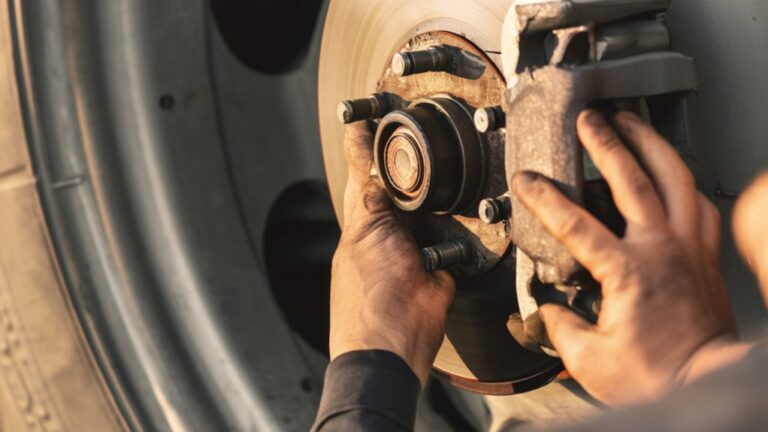
- Remove the lug nuts and tire: Completely unscrew the lug nuts and carefully pull the tire off the hub.
- Inspect the hub and tire: Check for any damage or debris that may affect the new tire installation.
How to Choose the Right Replacement Tires for Your John Deere Tractor
Choosing the right replacement tires for your John Deere tractor requires understanding your specific mowing and terrain needs. First, check your tractor’s manual or existing tires for size specifications to guarantee compatibility.
Next, consider the terrain you usually work on: turf tires work well for lawns without causing damage, while lugged tires offer better traction on rough or muddy ground. Also, think about the weather conditions—some tires perform better in wet or icy environments.
Don’t forget to choose between tubeless and tube-type tires, depending on your tractor model and personal preference. Ultimately, opt for tires made from durable materials to withstand frequent use and extend their lifespan.
Selecting the right tires improves performance and safety during your mowing tasks.
Installing New Tubeless Tires on a John Deere Lawn Tractor
When you’re ready to install new tubeless tires on your John Deere lawn tractor, make sure you have the right tools and workspace prepared. Start by supporting the tractor securely with jack stands to keep it stable. Then, carefully remove the old tires from the rims, ensuring the bead is fully released.
Prepare your workspace and securely support your John Deere tractor before removing old tubeless tires.
Follow these steps:
- Clean the rim thoroughly to ensure a proper seal with the new tire.
- Position the new tire on the rim, aligning it evenly all around.
- Use a tire lever or bead breaker to seat the tire bead onto the rim.
- Double-check that the tire is seated correctly before lowering the tractor.
Taking your time here ensures a smooth installation and prevents leaks.
How to Inflate John Deere Lawn Tractor Tubeless Tires Correctly
Although inflating tubeless tires on your John Deere lawn tractor might seem straightforward, doing it correctly is essential to guarantee safety and ideal performance. First, check the recommended tire pressure in your tractor’s manual or the tire sidewall. Use a reliable tire pressure gauge to measure the current pressure.
Remove the valve cap, attach the air compressor or pump, and add air slowly. Periodically stop to check pressure, avoiding overinflation that can cause uneven wear or damage. Inflate each tire evenly to maintain balance.
Once you reach the recommended pressure, remove the pump, replace the valve cap tightly, and inspect for leaks by listening or applying soapy water around the valve. Proper inflation improves traction, fuel efficiency, and extends tire life.
Troubleshooting Common Issues With John Deere Lawn Tractor Tires
If you notice your John Deere lawn tractor isn’t handling well or you spot uneven tire wear, it’s time to troubleshoot common tire issues.
First, check the tire pressure; underinflated tires cause poor traction and uneven wear.
Second, inspect for punctures or cuts that may lead to slow leaks.
Third, examine the tire tread for excessive wear, which reduces grip and stability.
Fourth, verify the wheels are properly aligned, as misalignment can cause uneven tire wear and affect steering.
Addressing these issues promptly helps maintain safe operation and extends tire life.
Regularly inspecting your tires prevents unexpected breakdowns and keeps your tractor running smoothly during every mowing session.
When to Consider Professional Help for Tire Maintenance
Properly maintaining your John Deere lawn tractor tires can solve many common issues, but some situations demand a professional’s expertise.
If you notice severe tire damage like deep cuts, sidewall bulges, or repeated air leaks, it’s time to seek help. Professionals have the right tools and knowledge to safely repair or replace tires without risking further damage.
Additionally, if you’re uncertain about tire balancing, bead seating, or handling tubeless tires, a technician can ensure the job is done correctly.
Complex issues like rim damage or persistent vibrations also require expert assessment.
Don’t hesitate to contact a professional if you feel overwhelmed or lack the necessary equipment.
This approach *guarantees* your tractor safe and running smoothly while avoiding costly mistakes.
Maintaining Your John Deere Lawn Tractor Tires for Longevity
To keep your John Deere lawn tractor tires performing well over time, you’ll need to regularly inspect and care for them. Proper maintenance extends their life and ensures safety. Here’s what you should do:
Regular inspection and care keep your John Deere lawn tractor tires lasting longer and performing safely.
- Check tire pressure weekly to maintain the recommended PSI. Underinflation causes uneven wear.
- Inspect tires for cracks, punctures, or embedded debris. Remove any objects to prevent damage.
- Clean tires after each use to remove dirt and grass that can degrade rubber.
- Rotate tires seasonally to promote even wear and enhance traction.
Frequently Asked Questions
What Is the Average Lifespan of John Deere Lawn Tractor Tires?
You can expect John Deere lawn tractor tires to last about 3 to 5 years, depending on usage and terrain. Regular maintenance and proper inflation will help you get the most out of their lifespan.
Can I Use John Deere Tractor Tires on Other Brands of Lawn Tractors?
You can use John Deere tractor tires on other brands if the size and specifications match. Notably, about 70% of lawn tractor owners prioritize tire compatibility when switching brands, so always double-check before swapping tires to ensure safety and performance.
How Do Tire Types Affect Lawn Tractor Fuel Efficiency?
Tire types affect your lawn tractor’s fuel efficiency by influencing rolling resistance. Tubeless tires usually reduce resistance, helping you conserve fuel. Choosing tires with proper tread and inflation guarantees smoother rides and better fuel economy for you.
Are There Eco-Friendly Tire Options for John Deere Lawn Tractors?
You can find eco-friendly tire options for your John Deere lawn tractor, but they might differ in durability compared to traditional tires. Choosing sustainable materials often means balancing environmental benefits with performance and cost considerations.
What Are the Best Storage Practices for John Deere Tires Off-Season?
You should clean and inflate your John Deere tires properly before storage. Store them in a cool, dry place away from direct sunlight and chemicals. Rotate tires occasionally to prevent flat spots and cover them to keep dust off.
Conclusion
Keeping your John Deere lawn tractor tires in top shape is like tending a garden—consistent care helps them grow strong and reliable. Tubeless tires offer a smoother, safer ride, but only if you check and maintain them regularly. By knowing when to patch a leak or call in the pros, you’ll keep your tractor rolling like clockwork. Remember, your tires are the roots of your mower’s performance—nourish them well, and they’ll carry you through every mowing season.