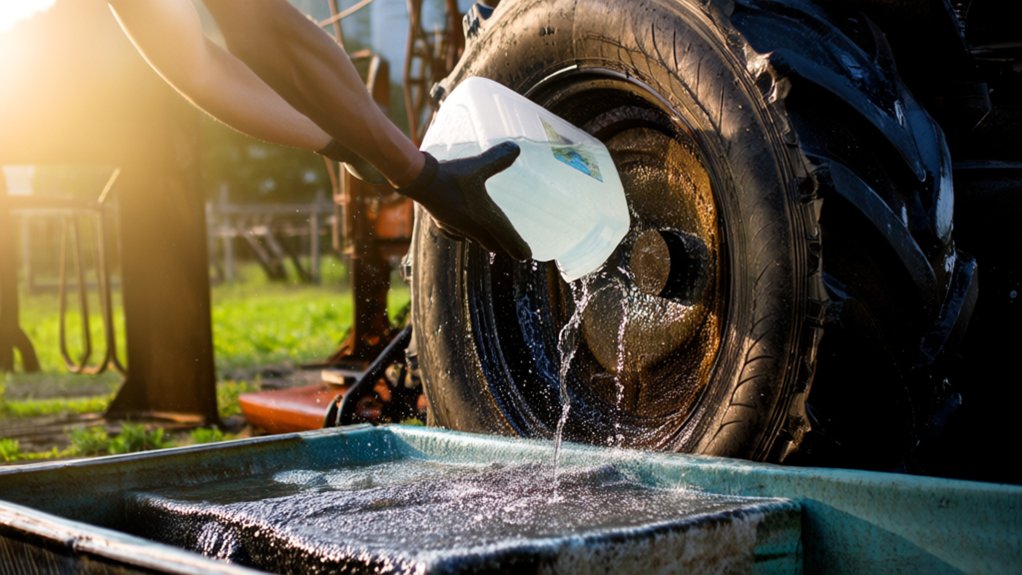
How to Put Water in a Tractor Tire in 3 Easy Steps
To put water in a tractor tire, first gather a jack, tire iron, drill with a long bit, and safety gear, then check the tire for damage. Next, remove the valve core and slowly fill the tire with clean water, adding a bit of bleach or antifreeze to prevent freezing and algae. Finally, reinstall the valve core and inflate the tire to the correct pressure. Keep an eye on maintenance tips to guarantee your tires last longer and perform well under tough conditions.
Key Takeaways
- Safely jack up the tractor tire and remove the valve core to allow air to escape during filling.
- Drill a drainage hole near the valve stem if needed, then clean the tire interior thoroughly.
- Slowly fill the tire with clean water using a hose, monitoring for sidewall bulges or damage.
- Add a few drops of bleach or antifreeze to prevent algae growth and freezing in cold weather.
- Reinstall the valve core tightly, then inflate the tire to the recommended pressure without overfilling.
What Tools You’ll Need and How to Get Your Tractor Tire Ready
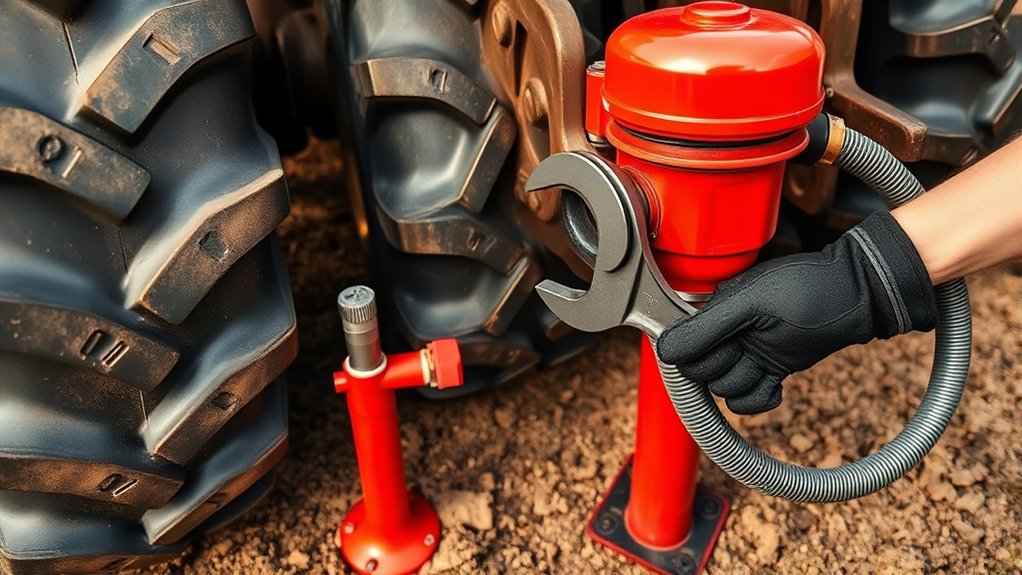
Before you start filling your tractor tire with water, you’ll need a few essential tools to make the process smooth and safe. Gather a sturdy jack to lift the tractor, a tire iron or lug wrench to remove the wheel, and a water hose or bucket for filling. You’ll also want a drill with a long drill bit to create a small hole for drainage, plus a plug or rubber stopper to seal it afterward. Don’t forget safety gloves and goggles to protect yourself.
Next, inspect your tire carefully for any damage or cracks that could cause leaks.
Finally, clean the tire’s interior to remove debris or dirt, ensuring a proper seal when you finish filling it with water.
How to Fill Your Tractor Tire With Water Safely
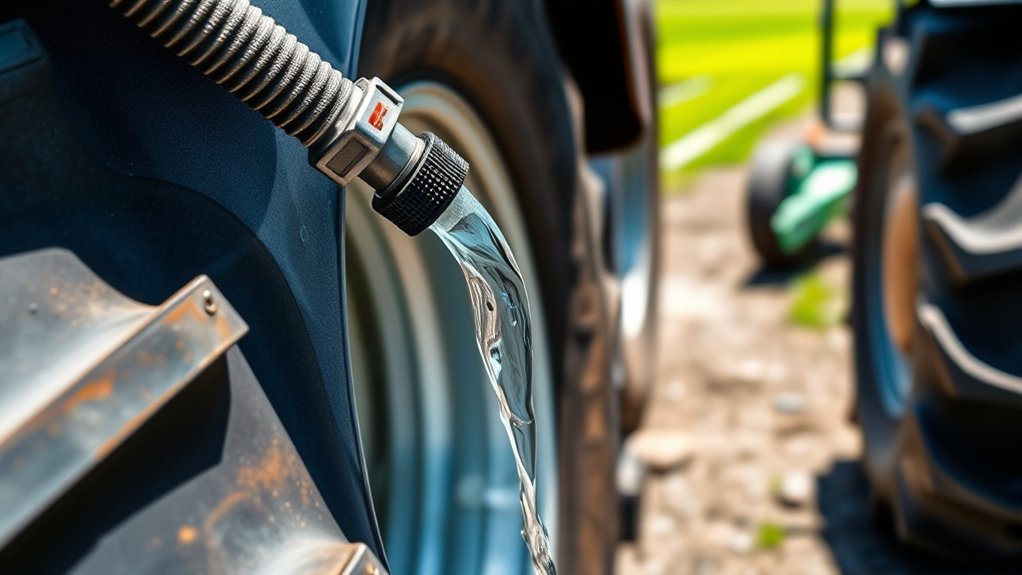
Once your tractor tire is prepped and free of debris, you can begin filling it with water. Start by positioning the tractor securely and removing the valve core to allow air to escape as you add water.
Secure the tractor, clear debris, and remove the valve core to safely begin filling your tire with water.
Use a clean hose or water source to slowly fill the tire, preventing sudden pressure buildup. Keep an eye on the tire’s sidewalls for any bulges or damage during filling.
To prevent contamination, add a few drops of bleach or antifreeze as recommended to inhibit algae growth and freezing.
After filling, reinstall the valve core securely and inflate the tire to the manufacturer’s recommended pressure.
Always wear protective gear, and avoid overfilling, which can damage the tire or affect performance. Filling carefully guarantees safety and longevity.
How to Keep Your Water-Filled Tractor Tires in Top Shape
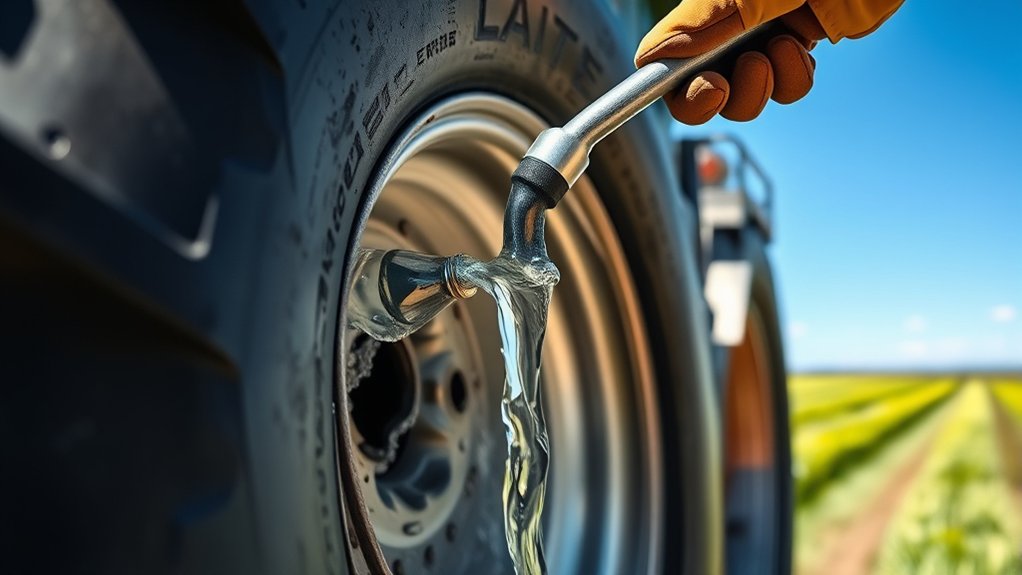
Even though filling your tractor tires with water boosts stability and traction, maintaining them requires regular attention. You should check for leaks frequently, as even small cracks can cause water loss and reduce effectiveness.
Keep an eye on the tire pressure and water level, topping off as needed to maintain proper weight and balance. Inspect the tires for any signs of damage or wear to avoid costly repairs.
When winter comes, consider adding antifreeze to the water to prevent freezing and maintain performance. Also, clean the valve stems regularly to prevent clogging.
Frequently Asked Questions
Can I Use Antifreeze Instead of Water in Tractor Tires?
You can use antifreeze in tractor tires, but be careful. It prevents freezing in cold weather, but it’s toxic and expensive. Make sure you choose the right type and follow safety guidelines to avoid damage or harm.
What Are the Benefits of Water-Filled Tractor Tires?
Imagine you’re working a muddy field; water-filled tires give you better traction and stability. You’ll reduce tire damage and improve your tractor’s balance, making your work smoother and safer, even in tough conditions.
How Much Does Filling a Tractor Tire With Water Typically Cost?
You’ll typically pay between $20 and $50 per tire to fill it with water, depending on size and labor costs. Adding antifreeze or calcium chloride might increase the price slightly, but it’s generally affordable.
Can Water-Filled Tires Affect Tractor Performance?
Yes, water-filled tires can affect your tractor’s performance by improving traction and stability, but they might reduce fuel efficiency and make steering a bit harder. You’ll notice changes depending on terrain and load conditions.
Is It Safe to Mix Water With Other Liquids for Tire Filling?
You shouldn’t mix water with other liquids in your tractor tire unless you know exactly what you’re adding. Some additives can cause corrosion or damage the tire, so it’s safer to stick with plain water or approved solutions.
Conclusion
So, there you have it—filling your tractor tire with water is almost too easy, isn’t it? Who knew that something as simple as adding water could make such a big difference in your tractor’s performance? Just remember, while it’s a straightforward process, keeping those water-filled tires in shape takes a bit more attention. After all, you want your tractor rolling smoothly, not turning into a soggy mess!