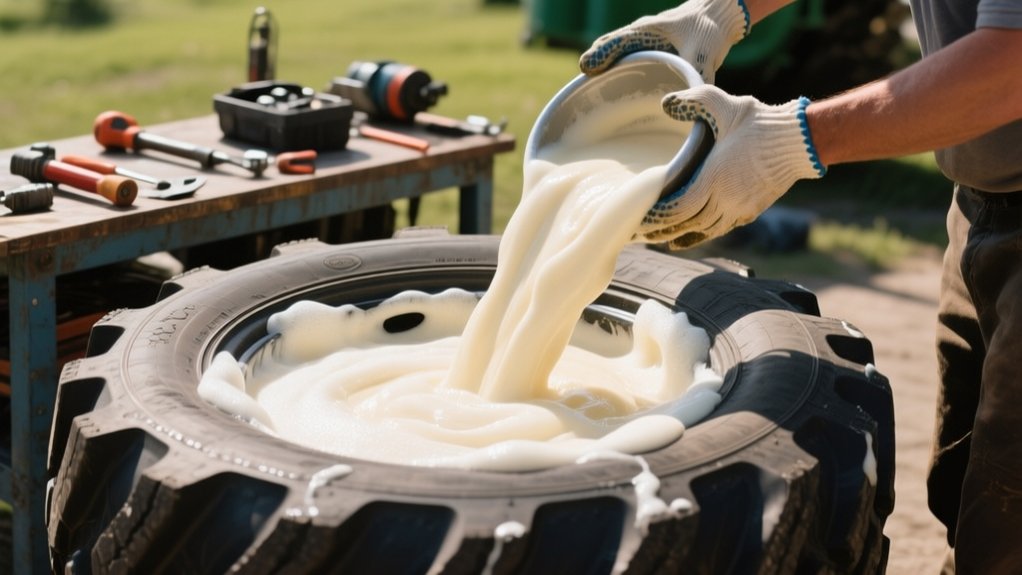
How to Foam Fill Tractor Tires in 5 Easy Steps
To foam fill your tractor tires in five easy steps, start by gathering essential tools like a foam fill kit and removing the valve cores. Clean and inspect the tires, then fully deflate them for safe foam application. Mix and pour the foam carefully to avoid air pockets. Let the foam cure for 24 to 48 hours, then inspect for any issues. Stay on top of maintenance to keep your tires durable and reliable in tough conditions—you’ll find more tips and details ahead.
Key Takeaways
- Clean and inspect tractor tires thoroughly, then fully deflate and remove valve cores for smooth foam filling.
- Mix the foam concentrate and catalyst precisely according to instructions in a clean container.
- Position the tire properly and pour foam slowly to avoid air pockets and allow even coverage.
- Allow the foam to cure for 24 to 48 hours, then inspect for cracks, gaps, or deformities.
- Perform regular maintenance by checking foam condition and cleaning tires to ensure durability and performance.
Tools and Materials Needed for Foam Filling Tractor Tires
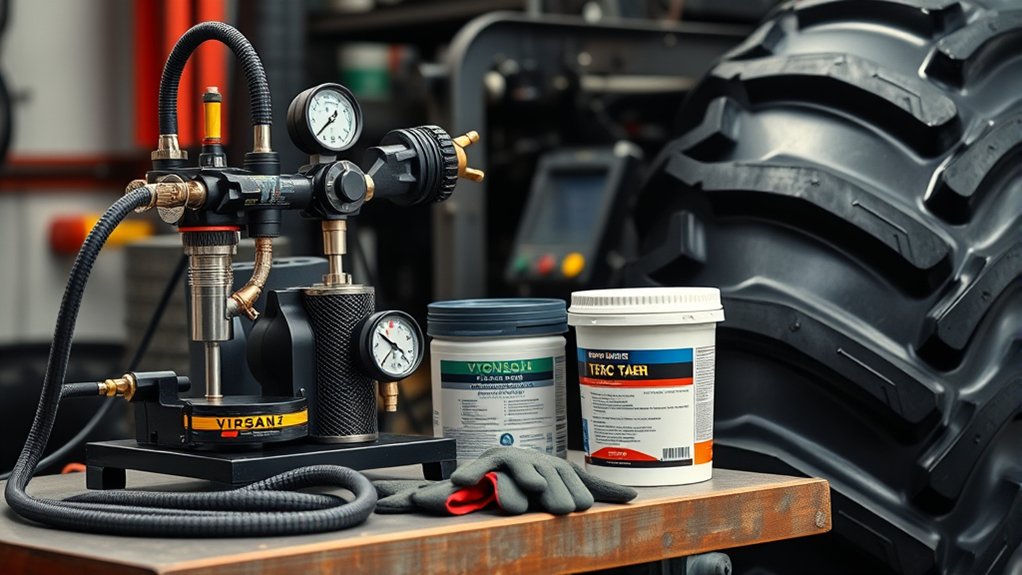
Before you start foam filling your tractor tires, you’ll need to gather the right tools and materials to make the job efficient and safe. You’ll want a high-quality tire foam fill kit specifically designed for tractor tires, which typically includes the foam concentrate and a mixing tool.
Gather quality foam fill kits and proper tools to safely and efficiently foam fill your tractor tires.
A heavy-duty air compressor helps guarantee proper tire inflation after filling. Don’t forget protective gloves and safety goggles to shield yourself from chemicals.
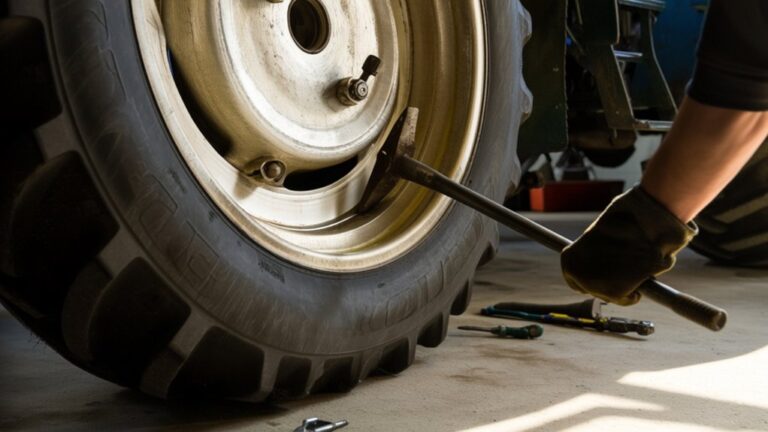
You’ll also need a tire removal tool or bead breaker to separate the tire from the rim if necessary. Have a clean bucket or container ready for mixing the foam concentrate with water, following the manufacturer’s instructions.
Finally, a sturdy scraper or brush will help you clean the inside of the tire before applying the foam.
How to Prepare Your Tractor Tires for Foam Filling
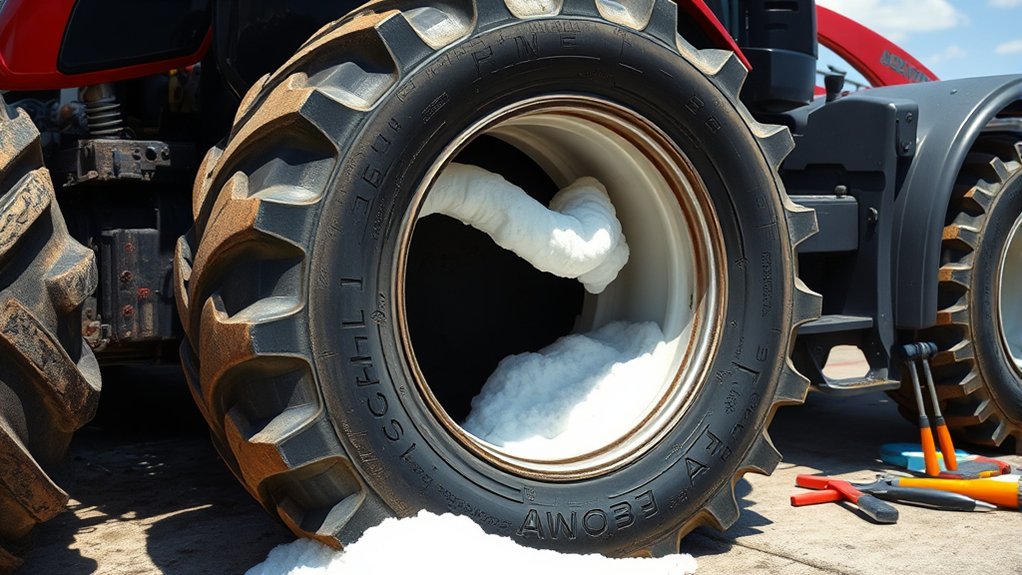
How should you get your tractor tires ready for foam filling to guarantee the best results? Start by thoroughly cleaning the tires to remove dirt, debris, and moisture that could affect adhesion. Next, inspect the tires carefully for any damage or excessive wear that might compromise the foam’s effectiveness.
Then, deflate the tires completely to ensure you can work safely and efficiently. Finally, remove the valve cores to allow easy foam entry and prevent air pockets.
- Clean the tires inside and out with water and a brush
- Check for cracks, punctures, or worn tread
- Fully deflate tires before starting
- Remove valve cores for smooth foam filling
Proper prep makes the foam fill job safer and longer-lasting.
How to Mix and Pour Foam Into Tractor Tires Correctly
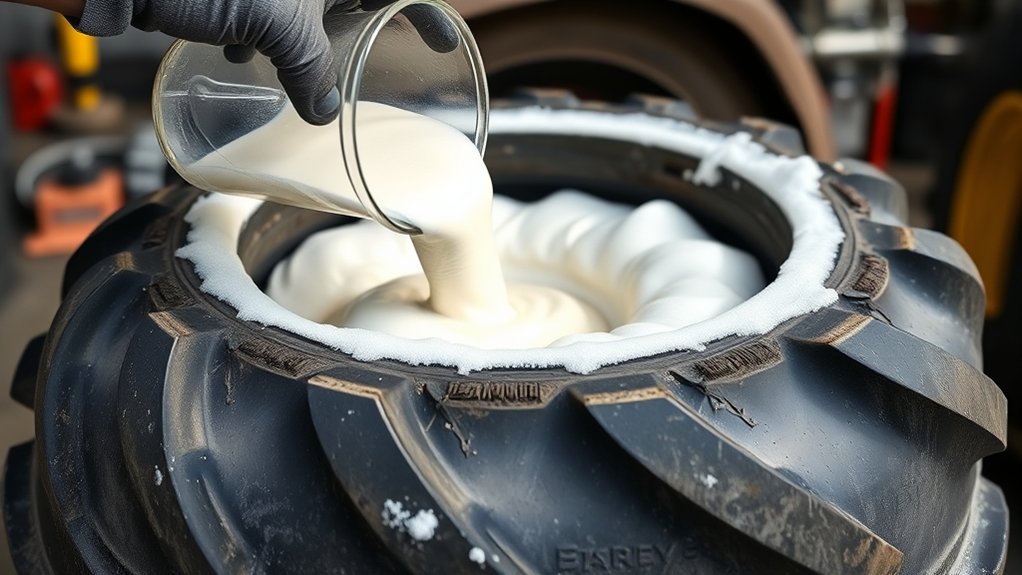
Once you’ve prepared your tractor tires, you’ll need to mix the foam components carefully to guarantee a strong, durable fill. Start by measuring the resin and catalyst according to the manufacturer’s instructions—accuracy here is vital. Pour both into a clean mixing container and stir thoroughly, ensuring a consistent blend without lumps.
Work swiftly, as foam mixtures have a limited working time before they begin to set. Next, position your tire so the valve stem is accessible, then pour the mixed foam evenly into the tire through the valve or an opening you’ve created. Fill slowly to prevent air pockets and ensure full coverage inside the tire.
Avoid overfilling; leave some room for foam expansion during curing. Proper mixing and pouring set the foundation for a successful foam fill.
Cure and Inspect Your Foam-Filled Tractor Tires
After pouring the foam, you’ll need to let it cure completely to achieve maximum strength and durability. The curing time depends on the foam type but usually takes 24 to 48 hours. During this period, keep the tire in a stable environment to prevent any disturbance that might affect the foam’s integrity.
Once cured, inspect your foam-filled tire carefully:
- Check for any visible cracks or gaps in the foam.
- Ensure the foam adheres firmly to the tire’s interior.
- Look for any trapped air pockets or inconsistencies.
- Confirm the tire maintains its shape without bulges or deformities.
Proper curing and inspection guarantee your foam-filled tractor tires perform reliably in the field, providing excellent support and puncture resistance.
Maintain and Troubleshoot Foam-Filled Tractor Tires
Although foam-filled tires require less upkeep than traditional tires, you’ll still need to perform regular maintenance and address any issues promptly to keep them functioning well. Check for cracks, leaks, or foam degradation every few months. Clean the tires to remove debris that can cause wear. If you notice any uneven wear or decreased performance, troubleshoot immediately to prevent bigger problems.
| Issue | Cause | Solution |
|---|---|---|
| Foam degradation | Age, exposure to elements | Replace foam |
| Tire cracks | Overload, impact damage | Inspect and repair or replace |
| Uneven wear | Improper installation | Reinstall or adjust tires |
| Loss of firmness | Foam breakdown | Refill or replace foam |
| Debris buildup | Mud, dirt accumulation | Clean tires regularly |
Frequently Asked Questions
Can Foam Filling Improve Tractor Tire Fuel Efficiency?
Yes, foam filling can improve your tractor’s fuel efficiency by reducing tire flex and rolling resistance. You’ll notice better traction and less energy loss, which means your engine won’t have to work as hard, saving fuel.
Is Foam Filling Environmentally Friendly?
You might think foam filling isn’t eco-friendly due to chemicals, but it actually reduces tire waste and fuel consumption. So, you’re helping the environment by extending tire life and lowering emissions during tractor use.
How Long Does Foam Filling Last in Tractor Tires?
Foam filling in tractor tires typically lasts between 5 to 10 years, depending on usage and conditions. You’ll want to check regularly for wear or damage to guarantee the foam continues protecting and supporting your tires effectively.
Can Foam-Filled Tires Be Repaired if Damaged?
Yes, you can repair foam-filled tires, but it’s tricky. You’ll need to remove the foam, fix the damage, then refill. Many prefer replacing the tire instead, since repairs can be time-consuming and sometimes less effective.
Are Foam-Filled Tractor Tires Suitable for All Terrains?
Foam-filled tractor tires aren’t suitable for all terrains; they perform like a sturdy shield on rough, uneven ground but can struggle on extremely soft or muddy surfaces. You’ll want to take into account your specific field conditions carefully.
Conclusion
Now that you’ve mastered foam filling your tractor tires, you’ll see just how much smoother and more durable your ride becomes. It’s true—foam filling really does reduce flats and improve stability. By following these simple steps, you’re not only saving time and money but also boosting your tractor’s performance. Keep an eye on maintenance, and you’ll enjoy the benefits for seasons to come. Ready to get rolling with confidence?