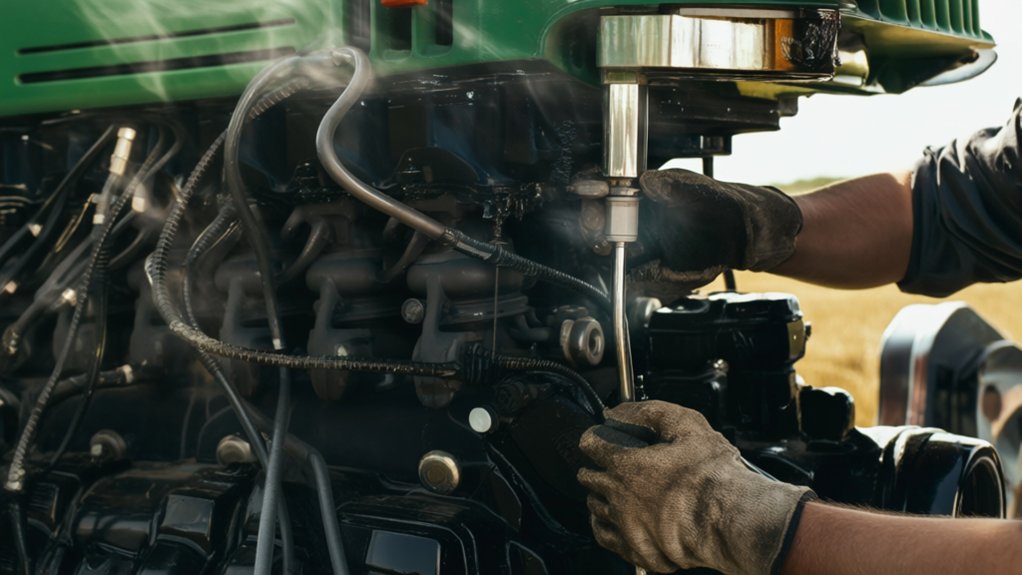
How Do You Check Hydraulic Fluid on a Tractor Running Safely?
To check hydraulic fluid safely while your tractor is running, wear impact-resistant goggles, gloves, and sturdy boots. Use the sight glass or carefully remove the dipstick during normal hydraulic load or after warm-up to get accurate readings. Watch for proper fluid level, clarity, and absence of bubbles. Always stay cautious near moving parts and hot surfaces. Keeping an eye on fluid condition and level this way helps prevent breakdowns and maintains performance. You’ll find even more helpful tips on proper techniques and troubleshooting ahead.
Key Takeaways
- Wear impact-resistant goggles and chemical-resistant gloves before inspecting the hydraulic fluid while the tractor operates.
- Use the sight glass on the hydraulic reservoir to safely observe fluid level and clarity during operation.
- Check fluid level is within marked range without contaminants, bubbles, or discoloration indicating problems.
- Perform checks during heavy hydraulic load or after warm-up for accurate readings at operating temperature.
- Avoid opening the reservoir or dipstick while running; monitor visually and use proper PPE to prevent exposure.
Why Checking Hydraulic Fluid While Running Keeps Your Tractor Safe and Efficient
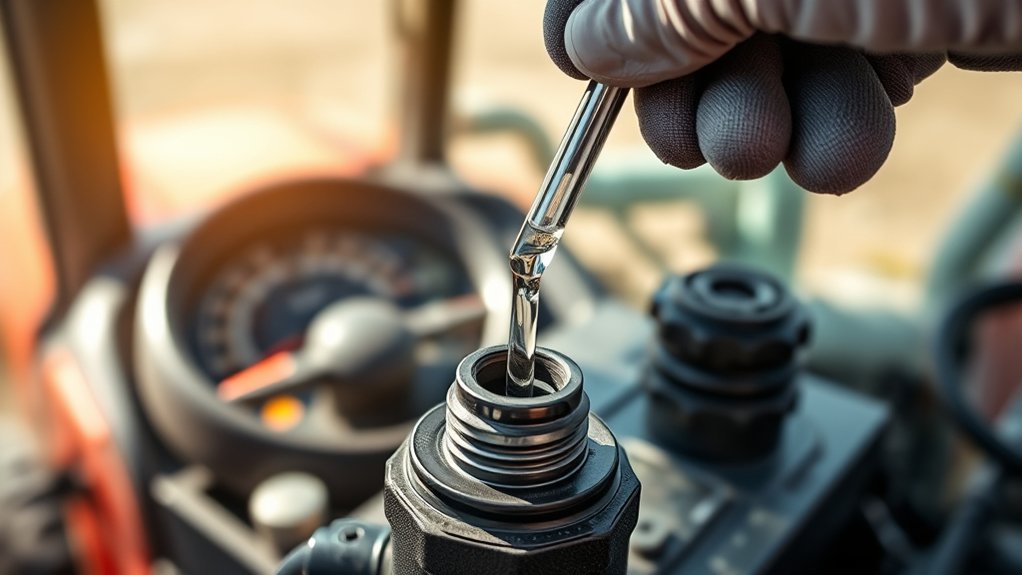
Although it might seem counterintuitive, checking your tractor’s hydraulic fluid while it’s running helps you spot issues more accurately. When the engine runs, the hydraulic system operates under normal pressure and temperature, revealing problems you wouldn’t catch when it’s off.
You’ll see if the fluid level stays steady or drops, indicating leaks or consumption issues. Running fluid also lets you check for proper circulation and contamination, which can cause damage if ignored.
By monitoring the fluid in real time, you guarantee your tractor runs efficiently and avoid costly breakdowns. This proactive step helps maintain ideal pressure and prevents overheating, keeping your equipment safe and reliable during demanding tasks.
Don’t skip this check—it’s essential for your tractor’s longevity.
What Safety Gear You Need Before Starting Hydraulic Fluid Checks

Before you start checking hydraulic fluid, make sure you’re wearing the right protective clothing to shield your skin. Don’t forget eye and hand protection to guard against splashes and sharp edges.
Also, choose sturdy, safe footwear to keep your feet secure while working around the tractor.
Essential Protective Clothing
Since hydraulic fluid can be harmful on contact and under pressure, you need to wear the right protective clothing before you start checking it. Begin with long-sleeved shirts and long pants made from durable, non-flammable materials to shield your skin from potential leaks or sprays.
Avoid loose clothing that could get caught in moving parts. Wear sturdy, closed-toe boots with slip-resistant soles to protect your feet from spills and provide stable footing around the tractor.
Consider wearing a protective apron or coveralls if you expect heavy exposure. These layers help reduce skin contact and minimize injury risks.
Dressing properly guarantees you’re prepared for any unexpected fluid release while keeping you comfortable and safe during the entire inspection process. Always prioritize safety by choosing appropriate clothing before handling hydraulic systems.
Eye and Hand Protection
When you’re about to check hydraulic fluid, you’ll need reliable eye and hand protection to prevent injuries from unexpected sprays or contact with the fluid.
Start by putting on safety goggles that provide a tight seal around your eyes to block any fluid that might spray unexpectedly. Choose goggles that are impact-resistant for added protection.
Next, wear chemical-resistant gloves to shield your hands from hydraulic fluid, which can irritate or damage your skin. Nitrile or neoprene gloves work well because they resist oils and chemicals without sacrificing dexterity.
Make sure your gloves fit snugly but comfortably to maintain control while handling components.
Safe Footwear Choices
Although eye and hand protection are essential, your footwear plays a significant role in keeping you safe during hydraulic fluid checks.
You need sturdy, slip-resistant boots that provide good traction to prevent falls on slippery surfaces. Steel-toed boots are ideal because they protect your feet from heavy tools or parts that might accidentally drop.
Avoid open-toed shoes or sneakers, as they offer little protection and increase your risk of injury. Make sure your boots are well-fitted and comfortable to reduce fatigue and maintain balance.
Waterproof footwear is also a smart choice since hydraulic fluid can leak and create slippery spots.
How to Identify the Hydraulic Fluid Reservoir on Your Tractor
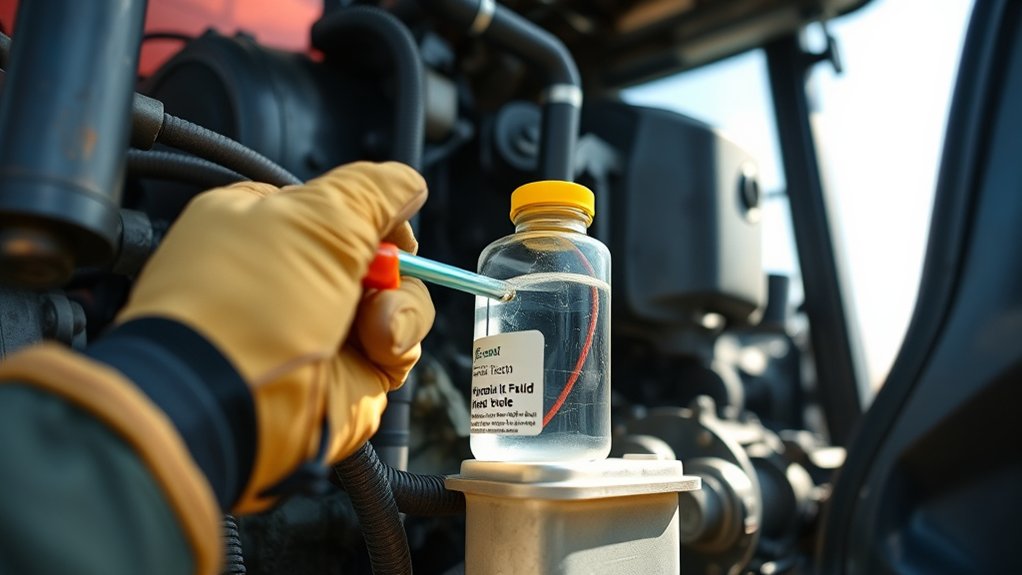
You’ll first want to locate the hydraulic fluid reservoir, usually found near the engine or under the hood.
Look for a translucent tank with clear markings to help you check the fluid level easily.
Also, make sure you recognize the type of hydraulic fluid your tractor uses to avoid mixing fluids.
Locating The Reservoir
Where exactly is the hydraulic fluid reservoir located on your tractor? Finding it’s essential before you check the fluid safely. Typically, the reservoir is a metal or plastic tank, often mounted near the engine or rear of the tractor.
To locate it, follow these steps:
- Look for a tank with a cap labeled “Hydraulic Fluid” or showing a hydraulic symbol.
- Check near the hydraulic pump or control valves, as the reservoir usually sits close by.
- Refer to your tractor’s owner’s manual or decals on the tractor, which often indicate the reservoir’s position.
Recognizing Fluid Types
Since different fluids serve various functions in your tractor, correctly identifying the hydraulic fluid is essential before checking or refilling it. Look for a reservoir labeled specifically for hydraulic fluid—this is often marked with “Hydraulic Oil” or a similar term. The cap or dipstick may also display a symbol resembling a hydraulic cylinder or fluid drop.
The fluid itself typically has a clear to amber color, but always refer to your tractor’s manual to confirm the correct type and appearance. Avoid confusing it with engine oil, coolant, or transmission fluid, which have different colors and reservoir locations.
When Should You Check Hydraulic Fluid While Running?
Although it might seem risky, checking hydraulic fluid while the tractor is running can help you identify issues like leaks or pressure drops in real time. You should know the right moments to perform this check to avoid damage or injury.
Here are three key times to check hydraulic fluid while the tractor is running:
- During heavy hydraulic load: When operating attachments like loaders or backhoes, check fluid levels to ensure the system handles pressure properly.
- When you notice sluggish hydraulic response: If the controls feel slow or weak, checking fluid can reveal if low levels are the cause.
- After routine warm-up: Once the tractor reaches normal operating temperature, fluid expands and circulates fully, giving you an accurate reading.
Checking at these times helps maintain excellent tractor performance and prevents costly repairs.
How to Safely Access the Hydraulic Fluid Dipstick
First, make sure the tractor is completely turned off and cooled down before you start.
Next, locate the hydraulic fluid dipstick, usually found near the hydraulic reservoir.
Taking these precautions helps you avoid injury and get an accurate fluid reading.
Locate Dipstick Position
Where exactly is the hydraulic fluid dipstick located on your tractor? Finding it quickly ensures a safe and efficient fluid check. Typically, the dipstick is near the hydraulic reservoir, which is often marked or colored for easy identification.
To locate it:
- Open the tractor’s engine compartment or hydraulic access panel.
- Look for a cap or handle labeled “Hydraulic Fluid” or with a dipstick icon.
- Refer to your tractor’s manual for the exact dipstick position if it’s not immediately visible.
Keep in mind, the dipstick might be positioned vertically or horizontally, depending on your tractor model.
Knowing its location helps you access the fluid without unnecessary adjustments or risks, setting you up for a smooth inspection process.
Ensure Tractor Is Off
After locating the hydraulic fluid dipstick, make sure the tractor is completely off before you proceed. Turn the ignition key to the off position and remove it to prevent accidental starting. Engage the parking brake to guarantee the tractor remains stationary.
If your tractor has a keyless start, double-check that all controls are in neutral and the engine is shut down. Waiting a few minutes after shutting off the engine allows the hydraulic fluid to settle, giving you a more accurate reading.
Never attempt to check the fluid while the engine is running or the tractor is in gear, as this can be dangerous. By guaranteeing the tractor is off, you protect yourself from moving parts and avoid inaccurate fluid level readings.
How to Read Your Tractor’s Hydraulic Fluid Levels
Before you start your tractor, you’ll want to check the hydraulic fluid level to make sure everything operates smoothly. Here’s how to read it correctly:
Before starting your tractor, check the hydraulic fluid level to ensure smooth and reliable operation.
- Locate the hydraulic fluid reservoir or dipstick. It’s often marked with a bright color or labeled clearly.
- Remove the dipstick, wipe it clean, then reinsert it fully to get an accurate reading.
- Pull the dipstick out again and observe the fluid level. It should fall between the “Full” and “Add” marks. If it’s below, you’ll need to top it up.
Always check the fluid when the tractor is on level ground and the engine is cool for the most accurate measurement.
This simple step helps prevent hydraulic system damage and ensures reliable tractor performance.
What Signs to Watch For in Hydraulic Fluid Condition
Although checking the fluid level is essential, you also need to pay close attention to the condition of your hydraulic fluid. Look for changes in color—clean hydraulic fluid is usually clear or amber, so dark or cloudy fluid signals contamination or breakdown.
Also, check for a burnt smell, which indicates overheating or degradation. You should watch for any visible debris or metal particles that may be floating in the fluid, as these can cause damage to your tractor’s hydraulic system.
Ultimately, note the fluid’s consistency; it should flow smoothly without being too thick or watery. By monitoring these signs regularly, you can catch potential issues early and keep your tractor’s hydraulics running safely and efficiently.
Common Hydraulic Fluid Problems and How to Spot Them
When hydraulic fluid problems arise, they usually show clear signs you can detect early. Catching these issues quickly helps you avoid costly repairs and downtime. Watch out for these common problems:
- Contamination: If the fluid looks milky or has particles, water or dirt may have entered the system. This reduces lubrication and causes wear.
- Foaming: Bubbles in the fluid indicate air trapped inside, leading to erratic hydraulic performance and reduced power.
- Degradation: Dark, burnt-smelling fluid means the oil has broken down due to heat or age, losing its protective qualities.
How Temperature Affects Hydraulic Fluid Checking Accuracy
Since hydraulic fluid expands and contracts with temperature changes, checking its level or condition without accounting for temperature can lead to inaccurate readings.
When the fluid is warm, it expands, making the level appear higher than it actually is. Conversely, cold fluid contracts, causing the level to seem lower.
To get a precise reading, you should check the fluid when the tractor is at normal operating temperature or follow the manufacturer’s recommended temperature range.
Also, be aware that temperature affects the fluid’s viscosity, which influences how it flows and how contaminants might appear.
Comparing Hydraulic Fluid Checking Methods: Dipstick, Gauge, and Sight Glass
Accounting for temperature is just one part of accurately checking your tractor’s hydraulic fluid. You’ll want to choose the right method to get a clear reading. Here’s a quick comparison:
Choosing the right method is key to accurately checking your tractor’s hydraulic fluid level.
- Dipstick: Simple and common, it requires you to pull it out, wipe it clean, reinsert, then check the fluid level. It’s manual but effective when done correctly.
- Gauge: Usually mounted on the reservoir, a gauge gives a quick visual indicator of fluid level without removing parts. It’s convenient but may be less precise.
- Sight Glass: Located on the reservoir, it lets you view the fluid level directly. This method requires less effort and helps you monitor fluid levels while the tractor runs.
Each method has pros and cons; pick the one that suits your tractor and your routine.
How to Use a Sight Glass for Real-Time Hydraulic Fluid Monitoring
Using a sight glass for real-time hydraulic fluid monitoring gives you immediate insight into your tractor’s fluid levels without any guesswork.
To use it, first locate the sight glass on your tractor’s hydraulic reservoir—usually a small, transparent window on the tank’s side.
While the tractor runs safely, glance at the fluid level through the glass. The fluid should be within the marked range, indicating proper hydraulic fluid levels.
Check for clarity too; the fluid should look clean and free of bubbles or discoloration.
If the fluid level stays steady and clear, your system operates smoothly.
This method lets you monitor fluid levels continuously without stopping the tractor, helping you catch potential issues early and maintain hydraulic performance effectively.
Steps to Take If Hydraulic Fluid Is Low or Contaminated
If you notice your hydraulic fluid is low or contaminated, act quickly to prevent damage to your tractor’s system. Addressing the issue promptly helps avoid costly repairs and downtime.
- Stop the tractor and allow the system to cool. This prevents injury and avoids further contamination.
- Drain the old fluid completely. Use a clean container to catch the fluid, then inspect the reservoir and lines for debris or damage.
- Refill with the correct hydraulic fluid. Use a clean funnel to avoid introducing contaminants, and top off to the recommended level.
After refilling, run the tractor briefly to circulate the fluid, then recheck the level and condition.
Taking these steps ensures your hydraulic system stays protected and operates reliably.
How Regular Hydraulic Fluid Checks Improve Tractor Performance
While it might seem like a small task, regularly checking your tractor’s hydraulic fluid can make a big difference in performance. Keeping the fluid at the right level guarantees your hydraulic system operates smoothly, preventing sluggish or erratic movements.
Regularly checking hydraulic fluid ensures smooth tractor performance and prevents sluggish or erratic movements.
Clean, adequate fluid helps maintain proper pressure, which improves the responsiveness of your tractor’s attachments and steering. By spotting leaks or contamination early, you avoid costly repairs and downtime.
Regular checks also extend the lifespan of hydraulic components by reducing wear caused by friction and overheating. Ultimately, staying on top of hydraulic fluid maintenance keeps your tractor running efficiently, saves you money, and boosts safety during operation.
You’ll get more consistent power and better control, making your work easier and more productive every day.
Frequently Asked Questions
What Type of Hydraulic Fluid Is Best for My Tractor Model?
You should use the hydraulic fluid specified in your tractor’s owner manual, usually a high-quality ISO VG 46 or 68 fluid. Don’t guess—using the right type safeguards your system and guarantees peak performance.
How Often Should Hydraulic Fluid Be Completely Replaced?
You should replace hydraulic fluid completely every 1,000 to 2,000 hours, but don’t wait too long—old fluid can silently damage your tractor’s system. Regular checks and timely changes keep your machine running smoothly and safely.
Can Hydraulic Fluid Leaks Cause Engine Damage?
Yes, hydraulic fluid leaks can cause engine damage because low fluid levels lead to overheating and poor lubrication. You should fix leaks quickly to avoid costly repairs and keep your tractor running smoothly and safely.
What Tools Are Needed for a Hydraulic Fluid Flush?
You don’t need a magic wand—just a drain pan, wrenches, fresh hydraulic fluid, and a filter wrench. Oh, and gloves—because touching old fluid is like making a bad first impression you can’t undo.
How Do I Dispose of Used Hydraulic Fluid Properly?
You should never pour used hydraulic fluid down drains or on the ground. Instead, collect it in a sealed container and take it to a recycling center or hazardous waste disposal site to keep the environment safe and clean.
Conclusion
Now, imagine your tractor humming steadily, hydraulic fluid flowing perfectly as you watch the sight glass. You’ve donned your gloves, carefully checked the dipstick, and guaranteed every drop is just right. Skipping this step? That’s when trouble quietly creeps in—leaks, overheating, or worse. But you don’t let that happen. By checking your hydraulic fluid safely while running, you keep your tractor strong, efficient, and ready for whatever the field throws at you next.