What Is Shuttle Shift on a Tractor?
A shuttle shift on a tractor lets you quickly change direction between forward and reverse without clutching or stopping, saving you time and effort. It’s perfect for tasks like loader work, mowing, and tight maneuvering, making your job smoother and less tiring. Shuttle shifts come in mechanical, hydraulic, and electronic types, each offering different ease and precision. Keep going to explore how shuttle shift boosts efficiency, safety, and productivity on the farm.
Key Takeaways
- Shuttle shift allows quick, clutch-free direction changes between forward and reverse for efficient tractor operation.
- It improves maneuverability by enabling rapid gear shifts without stopping or clutching.
- Commonly used in loader work, bale handling, and tasks needing frequent back-and-forth movement.
- Shuttle shift reduces operator fatigue by simplifying gear changes during repetitive tasks.
- It enhances productivity by ensuring smooth, continuous operation in tight spaces and demanding fieldwork.
What Is Shuttle Shift on a Tractor and Why It Matters

What makes shuttle shift on a tractor so useful? It lets you quickly switch between forward and reverse without using the clutch, saving you time and effort during repetitive tasks.
When you’re moving loads or maneuvering in tight spaces, this feature helps you stay efficient and reduces fatigue. You won’t have to stop and manually change gears every time you want to reverse direction.
Shuttle shift is especially important in operations like loader work, where frequent directional changes are common. It improves your control and responsiveness, making your work smoother and less strenuous.
How Shuttle Shift Transmissions Work Compared to Traditional Ones
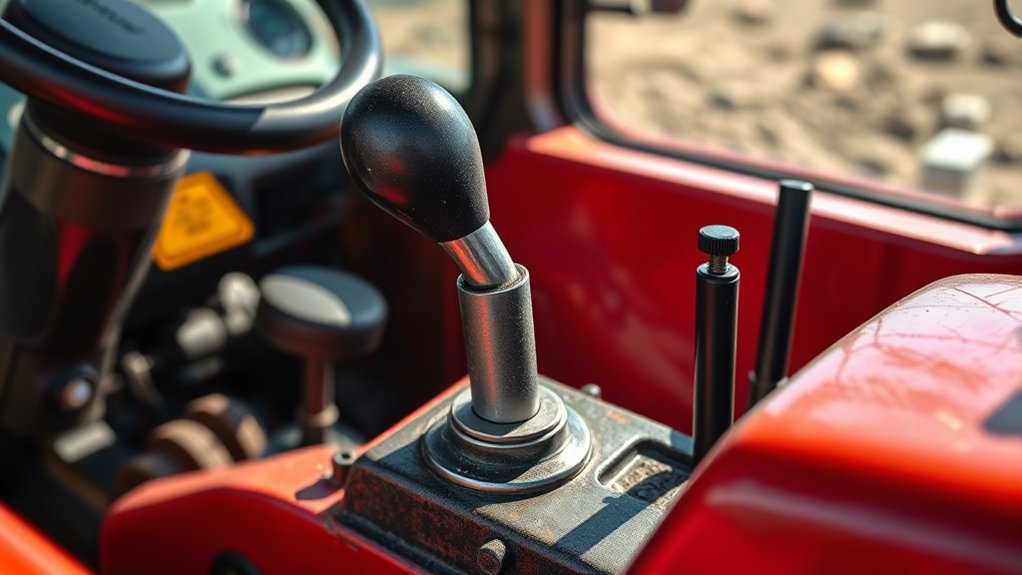
You’ll notice shuttle shift transmissions use a lever or button to quickly switch directions without clutching.
Traditional transmissions, however, require you to manually engage the clutch and move through gears to change direction.
Understanding these differences helps you operate your tractor more efficiently.
Shuttle Shift Mechanism
How does a shuttle shift transmission differ from a traditional one? The key lies in how the mechanism lets you quickly switch directions without clutching each time. When you use a shuttle shift, you engage a lever that smoothly reverses the tractor’s movement, saving time and effort.
Here’s how the shuttle shift mechanism works:
- Directional Control Lever: You move this lever forward or backward to select direction instantly.
- Hydraulic or Mechanical Linkage: It activates the transmission’s reverse or forward gears without disengaging the clutch.
- Synchronizer System: This ensures smooth gear engagement, preventing gear clash during quick shifts.
This setup lets you focus on your task, especially during loader work, by simplifying direction changes on the go.
Traditional Transmission Differences
Although both shuttle shift and traditional transmissions control your tractor’s movement, they operate quite differently regarding shifting ease and speed. Traditional transmissions require you to stop or slow down before shifting gears, which can interrupt your workflow. You’ll manually move the gear lever through an H-pattern, which takes more time and effort. In contrast, shuttle shift lets you switch directions quickly without clutching or stopping.
| Feature | Traditional Transmission | Shuttle Shift Transmission |
|---|---|---|
| Gear Shifting | Manual, requires stopping | Quick, no stopping needed |
| Direction Change | Slower, clutch required | Instant, clutchless |
| Ease of Use | More effort, slower | Less effort, faster |
You’ll notice shuttle shift boosts productivity, especially in repetitive tasks.
Types of Shuttle Shift Systems on Tractors
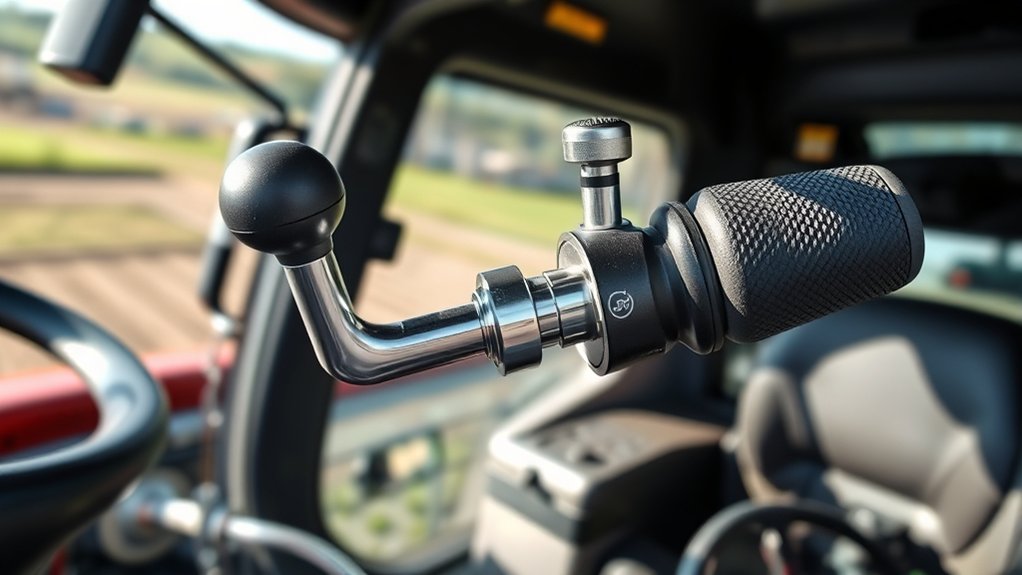
When you operate a tractor, understanding the different types of shuttle shift systems can greatly improve your efficiency and control. These systems allow you to switch direction quickly without using the clutch, saving time and reducing fatigue.
Mastering shuttle shift systems boosts your tractor operation by enabling quick, clutch-free direction changes that save time and energy.
Here are the three main types you’ll encounter:
- Mechanical Shuttle Shift – Uses a lever to change direction manually. It’s straightforward and reliable but requires more physical effort.
- Hydraulic Shuttle Shift – Employs hydraulic pressure to shift gears, making direction changes smoother and easier on you.
- Electronic Shuttle Shift – Uses electronic controls for quick, precise shifting with minimal effort, often found in modern tractors.
Knowing these types helps you choose the right tractor for your tasks and operating style.
Shuttle Shift vs. Powershuttle Transmissions: Key Differences
What sets shuttle shift and powershuttle transmissions apart? The main difference lies in how you change directions.
With a shuttle shift, you manually engage a lever or switch to reverse the tractor’s direction, but you still need to use the clutch to shift gears.
Powershuttle transmissions, on the other hand, let you reverse or switch directions smoothly without clutching, using a hydraulic system controlled by a lever. This means you can shuttle back and forth quickly and effortlessly.
Additionally, powershuttle systems are generally more complex and expensive due to their hydraulic components, while shuttle shifts are simpler and more cost-effective.
Understanding these differences helps you choose the right transmission based on your tractor use and budget.
Benefits of Shuttle Shift for Farm Work Efficiency and Safety
You’ll find that shuttle shift boosts your tractor’s maneuverability, making tight turns and quick direction changes much easier.
It also helps reduce operator fatigue by simplifying gear shifts during long hours in the field.
Plus, its safety features keep you more secure while working around equipment and uneven terrain.
Enhanced Maneuverability
How does shuttle shift enhance your tractor’s maneuverability on the farm? It lets you quickly switch between forward and reverse without using the clutch, making tight turns and precise movements much easier. This means you can navigate tricky spots and align implements faster.
Here’s how shuttle shift boosts your tractor’s maneuverability:
- Swift Direction Changes: Move from forward to reverse instantly, saving time in confined areas.
- Improved Control: Maintain smooth operation when adjusting position around obstacles or rows.
- Efficient Backing Up: Back up precisely without the need to stop and clutch, reducing delays.
With shuttle shift, you handle your tractor more confidently, improving both your productivity and safety during complex maneuvers.
Reduced Operator Fatigue
Along with making your tractor easier to maneuver, shuttle shift also helps cut down on operator fatigue. You won’t have to constantly clutch and manually shift gears when switching directions, which means less strain on your hands and legs during long hours. This ease of control lets you stay focused and work longer without tiring quickly.
| Task | Traditional Transmission | Shuttle Shift Transmission |
|---|---|---|
| Direction Changes | Manual clutching required | Quick lever operation |
| Hand/Leg Effort | High | Low |
| Operator Fatigue | Increases over time | Notably reduced |
| Work Duration | Shorter due to fatigue | Extended with comfort |
| Efficiency Impact | Moderate | Enhanced |
This reduction in fatigue boosts your overall productivity on the farm.
Improved Safety Features
Why risk safety when you can make every direction change smoother and more controlled? Shuttle shift lets you switch between forward and reverse quickly without clutching, reducing the chance of slips or stalls that could cause accidents.
When you use shuttle shift, you gain:
- Better control — You can respond faster to obstacles or changes in terrain, keeping you safer on uneven ground.
- Reduced distractions — You won’t have to worry about clutching or gear grinding, so your focus stays on your surroundings.
- Lower risk of injury — Less repetitive clutching means fewer chances for strain or mishaps during long workdays.
Using shuttle shift, you keep your tractor operations safer, letting you concentrate on the job without compromising your well-being.
Tractor Tasks That Benefit Most From Shuttle Shift
When performing tasks that require frequent changes between forward and reverse, shuttle shift can save you a lot of time and effort. If you’re moving pallets with a loader or operating a front-end loader, shuttle shift lets you reverse quickly without clutching or stopping.
Tasks like loader work, bale handling, and material moving benefit greatly because you can switch directions smoothly. It’s also helpful during precision jobs like landscaping or grading, where back-and-forth control improves efficiency.
If you’re working in tight spaces, shuttle shift reduces fatigue by minimizing manual gear changes. Overall, shuttle shift enhances productivity in any job needing quick direction shifts, so you can focus on the task rather than constantly manipulating the clutch and gear lever.
Operating a Shuttle Shift Tractor Safely and Efficiently
When operating a shuttle shift tractor, you’ll want to engage gears properly to avoid damage and guarantee smooth direction changes.
Pay close attention to how you switch between forward and reverse to maintain control.
Following key safety precautions will keep both you and your equipment protected during use.
Proper Gear Engagement
How do you guarantee smooth and safe gear changes on a shuttle shift tractor? Proper gear engagement is key. You need to make certain the tractor responds well without causing wear or damage.
Follow these steps:
- Fully depress the clutch before shifting to prevent grinding and ensure smooth gear engagement.
- Shift gently but decisively using the shuttle lever, avoiding abrupt or forced movements that can strain the transmission.
- Confirm the gear has engaged by feeling the tractor’s response before releasing the clutch completely, ensuring you’re not in neutral or a partially engaged gear.
Smooth Direction Changes
Why does mastering smooth direction changes matter on a shuttle shift tractor? When you shift directions seamlessly, you reduce wear on the transmission and keep your tractor running efficiently.
Abrupt shifts can cause mechanical stress and make your work less precise. To guarantee smooth changes, ease off the throttle slightly before moving the shuttle lever. This lets the transmission adjust without sudden jolts.
Keep your movements deliberate but gentle, avoiding forceful or rushed shifting. Practicing this technique helps you maintain control, especially when maneuvering around obstacles or in tight spaces.
Over time, smooth shifts not only protect your equipment but also make your workday easier and safer, letting you focus on the task rather than on handling jerky equipment.
Safety Precaution Tips
Mastering smooth direction changes helps you maintain better control over your shuttle shift tractor, which directly impacts safety. To operate your tractor safely and efficiently, keep these tips in mind:
- Always check surroundings – Before shifting directions, ensure no obstacles or people are nearby to avoid accidents.
- Use the shuttle lever gently – Abrupt movements can cause jerks, leading to loss of control or equipment damage.
- Wear proper safety gear – Use seatbelts and protective clothing to protect yourself during operation.
Troubleshooting Shuttle Shift Problems: Common Issues and Fixes
When your shuttle shift isn’t responding as it should, it can disrupt your work and cause frustration. First, check the hydraulic fluid level; low fluid often leads to sluggish shifting.
Inspect the shuttle shift lever and linkage for any damage or misalignment—loose connections can prevent smooth operation. If shifting feels stiff, lubricate moving parts to reduce resistance.
Check the shuttle shift lever and linkage for damage or looseness; lubricate parts if shifting feels stiff.
Also, examine the shuttle valve for dirt or debris, which can block fluid flow and impair function.
If you notice unusual noises or slipping, the internal shuttle clutch may need adjustment or replacement.
Always refer to your tractor’s manual for specific troubleshooting steps and safety guidelines.
Addressing these common issues promptly ensures your shuttle shift stays reliable and keeps your work on track.
How Shuttle Shift Affects Tractor Fuel Efficiency and Wear
Although shuttle shift primarily improves ease of direction changes, it also plays a significant role in your tractor’s fuel efficiency and wear. By allowing smooth, quick shifts without clutching, it reduces unnecessary engine strain and fuel consumption.
Here’s how shuttle shift benefits your tractor’s performance:
- Reduced Fuel Burn: You avoid revving the engine excessively during direction changes, saving fuel.
- Minimized Transmission Wear: Less clutch use means your transmission components last longer.
- Smoother Operation: Gentle shifting prevents sudden jolts, decreasing stress on the drivetrain.
What to Look For When Buying a Shuttle Shift Tractor
Since shuttle shift tractors offer unique benefits, you’ll want to contemplate several key factors before making a purchase. Focus on ease of use, durability, service support, and price. Test the shuttle shift action for smoothness and responsiveness. Consider the tractor’s size and power to match your workload. Check for warranty and dealer availability to avoid future headaches.
| Factor | Why It Matters | How It Makes You Feel |
|---|---|---|
| Ease of Use | Smooth shifting reduces effort | Confident and in control |
| Durability | Lasts through tough jobs | Secure and reliable |
| Service Support | Quick repairs minimize downtime | Peace of mind |
| Price | Fits your budget | Smart and satisfied |
| Power & Size | Matches your work needs | Efficient and capable |
Boosting Productivity With Shuttle Shift in Loader and Material Handling
How can shuttle shift technology transform your loader and material handling tasks? By allowing you to quickly switch directions without clutching, shuttle shift keeps your workflow smooth and efficient, especially during repetitive loading jobs. Here’s how it boosts your productivity:
- Faster Direction Changes – Instantly move from forward to reverse, saving time on every load and unload cycle.
- Reduced Operator Fatigue – Minimize clutch use, so you stay comfortable and focused longer during long workdays.
- Improved Precision – Shuttle shift lets you make quick, controlled movements, enhancing your accuracy when positioning loads or materials.
With shuttle shift, you’ll handle tasks faster and with less effort, turning your tractor into a more effective tool for loader and material handling work.
Maintenance Tips for Keeping Your Shuttle Shift Transmission Smooth
To keep your shuttle shift transmission running smoothly, you need to perform regular maintenance and address issues promptly.
First, check the transmission fluid level and quality regularly; low or dirty fluid can cause shifting problems. Change the fluid and filter according to your tractor’s manual to assure proper lubrication.
Regularly check and change transmission fluid and filter to ensure smooth shifting and proper lubrication.
Inspect the shuttle shift linkage and controls for wear or damage, tightening or replacing parts as needed.
Keep the transmission clean to prevent debris buildup, which can interfere with shifting.
Avoid aggressive shifting and allow the tractor to come to a complete stop before changing directions to reduce strain.
Finally, listen for unusual noises or delays in shifting, and consult a professional mechanic if you notice any problems early to prevent costly repairs.
Future Trends and Innovations in Shuttle Shift Technology
As tractor technology evolves, shuttle shift systems are becoming smarter and more efficient to meet the demands of modern farming. You can expect these innovations to make your work easier and more productive.
Here are three future trends to watch:
- Integration with Precision Farming: Shuttle shift systems will increasingly sync with GPS and automated controls, giving you seamless gear changes tailored to your field conditions.
- Enhanced Durability and Diagnostics: Advanced materials and sensors will boost transmission lifespan and alert you instantly to maintenance needs, preventing costly breakdowns.
- Electric and Hybrid Compatibility: As electric tractors gain popularity, shuttle shift technology will adapt to support smoother, quieter operation with improved energy efficiency.
Frequently Asked Questions
Can Shuttle Shift Transmissions Be Retrofitted to Older Tractor Models?
You can retrofit shuttle shift transmissions to some older tractors, but it depends on the model and compatibility. You’ll likely need professional help to guarantee proper installation and functionality, avoiding damage or performance issues.
Are Shuttle Shift Tractors Compatible With All Types of Tractor Attachments?
Just like a universal remote, shuttle shift tractors work with most attachments, but you’ll want to double-check compatibility with specific implements. Don’t assume all will fit perfectly—some may need adapters or adjustments to function smoothly.
How Does Shuttle Shift Impact Tractor Resale Value?
You’ll find shuttle shift tractors often have higher resale value because they offer easier operation and efficiency. Buyers appreciate the convenience, so your tractor can sell faster and at a better price compared to standard models.
What Brands Are Known for Reliable Shuttle Shift Tractors?
You’ll find reliable shuttle shift tractors from brands like John Deere, Kubota, Massey Ferguson, and New Holland. They’ve built solid reputations for durability and smooth shifting, making your farming tasks much easier and efficient.
Can Shuttle Shift Systems Be Used in Autonomous or Semi-Autonomous Tractors?
Yes, you can integrate shuttle shift systems into autonomous or semi-autonomous tractors. They help improve directional control and efficiency, making automated operations smoother and more responsive during tasks like loading or fieldwork.
Conclusion
Now that you know what shuttle shift on a tractor is, you’ll see how it boosts your efficiency and safety on the farm. Unlike older gears that feel like operating a steam engine, shuttle shift lets you switch directions quickly without clutching hard. Whether you’re handling a loader or moving materials, this tech keeps you productive and comfortable. Keep up with maintenance, and you’ll enjoy smooth shifts for many seasons to come.