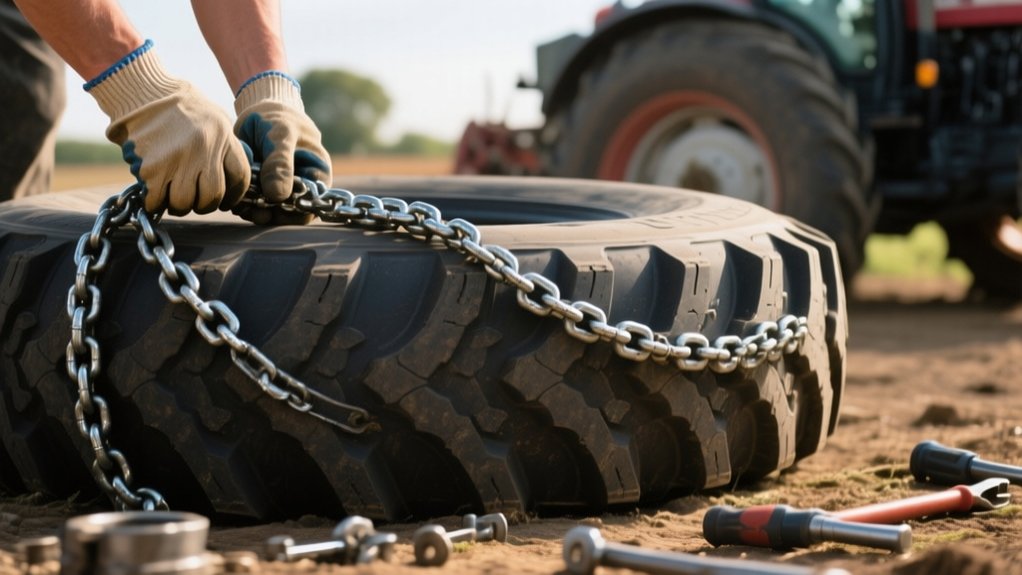
10 Easy Steps to Install Chains on Tractor Tires
First, park your tractor on a flat surface with the engine off and parking brake engaged. Choose chains that match your tire size and inspect them for damage or rust. Lay the chains flat, then drape them evenly over the tires, aligning cross chains on the tread and side chains along the walls. Secure the fasteners tightly, roll forward to check fit, and tighten after the first use. When done, remove and clean them well to prevent rust. Keep going to uncover tips for ideal chain care and safety.
Key Takeaways
- Park tractor on a flat surface, turn off engine, engage parking brake, and remove key for safety before starting chain installation.
- Lay out chains flat, inspect for damage, and select the correct size matching tire diameter and width.
- Drape chains evenly over the top of the tire, ensuring cross chains lie flat on the tread and side chains align with sidewalls.
- Connect inside fasteners first, then outside hooks, and use tensioners to secure chains tightly and evenly around the tire.
- Roll the tractor forward slowly to check chain alignment and tension, then adjust and retighten chains as necessary for safe operation.
Prepare Your Tractor and Workspace for Safe Installation
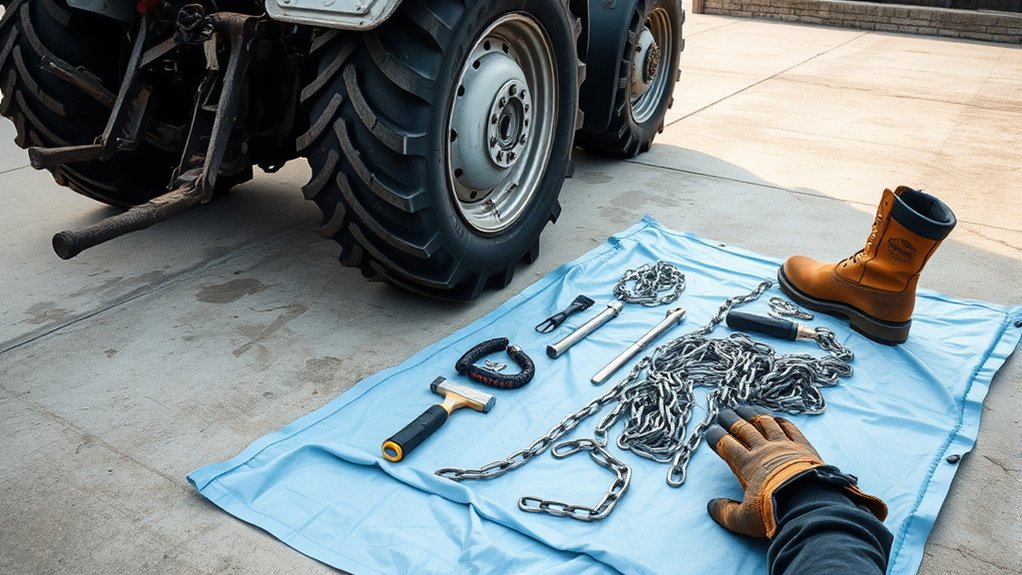
Before you begin installing chains on your tractor tires, make sure you park on a flat, stable surface and turn off the engine. This step is essential—it keeps your tractor from rolling or shifting while you work.
Always park on a flat, stable surface and turn off the engine to prevent your tractor from moving during chain installation.
Next, engage the parking brake and remove the key to prevent accidental starts.
Clear the area around the tires to give yourself plenty of room to move safely.
Lay out your chains flat and untangled nearby so you won’t struggle during installation.
Wear sturdy gloves to protect your hands from sharp edges.
Finally, gather all necessary tools and ensure good lighting; working in daylight or with a bright lamp makes the process smoother and safer.
Taking these precautions sets you up for a hassle-free, secure chain installation.
Choose the Right Chains for Your Tractor Tires
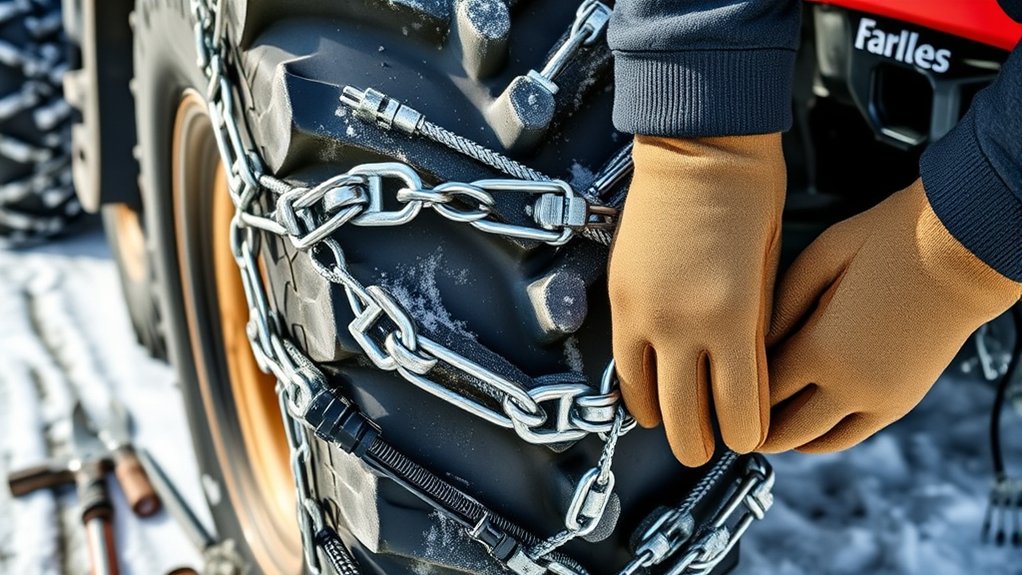
Once your tractor and workspace are ready, focus on selecting the right chains for your tires. Choosing the correct chains guarantees better traction and prevents damage to both tires and vehicle.
Keep these key points in mind:
- Match the chain size exactly to your tire’s diameter and width.
- Consider the terrain you’ll operate on: mud, snow, or rocky surfaces need different chain designs.
- Opt for heavy-duty chains if you frequently work in challenging conditions.
- Check if your tractor manufacturer recommends specific chain types for compatibility.
- Choose chains with easy installation features to save time and effort.
Inspect Chains for Damage Before Installation
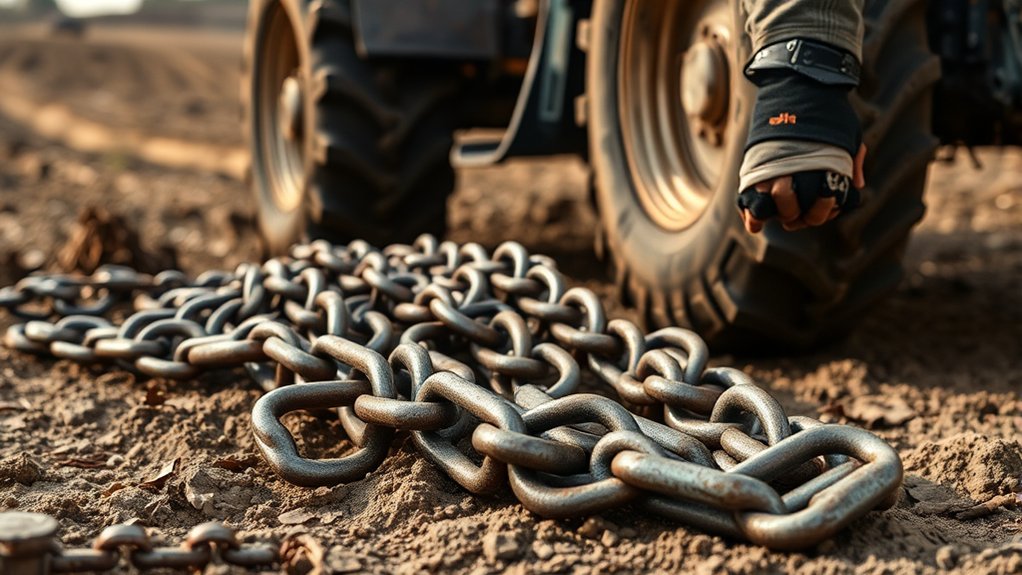
Before you install the chains, take a close look for any rust that could weaken them. Make sure to check each link carefully for breaks or cracks.
Catching damage early helps keep you safe and your tractor running smoothly.
Check for Rust
Although it’s tempting to skip this step, checking your chains for rust is essential to guarantee they function properly and last longer. Rust weakens the metal, making chains less reliable and more prone to failure during use.
Before you install, take a close look at every link and connection.
Here’s what to check for:
- Surface discoloration or reddish-brown spots
- Flaking or peeling metal indicating corrosion
- Stiff or seized links that don’t move freely
- Areas where rust has caused pitting or rough texture
- Rust accumulation around connecting hooks or fasteners
If you find rust, clean it thoroughly or consider replacing affected chains. This prevents damage to your tires and keeps your tractor running safely and smoothly.
Look for Broken Links
Two key things you need to do when inspecting your chains are identifying any broken links and evaluating overall chain integrity. Broken links can compromise safety and performance, so carefully check each link for cracks, bends, or missing pieces. If you spot damaged links, don’t install the chains until you replace or repair them.
Use the table below to guide your inspection:
| Common Issue | What to Look For |
|---|---|
| Broken Links | Cracks, splits, or breaks |
| Bent Links | Deformed or misshapen links |
| Missing Links | Gaps where links should be |
| Loose Connections | Links that move excessively |
Position Chains Correctly Around Your Tractor Tires
When you position the chains around your tractor tires, make certain they lay flat and evenly spaced to avoid slipping or damage.
Start by draping the chains over the top of the tire, letting them hang evenly on both sides. Check that the cross chains sit directly on the tread to provide maximum traction.
Begin by draping chains over the tire top, ensuring even hang and cross chains on the tread for traction.
Confirm the side chains run parallel to the tire sidewalls without twisting. Finally, adjust the chains so every link rests snugly against the tire.
- Drape chains evenly over the tire
- Let chains hang symmetrically on both sides
- Position cross chains flat on the tread
- Align side chains parallel to sidewalls
- Remove twists for a snug fit
This careful positioning keeps your chains secure and ready for the next installation step.
Secure Tractor Tire Chains With Fasteners or Hooks
After positioning the chains evenly and ensuring they sit snugly against your tractor tires, the next step is to secure them firmly using fasteners or hooks.
Start by connecting the inside fasteners first to hold the chain in place. Make sure each hook or clasp is properly engaged to prevent slipping during operation.
Then, move to the outside of the tire and fasten those hooks tightly. If your chains come with tensioning devices, use them now to lock the fasteners securely.
Double-check every connection to confirm nothing is loose or misaligned. Properly secured chains reduce the risk of damage and improve traction.
Taking the time to fasten all hooks correctly ensures your tractor operates safely and efficiently on slippery or rough terrain.
Adjust Tractor Chains for a Snug, Safe Fit
Although securing the chains is essential, you’ll need to adjust them properly to guarantee a snug, safe fit on your tractor tires.
Loose chains can slip off or damage the tire, while overly tight chains risk breaking. Here’s how to get the fit just right:
- Check the chain tension around the tire’s circumference.
- Use tensioners or adjusters to tighten the chains evenly.
- Make certain chains lay flat without twists or gaps.
- Reinspect hooks and fasteners to confirm they’re locked securely.
- Manually wiggle the chains to verify they don’t shift excessively.
Test Chains by Rolling Your Tractor Forward
Once you start rolling your tractor forward slowly, watch how the chains move on the tires. Make sure they stay aligned and don’t shift out of place.
If the tension feels off or the chains slip, stop and adjust before continuing.
Check Chain Alignment
To guarantee your chains are properly aligned, roll your tractor forward slowly and watch how the chains settle on the tires.
Pay close attention to these key points to ensure a perfect fit:
- Chains should sit evenly around the tire without bunching or gaps.
- Links need to lie flat against the tread, not twisted or overlapping.
- The cross chains must be centered over the tire’s tread for balanced traction.
- Check that side chains run parallel to the tire’s sidewalls without sagging.
- Observe for any unusual noise or movement, which could indicate misalignment.
If you spot any of these issues, reposition the chains and test again.
Proper alignment ensures optimal grip and prevents damage to both chains and tires as you work.
Ensure Proper Tension
After making sure your chains sit correctly on the tires, the next step is to guarantee they have the right tension. Too loose, and the chains can slip or come off; too tight, and they might damage the tire. To test this, roll your tractor forward a few feet, then stop and recheck the chains. Adjust the tension as needed to ensure a snug fit.
| Step | Action | Tip |
|---|---|---|
| 1 | Roll tractor forward | Move slowly to avoid damage |
| 2 | Stop and inspect chains | Look for slack or tight spots |
| 3 | Adjust tension | Use tensioning device if needed |
| 4 | Recheck and repeat | Ensure chains stay secure |
This method guarantees safe and effective chain installation.
Tighten Chains After First Use for Best Performance
Although you may have securely installed the chains initially, you’ll need to tighten them after the first use to guarantee they stay firmly in place and perform effectively. Chains naturally loosen as you drive, so a quick adjustment ensures safety and traction.
Here’s how to tighten chains after your first use:
- Park the tractor on a flat surface and turn off the engine.
- Inspect the chains for any slack or gaps.
- Use the tensioning device or tighten the chain links manually.
- Recheck the fit by moving the tractor slightly forward and backward.
- Adjust again if you notice any looseness or uneven tension.
Regularly tightening your chains keeps them secure and extends their lifespan.
Remove Tractor Chains Safely When Done
Keeping your chains tight during use helps maintain traction, but once you’re finished working, you’ll want to remove them safely to prevent damage to both the chains and your tractor tires.
Maintaining tight chains improves traction, but safe removal is key to protecting both chains and tractor tires.
First, park your tractor on a flat, stable surface and turn off the engine. Make sure the chains are cool to the touch before handling them.
Loosen the tensioning mechanism carefully, avoiding sudden jerks that could strain the chains.
Gently lift the chains off the tires, starting from the top and working your way down. Avoid dragging the chains on rough ground to prevent wear.
Once removed, inspect the chains for any damage or debris before setting them aside.
Taking these careful steps ensures your chains and tires stay in good condition for future use.
Maintain and Store Your Tractor Chains Properly
How you maintain and store your tractor chains directly affects their longevity and performance. After use, clean your chains thoroughly to remove mud, salt, or debris that can cause rust.
Dry them completely before storing to prevent corrosion. Store chains in a cool, dry place away from direct sunlight to avoid metal fatigue.
Regularly inspect chains for wear or damage and repair or replace parts as needed. Apply a light coat of lubricant to keep the metal flexible and rust-free.
- Clean chains with water and a brush after each use
- Dry chains fully to prevent rust
- Store chains off the ground in a dry, shaded area
- Inspect chains regularly for broken links or excessive wear
- Lubricate chains lightly before storage to protect metal
Frequently Asked Questions
Can Chains Damage My Tractor Tires if Left on Too Long?
Yes, if you leave chains on your tractor tires too long, they can cause damage like excessive wear, tire cracking, or reduced traction. You should remove them once you’re off slippery or rough terrain to protect your tires.
Are Tractor Tire Chains Legal on Public Roads?
Think of tire chains as sturdy armor—they’re legal on public roads only in certain areas or during snowy conditions. You’ll want to check local laws, so you don’t get caught driving unprotected or illegally armored.
How Do I Choose Chains for Different Tire Sizes?
You’ll match chains to your tire size by checking the tire’s sidewall for size numbers. Always pick chains labeled for those exact dimensions, ensuring a snug fit for safety and traction without damaging your tires.
Can I Use Chains on All Types of Tractor Tires?
You can’t paint with one brush; not all tractor tires suit chains. While most tires handle chains well, some turf or flotation tires might get damaged or lose traction, so always check your tire type before fitting chains.
What Should I Do if Chains Slip During Operation?
If chains slip during operation, stop immediately, tighten them, and check for proper fit. Adjust tension or reposition chains as needed. If slipping continues, inspect for damage or consider using different chains better suited for your tires.
Conclusion
Now that you know how to install chains on your tractor tires in just 10 easy steps, are you ready to tackle tough terrain with confidence? Proper preparation, careful installation, and routine maintenance will keep your chains working effectively and your tractor safe. Don’t forget to remove and store them properly when the job’s done. With these simple steps, you’ll be ready for any challenge winter throws your way!