7 Easy Steps to Put Chains on a Tractor Tire
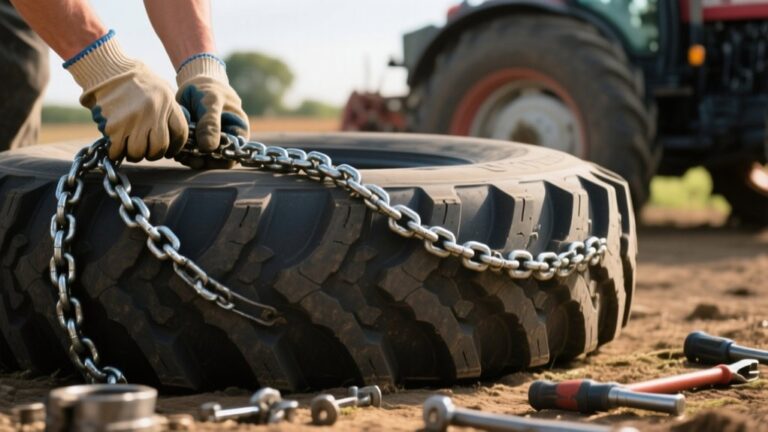
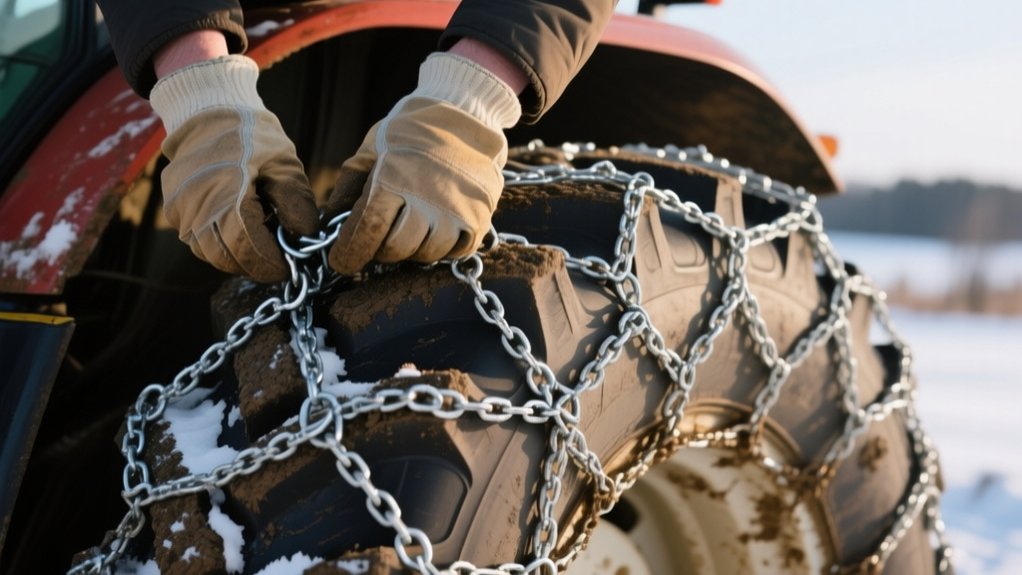
To put chains on a tractor tire, first choose the right chains matching your tire size and terrain. Clean and inspect your tires for damage. Lay out the chains flat and check for any defects. Position the chains evenly around the tire, then secure them tightly with fasteners or hooks. Drive forward slowly to help the chains settle, and check the tension, adjusting as needed for a snug fit. Keep going, and you’ll find helpful tips to maintain safety and performance.
Key Takeaways
- Clean and inspect tires for damage and proper tread before installing chains.
- Lay chains flat, inspect for defects, and position evenly around the tire tread.
- Secure chains with hooks and fasteners, ensuring a snug but not tight fit.
- Drive slowly to settle chains, then check and adjust tension for proper fit.
- Regularly monitor chains during use, adjusting tension and inspecting for wear.
Choose the Right Chains for Your Tractor Tires
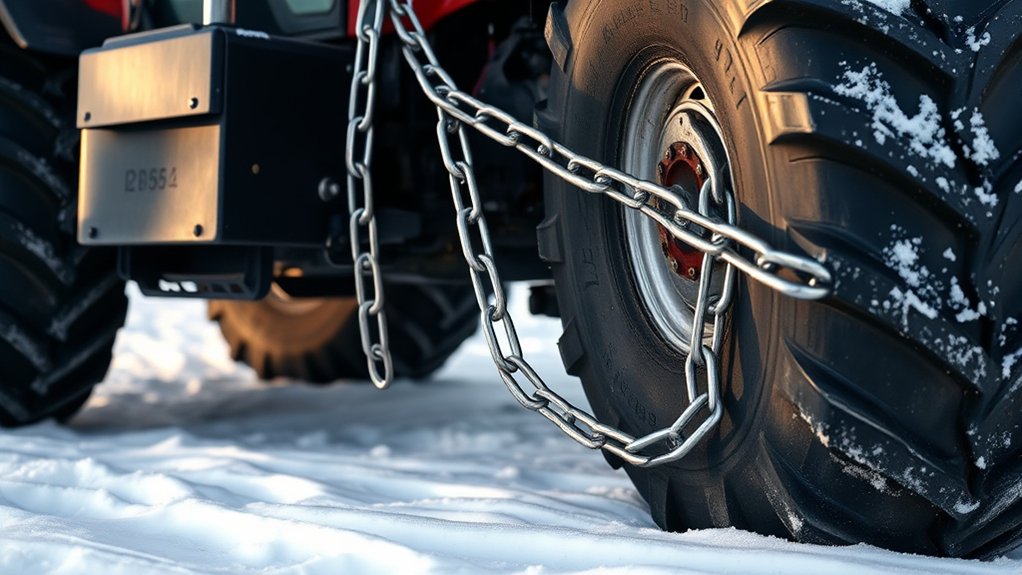
How do you know which chains fit your tractor tires best? Start by checking your tire’s size, usually found on the sidewall; it includes numbers for width, aspect ratio, and diameter. You’ll want chains that match these dimensions exactly to guarantee a secure fit.
Next, consider the chain type—ladder, diamond, or cable—based on the terrain and traction you need. Ladder chains offer solid grip on ice, while diamond chains provide smoother rides and better traction on uneven surfaces.
Don’t forget to look at the material quality; thicker, hardened steel chains last longer and resist wear better.
Finally, confirm compatibility with your tractor model and tire type. Choosing the right chains upfront makes installation easier and improves your tractor’s performance in tough conditions.
Clean and Inspect Tractor Tires Before Installation
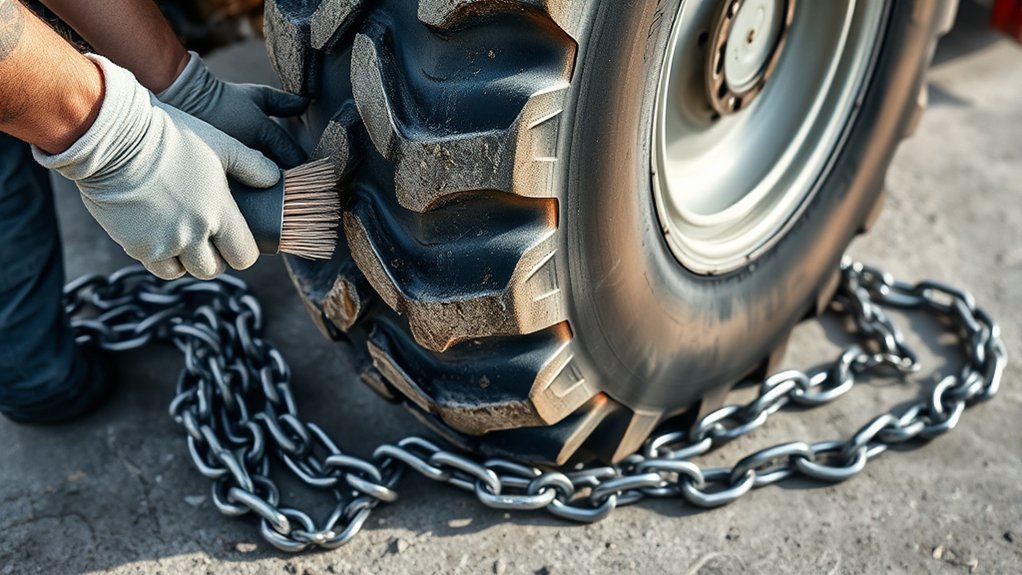
Before you install the chains, take a few minutes to thoroughly clean and inspect your tractor tires. Start by removing any dirt, mud, or debris stuck on the tire tread and sidewalls. Use a stiff brush or water hose to guarantee the surface is clear. Clean tires help the chains fit properly and prevent damage.
Next, carefully examine the tires for any signs of wear, cracks, cuts, or punctures. Check the tread depth to make sure it’s sufficient for safe operation with chains. If you spot any damage, address it before proceeding, as installing chains on compromised tires can cause accidents or further damage.
Taking these steps assures your chains will fit securely and your tractor operates safely.
Lay Out Tractor Tire Chains and Inspect for Damage
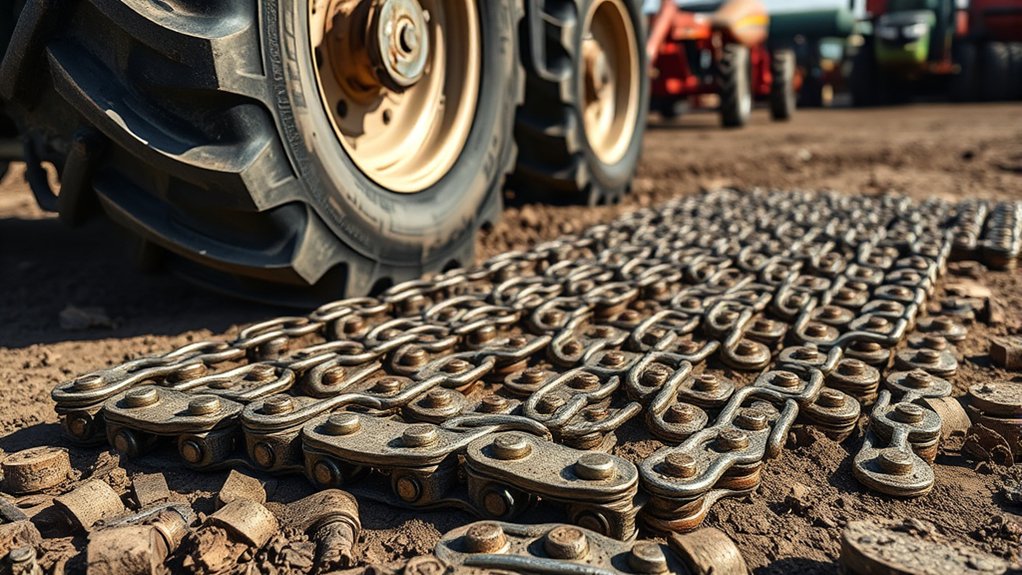
Once your tires are clean and free from damage, spread out your tractor tire chains on a flat surface near the tractor. Lay them flat to avoid tangling and to make it easier to spot any issues.
Carefully inspect each chain link for cracks, rust, or worn spots that could break under pressure. Check the hooks and connectors to make sure they’re secure and not bent out of shape.
Don’t forget to look over the cross-links and any tensioning parts for signs of wear. Catching damage now prevents problems during use.
If you find any defects, replace or repair the chains before proceeding. Taking a few minutes to thoroughly inspect your chains helps keep you safe and ensures they’ll perform well when you need them most.
Position the Chains Correctly Around the Tires
Now that you’ve laid out the chains, it’s time to position them correctly around the tires. Make sure the chains align with the tread and sit centered on the tire.
Check that the chains are evenly distributed to avoid any imbalance while driving.
Align Chains With Tread
How do you guarantee your chains grip properly and last longer? Start by aligning the chains precisely with the tire tread. This ensures even contact and prevents slipping or damage. Lay the chains flat and position the cross-links evenly across the tread grooves. Avoid bunching or twisting to maintain reliable traction.
Here’s a quick guide to align chains effectively:
| Step | Action | Tip |
|---|---|---|
| 1 | Spread chains flat | Prevent tangling |
| 2 | Position cross-links | Match tread grooves |
| 3 | Check chain orientation | Ensure hooks face outward |
| 4 | Avoid overlaps | Keep chains smooth |
| 5 | Test fit visually | Adjust before securing chains |
Following these tips helps your chains grip firmly and last through tough conditions.
Center Chains On Tire
Three key points help you center the chains correctly around your tractor tires: assure even coverage, avoid shifting, and maintain proper tension. Positioning the chains properly ensures they stay secure and perform effectively in tough conditions.
To center the chains on your tire:
- Drape the chains evenly over the tire, making sure the cross-links sit flat against the tread without bunching.
- Align the side chains so they run straight along the tire’s sidewalls, preventing the chains from slipping sideways.
- Tighten the chains just enough to hold them firmly in place without over-tightening, which can cause damage or wear.
Following these steps will keep your chains stable and ready for the job ahead.
Ensure Even Chain Distribution
After centering the chains on your tire, the next step is to guarantee they’re evenly distributed all around. Uneven chains can cause imbalance and reduce traction, making your work harder and less safe. Walk around the tire, adjusting the chains so they rest flat and tight without overlapping. Make sure the side links line up smoothly, and the tension is consistent. Use the table below to check your feelings as you secure the chains—staying calm and confident helps you work efficiently.
| Step | Feeling | Action Needed |
|---|---|---|
| Center chains | Focused | Adjust position |
| Distribute | Calm | Smooth out links |
| Tighten | Confident | Check tension |
| Test fit | Ready | Walk tire |
| Final check | Assured | Secure chains |
Secure Chains With Fasteners or Hooks
Once the chains are properly positioned around the tire, you’ll need to secure them using the fasteners or hooks provided. This step ensures the chains stay in place during operation and prevent slipping.
- Connect the fasteners: Attach the chain ends by linking the fasteners or hooks through the chain links, making sure they’re tight but not overly stretched.
- Check tension: Pull the chains snugly around the tire, ensuring even tension so they won’t loosen or shift.
- Lock the fasteners: Secure the hooks or fasteners firmly to prevent accidental release, double-checking that all connections are secure.
Drive Forward Slowly to Set the Chains
Before you start driving, make sure the chains are properly secured and the fasteners locked.
Now, slowly drive the tractor forward just a few feet. This movement helps the chains settle evenly around the tire’s surface, ensuring they grip firmly. Don’t rush this step; moving too fast can cause the chains to shift or come loose.
After driving forward, stop and inspect the chains to confirm they’ve seated correctly on the tire tread and sidewalls. If everything looks stable, you can proceed with your work.
Check and Adjust Chains for Safety and Traction
Now that the chains are set, you need to check their tension to guarantee they’re snug but not too tight.
Make certain the chains provide good traction without slipping or causing damage.
Adjust them as needed to keep your tractor safe and efficient on the move.
Inspect Chain Tension
Although you’ve secured the chains on your tractor tire, you’ll want to inspect the tension carefully to guarantee they’re snug but not too tight. Proper tension ensures safety and maximum traction without risking damage to the chains or tire.
Here’s how you can check and adjust the tension:
- Visual Check: Look for gaps between the chain and tire. The chains should fit closely without sagging.
- Hand Test: Pull on the chain links; they should resist movement but still allow slight flexibility.
- Adjust if Needed: Use the tensioning device or chain tightener to remove slack. Recheck tension after adjustment.
Verify Traction Performance
How well do your chains perform once they’re on? To verify traction, take your tractor for a slow test drive on the surface you’ll be working on. Pay close attention to any slipping or unusual vibrations.
If you notice slipping, stop immediately and recheck the chain tension—too loose or too tight can reduce grip and safety. Also, listen for any rattling sounds that might mean the chains aren’t seated properly.
Adjust the chains as needed, ensuring they’re snug but not overstretched. Confirm that the chains cover the tire evenly for maximum traction.
Finally, inspect the chains periodically during use, especially after rough terrain, to maintain ideal performance and prevent damage. Taking these steps keeps you safe and your tractor working efficiently.
Frequently Asked Questions
How Do I Store Tractor Tire Chains When Not in Use?
You should clean the chains thoroughly, dry them completely, then coil them neatly. Store them in a dry, cool place, preferably in a sealed container or bag to prevent rust and damage until you need them again.
Can Chains Damage My Tractor Tires?
Chains won’t damage your tractor tires if you install and use them properly, but careless use can cause wear or punctures. So, you’ll want to check fit, avoid sharp turns, and keep them tight for best protection.
Are Tire Chains Legal for Use on Public Roads?
Yes, you can use tire chains on public roads, but you’ll need to check local laws since regulations vary. Some places restrict chains to certain conditions or require you to remove them when pavement is clear.
How Often Should I Replace My Tractor Tire Chains?
You should replace your tractor tire chains as soon as they look like they’ve survived a demolition derby—usually every 2-3 seasons. Don’t wait for breakage; worn chains can ruin your tractor’s grip and your day.
What Safety Gear Should I Wear When Installing Chains?
You should wear sturdy gloves to protect your hands, safety glasses to shield your eyes, and steel-toed boots to guard your feet. Wearing long sleeves and pants can also prevent scrapes and bruises while installing chains.
Conclusion
Now that you’ve wrapped those chains snugly around your tractor tires, you’re ready to dance through mud and snow like a pro. With every twist and turn, your tractor grips the ground tight, like a heartbeat steady in the cold. Remember, checking and adjusting your chains is the final touch — the rhythm that keeps your ride smooth and safe. So gear up, roll out, and let those chains sing on the road ahead!