How Does a Tractor Voltage Regulator Work Step by Step
You rely on your tractor’s voltage regulator to keep electrical output steady by constantly monitoring battery voltage and alternator output. It senses voltage changes and adjusts current flowing to the alternator’s field coil, boosting it when voltage is low and reducing it when voltage gets too high. This protects your battery and electrical parts from damage due to spikes or drops. If you want to understand how it maintains system stability and prevents issues, there’s more you’ll find out next.
Key Takeaways
- The regulator continuously senses battery voltage and alternator output to detect voltage fluctuations.
- It compares the sensed voltage to a preset reference voltage for accuracy.
- The regulator adjusts current flow to the alternator’s field coil to increase or decrease voltage output.
- It reduces field coil current to prevent overcharging and disconnects the generator during high voltage spikes.
- The system maintains stable voltage despite engine speed and load changes by rapidly modulating the magnetic field strength.
What Is a Tractor Voltage Regulator and Why It Matters
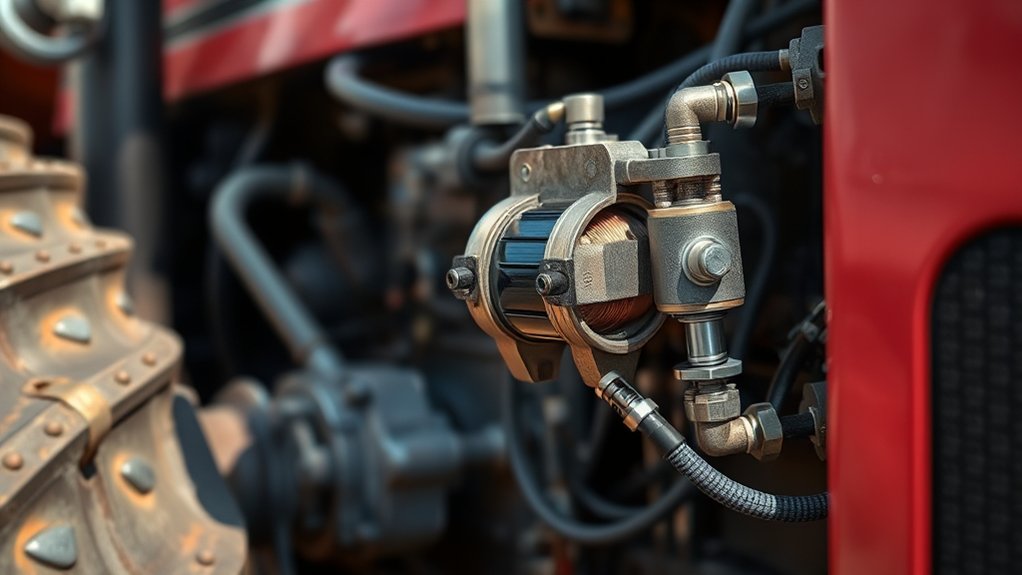
A tractor voltage regulator controls the electrical output from your tractor’s alternator to keep the voltage steady. Without it, your tractor’s electrical system could experience spikes or drops that damage batteries, lights, or other components.
You rely on it to protect sensitive parts by maintaining a consistent voltage level, ensuring everything runs smoothly. If the voltage gets too high, it can fry electrical parts; too low, and your battery won’t charge properly.
This regulator acts like a gatekeeper, balancing power flow to prevent overloads or short circuits. By stabilizing voltage, it extends your tractor’s electrical system lifespan and keeps your machinery reliable during work.
Understanding this part helps you appreciate its role in your tractor’s performance.
How the Tractor Alternator Generates Electricity
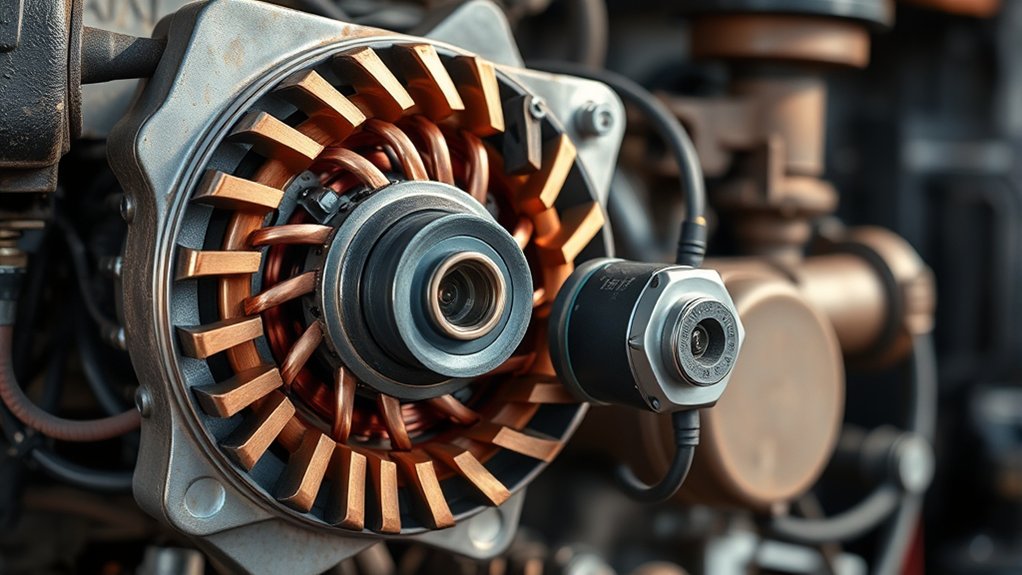
To understand how your tractor’s alternator generates electricity, you first need to know its main components. The rotor, stator, and diodes work together to convert mechanical energy into electrical power.
Let’s explore how this process happens step by step.
Alternator Components Overview
How exactly does the tractor alternator convert mechanical energy into electrical power? It all starts with its key components working together. You’ll find the rotor, a spinning electromagnet, inside the alternator. When the engine runs, it turns the rotor via a belt.
Surrounding the rotor is the stator, made up of stationary wire coils. As the rotor spins, it creates a magnetic field that induces an electric current in the stator coils.
Other essential parts include the rectifier, which converts the alternating current (AC) produced into direct current (DC) the tractor uses, and the voltage regulator, which controls output voltage to keep it steady.
Understanding these parts helps you see how mechanical motion becomes usable electrical energy.
Electricity Generation Process
Three main steps drive the tractor alternator’s electricity generation process. First, the engine spins the alternator’s rotor, creating a rotating magnetic field. As you start the tractor, the engine’s motion turns the rotor inside the stator.
Second, this rotating magnetic field induces an alternating current (AC) in the stator windings through electromagnetic induction. The stator remains stationary while the rotor spins, generating electricity.
Third, the AC produced isn’t suitable for your tractor’s electrical system, so the alternator’s diodes convert it into direct current (DC). This DC powers your tractor’s battery and electrical components.
Understanding this process helps you appreciate how the voltage regulator maintains consistent voltage, ensuring your tractor runs smoothly without electrical hiccups.
Different Types of Tractor Voltage Regulators and Their Uses
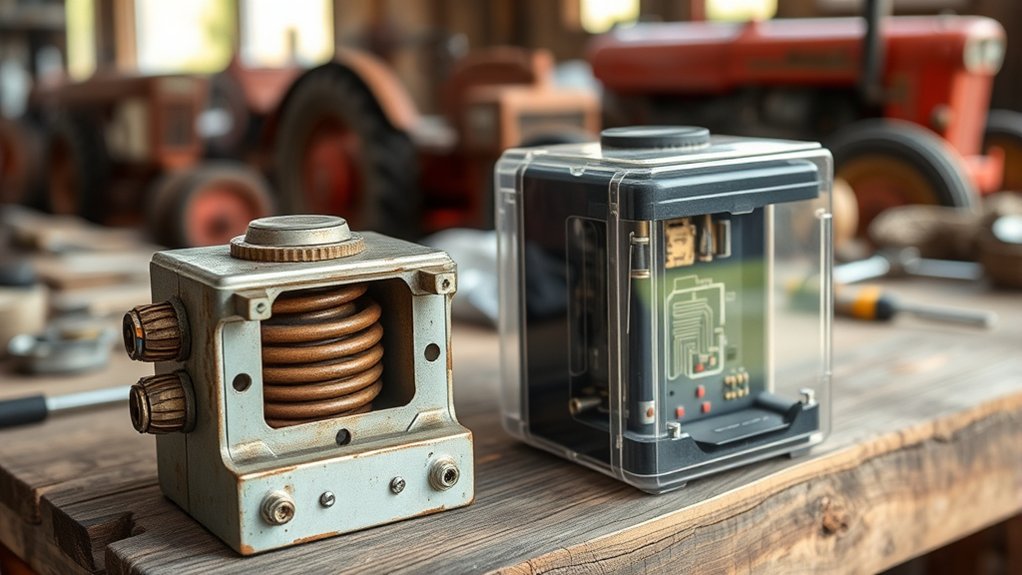
You’ll find three main types of tractor voltage regulators: mechanical, electronic, and digital.
Each one controls voltage differently to protect your tractor’s electrical system.
Let’s look at how they work and where you’d use each type.
Mechanical Voltage Regulators
Although electronic regulators have become more common, mechanical voltage regulators still play a crucial role in many tractors due to their simplicity and reliability.
When you work with mechanical regulators, you’ll encounter designs like the vibrating armature type, which uses an electromagnet to open and close contacts, controlling the generator’s output.
Another common type is the relay-based regulator, which uses a bimetallic strip or coil to respond to voltage changes.
You’ll find these regulators straightforward to maintain since they rely on physical components rather than complex electronics.
Mechanical regulators effectively protect your tractor’s electrical system from overcharging by continuously adjusting voltage output.
Their durability means you can count on them in rugged conditions without worrying about sensitive parts failing easily.
Electronic Voltage Regulators
While mechanical voltage regulators have served tractors well, electronic voltage regulators offer greater precision and efficiency in managing your tractor’s electrical system. You’ll find several types, including shunt, series, and hybrid electronic regulators.
Shunt regulators work by diverting excess current away from the battery, keeping voltage stable. Series regulators, on the other hand, control voltage by adjusting the current flow directly to the battery. Hybrid types combine features of both for improved performance in various operating conditions.
Electronic regulators respond faster to voltage changes, reducing wear on your electrical components and improving battery life. Choosing the right type depends on your tractor’s electrical demands and operating environment, but each type enhances reliability compared to mechanical versions.
Digital Voltage Regulators
Electronic voltage regulators have improved how tractors manage electrical systems, but digital voltage regulators take this a step further by offering even greater accuracy and adaptability. When you use a digital voltage regulator, you benefit from microprocessor-controlled systems that constantly monitor voltage levels and adjust output precisely.
There are several types, like pulse-width modulation (PWM) regulators, which efficiently control voltage by switching current on and off rapidly. Another type, the microcontroller-based regulator, lets you program specific voltage responses depending on engine load or battery condition.
These regulators protect your tractor’s electrical components better and improve battery life. If you want reliable, consistent voltage control in various operating conditions, digital voltage regulators are the smart choice for modern tractors. They keep your system stable and responsive without manual adjustments.
The Role of the Voltage Regulator in Your Tractor’s Electrical System
Because your tractor relies on a steady flow of electricity, the voltage regulator plays an essential role in maintaining that balance. It guarantees that your tractor’s electrical components receive a consistent voltage, protecting them from damage caused by voltage spikes or drops.
Without it, sensitive parts like lights, gauges, and the ignition system could malfunction or fail prematurely.
The voltage regulator acts as a guardian, keeping your battery properly charged while preventing overcharging. This balance helps extend your battery’s life and keeps your tractor running smoothly.
How a Tractor Voltage Regulator Controls Voltage Output
When your tractor’s engine runs, the voltage regulator constantly monitors the electrical output to keep it within safe limits. It does this by controlling the current flowing to the alternator’s field coil, which directly affects the alternator’s voltage production.
If the voltage rises above the set threshold, the regulator reduces the current to the field coil, causing the alternator to generate less voltage. Conversely, if the voltage drops below that threshold, the regulator increases current flow to boost voltage output.
This rapid adjustment ensures your tractor’s electrical system receives steady voltage, protecting batteries and electrical components from damage. By precisely managing the alternator’s field current, the voltage regulator maintains a consistent electrical supply regardless of engine speed or load changes.
How the Regulator Senses Battery Voltage and Electrical Load
Although the voltage regulator constantly adjusts output, it first needs to accurately sense your tractor’s battery voltage and electrical load. This sensing guarantees the regulator knows when to increase or decrease voltage to keep your battery healthy and electrical systems stable.
Here’s how it works:
- Battery Voltage Feedback: The regulator monitors the battery’s voltage through a connection, detecting whether it’s too low or too high.
- Load Detection: It measures the electrical load by sensing current flow changes, understanding how much power your tractor’s accessories demand.
- Voltage Reference Comparison: The regulator compares the sensed voltage to a preset reference voltage, deciding if adjustments are necessary.
How the Regulator Adjusts Current Flow to the Alternator Field
To control the alternator’s output, the regulator actively adjusts the current flowing to the alternator field coil.
When the battery voltage drops below a set level, the regulator increases current to the field coil, boosting the alternator’s magnetic field strength and raising voltage output.
Conversely, if the voltage rises too high, the regulator reduces current to the field coil, weakening the magnetic field and lowering output.
This adjustment happens rapidly and continuously, maintaining a steady voltage that meets your tractor’s electrical demands.
Preventing Overcharging and Protecting Your Tractor Battery
You need to understand how your tractor’s voltage regulator stops overcharging to keep the battery safe. It uses specific mechanisms to control voltage levels and prevent damage.
Let’s explore how these features protect your battery for longer life.
Overcharge Prevention Mechanisms
Because your tractor’s battery can suffer damage from too much charge, the voltage regulator plays a crucial role in preventing overcharging. It monitors the electrical output and activates mechanisms to keep voltage levels safe. Here’s how it works:
- Voltage Sensing: The regulator constantly measures the generator’s voltage to detect any rise above the safe limit.
- Field Current Control: When voltage exceeds the threshold, the regulator reduces current to the generator’s field coil, lowering the output.
- Cut-Out Function: It temporarily disconnects the generator from the battery if voltage spikes dangerously high, preventing damage.
Battery Protection Features
How exactly does your tractor’s voltage regulator protect the battery from damage? It actively monitors the electrical system’s voltage and adjusts the output from the alternator or generator.
When voltage rises above a safe threshold, the regulator reduces or cuts off the current flow, preventing overcharging. This stops excessive heat buildup and battery fluid loss, which can shorten battery life or cause failure.
Additionally, the regulator ensures consistent voltage during engine operation, protecting sensitive electrical components. By maintaining stable voltage, it prevents damage caused by voltage spikes or drops.
In short, your voltage regulator acts as a guardian, balancing charge delivery to keep your tractor’s battery healthy and reliable, saving you from costly replacements and downtime.
Maintaining Steady Voltage at Varying Engine Speeds
Although engine speeds constantly change during tractor operation, the voltage regulator works to keep the electrical output steady. It does this by continuously adjusting to fluctuations in engine RPM to prevent voltage spikes or drops that could harm electrical components.
Here’s how it maintains steady voltage:
- Senses Voltage Changes: The regulator monitors the output voltage from the alternator or generator in real time.
- Modulates Current Flow: It adjusts the current flowing to the field coil to control the magnetic field strength.
- Balances Voltage Output: By strengthening or weakening the magnetic field, it stabilizes the voltage regardless of engine speed.
This dynamic process ensures your tractor’s electrical system runs reliably, protecting batteries and electronics throughout varying operating conditions.
How to Identify Problems With Your Tractor Voltage Regulator
Maintaining steady voltage is key to your tractor’s electrical health, but when the voltage regulator starts to fail, you’ll notice signs that shouldn’t be ignored. Watch for dimming or flickering lights, as inconsistent voltage often causes these issues.
If your battery keeps dying despite being charged, the regulator mightn’t be controlling the voltage properly. You may also experience electrical components acting erratically or gauges showing unusual readings.
Another clue is a burning smell or visible damage near the regulator. Sudden engine stalls or difficulty starting can also point to voltage irregularities.
Basic Tools and Safety Tips for Voltage Regulator Maintenance
Before you start working on your tractor’s voltage regulator, gathering the right tools and following essential safety precautions can save you time and prevent accidents. Having everything ready guarantees a smooth maintenance process.
Preparing tools and safety measures before servicing your tractor’s voltage regulator ensures efficiency and prevents accidents.
Here are three basics you’ll need:
- Multimeter: To check voltage and continuity safely.
- Screwdrivers and Wrenches: For removing and securing regulator components.
- Insulated Gloves: To protect yourself from electrical shocks.
Always disconnect the tractor’s battery before starting any work to avoid short circuits.
Work in a well-lit, dry area to reduce hazards.
Keep a fire extinguisher nearby just in case.
Testing Your Tractor Voltage Regulator
Once you have your tools ready and safety measures in place, you can begin testing your tractor’s voltage regulator to verify it’s functioning properly.
Start by disconnecting the regulator from the tractor’s electrical system. Use a multimeter to check the resistance between the regulator’s terminals; compare your readings to the manufacturer’s specifications.
Next, reconnect the regulator and start the tractor. Measure the output voltage at the battery terminals with the engine running at various speeds.
The voltage should remain within the recommended range, typically between 13.5 and 14.5 volts.
If the voltage fluctuates wildly or stays too low or high, the regulator may be faulty.
Testing this way confirms your voltage regulator maintains proper electrical output, protecting your tractor’s battery and electrical components.
When to Replace Your Tractor Voltage Regulator
If your tractor’s voltage regulator consistently delivers unstable voltage or fails the tests, it’s time to think about a replacement. Ignoring these signs can lead to battery damage or electrical system failure.
Here’s when you should replace it:
Key signs it’s time to replace your tractor’s voltage regulator for reliable performance and battery health.
- Frequent Voltage Fluctuations: If your voltage readings swing wildly despite steady engine speed, the regulator isn’t controlling output properly.
- Battery Overcharging or Undercharging: An overcharged battery may bulge or leak, while undercharging leaves you stranded with a dead battery.
- Physical Damage or Corrosion: Any visible damage, burnt components, or corrosion on the regulator means it’s compromised and should be swapped out.
Replacing your voltage regulator on time ensures your tractor’s electrical system remains reliable and extends your battery’s lifespan.
Frequently Asked Questions
Can a Faulty Voltage Regulator Affect Tractor Engine Performance?
Yes, a faulty voltage regulator can affect your tractor’s engine performance by causing inconsistent electrical output, leading to battery drain or overcharging, which may result in poor engine operation, starting issues, or even damage to electrical components.
How Does Temperature Impact the Voltage Regulator’s Efficiency?
Temperature affects your voltage regulator’s efficiency by causing it to either overheat or become too cold, which can lead to inaccurate voltage control, reduced lifespan, and potential power fluctuations that impact your tractor’s performance.
Are Aftermarket Voltage Regulators Compatible With All Tractor Models?
Just like trying to fit a square peg in a round hole, aftermarket voltage regulators aren’t always compatible with every tractor model. You’ll need to check specifications carefully to guarantee a perfect match before installation.
What Are Common Signs of Alternator Failure Unrelated to the Regulator?
You’ll notice dimming lights, a dead battery, strange noises, or a burning smell when the alternator fails. Your tractor might also stall or have trouble starting, even if the voltage regulator is working fine.
Can a Voltage Regulator Be Repaired, or Is Replacement Always Necessary?
Think of your voltage regulator like a phone charger; if it’s just frayed wiring, you can fix it. But often, you’ll need to replace it entirely to guarantee your tractor charges properly and avoids damaging the battery.
Conclusion
Understanding how your tractor’s voltage regulator works helps you keep its electrical system running smoothly. You might think it’s just a simple component, but it plays an essential role in controlling voltage output and protecting your battery. By regularly testing and maintaining it, you guarantee your tractor stays reliable in the field. Don’t wait for problems to arise—staying proactive with your voltage regulator keeps your tractor powered and ready for work.