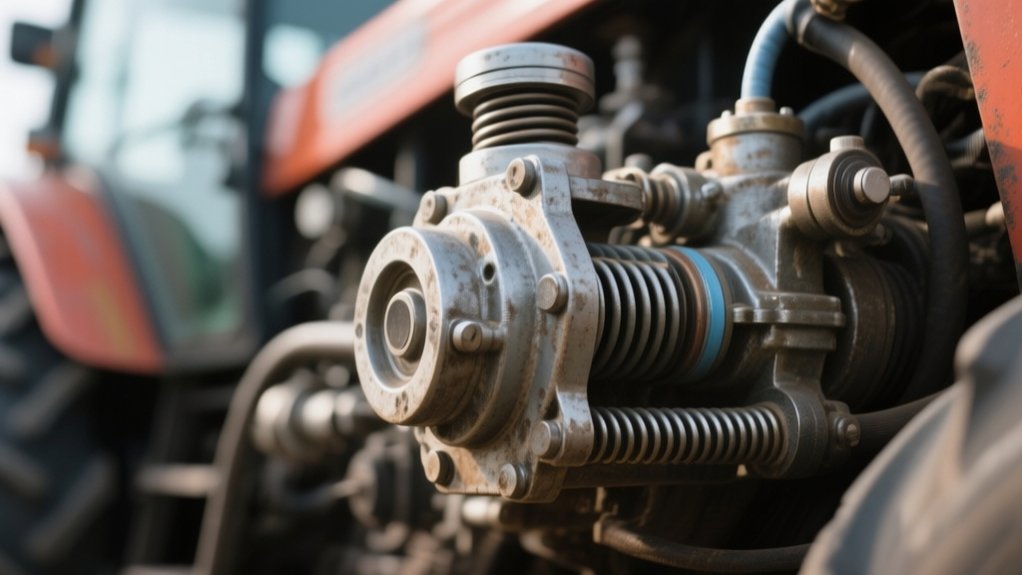
How Does a Tractor Protection Valve Work Step by Step
Your tractor protection valve monitors trailer air pressure through a control port and senses pressure drops caused by leaks or disconnects. When it detects a sudden loss, it automatically closes to isolate trailer air lines, preventing air loss from your tractor’s tanks. This keeps your tractor brakes fully pressurized and responsive for safe stopping. The valve resets when trailer pressure normalizes, maintaining balanced brake pressure. Keep following to uncover more details on this essential safety device.
Key Takeaways
- The valve receives air from the tractor’s supply line and directs it to the trailer brake system for normal operation.
- It continuously monitors trailer air pressure via a diaphragm or piston sensing pressure changes.
- When a pressure drop occurs, the valve automatically closes to isolate trailer air lines and prevent air loss.
- It maintains tractor air pressure independently to ensure safe braking even if the trailer system fails.
- Once trailer pressure normalizes, the valve resets, reopening airflow to restore trailer brake function.
What Is a Tractor Protection Valve and Why It Matters for Safety
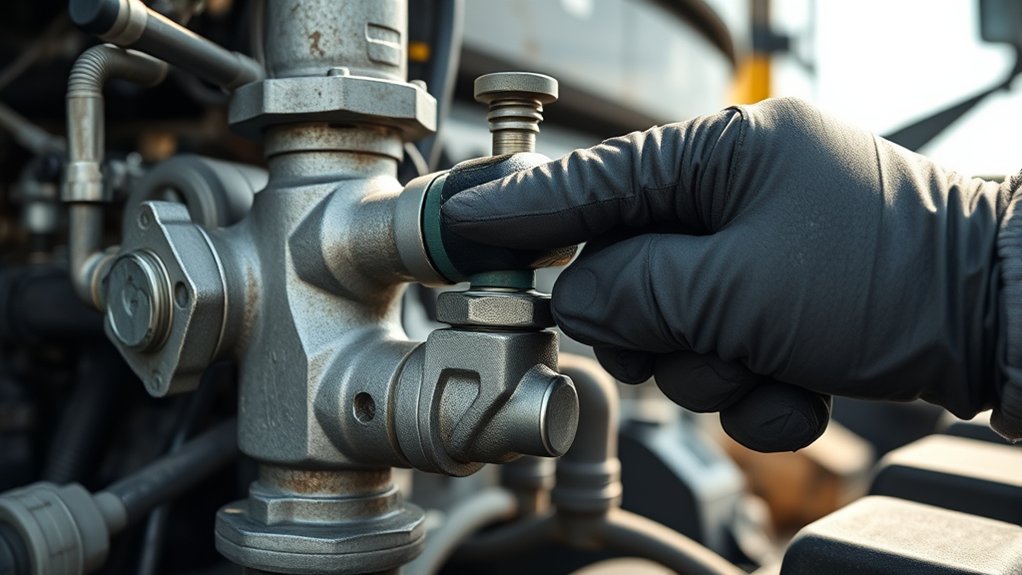
What exactly is a tractor protection valve, and why should you care about it? This valve plays an essential role in keeping your truck’s air brake system safe and functional.
It automatically protects your tractor’s air tanks from losing pressure if there’s a leak or disconnection in the trailer’s air lines. Without it, a sudden air loss could cause your brakes to fail, putting you and others at serious risk.
Automatically safeguards tractor air tanks from leaks or disconnections, preventing brake failure and ensuring safety.
You rely on this valve to isolate the tractor’s air supply, maintaining brake pressure so you can stop safely. In short, it’s a safety device designed to prevent accidents caused by air system failures.
Knowing how it works helps you appreciate its importance every time you hit the road.
Where the Tractor Protection Valve Fits in Your Air Brake System
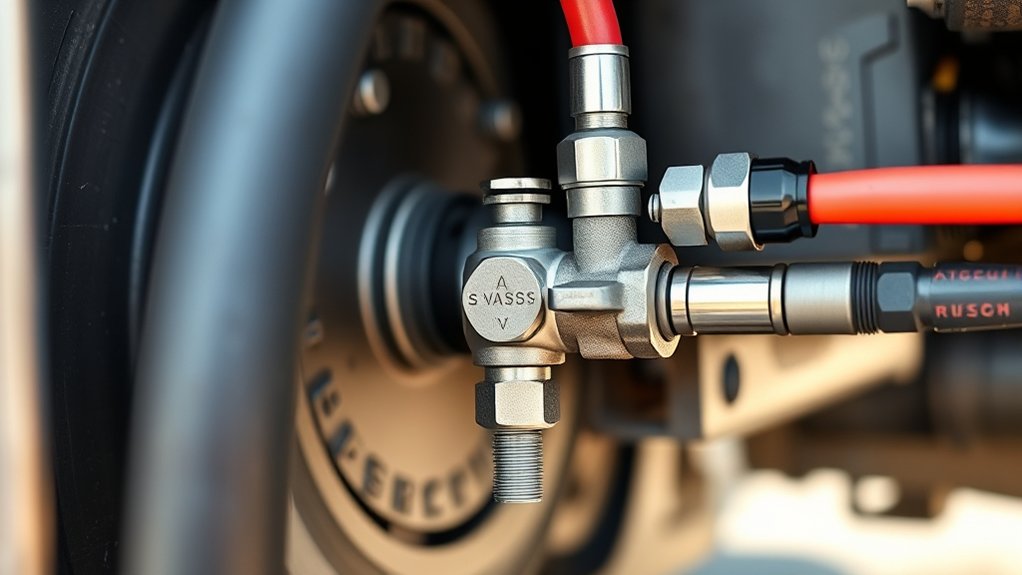
Since the tractor protection valve plays a critical role in your truck’s safety, understanding where it fits in your air brake system is essential. You’ll find this valve positioned between your tractor’s air supply and the trailer’s brake lines.
Its main job is to monitor air pressure and control airflow to the trailer’s brakes. When air pressure drops below a safe level, the valve closes automatically to prevent air loss from the tractor’s system.
This setup ensures your tractor retains enough air to stop safely, even if the trailer develops a leak. By fitting directly in the air line connecting the tractor and trailer, the valve acts as a safeguard, protecting both your vehicle and cargo during operation.
Key Components of a Tractor Protection Valve and Their Functions
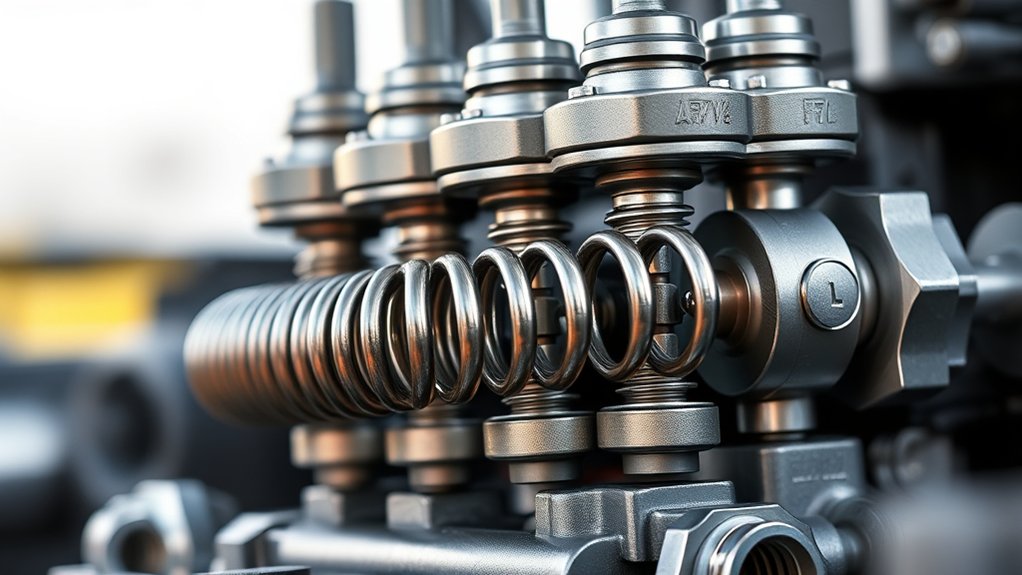
Although the tractor protection valve may look simple, it contains several key components that work together to maintain air pressure and guarantee safety. First, the valve body houses all internal parts and connects to the tractor’s air system.
Inside, the spool or piston moves to open or close air passages based on pressure changes. The spring applies force on the spool, helping it return to its default position when pressure drops. Seals prevent air leaks, ensuring the system stays airtight.
The pressure sensing chamber detects air pressure levels and signals the spool to react accordingly. Lastly, the control port interfaces with the brake system, allowing the valve to isolate or connect air supply.
Each part plays an essential role in protecting your tractor’s brake system.
How Air Flows Through the Tractor Protection Valve
When air pressure builds in the tractor’s system, it flows through the protection valve to guarantee safe brake operation. You’ll notice that air enters the valve’s inlet port first, where it passes through an internal chamber.
From here, the valve directs air toward the tractor’s brake system, maintaining pressure for consistent braking.
If you disconnect the trailer or experience a loss in air pressure, the valve automatically closes the passage to protect the tractor’s air supply. This closure prevents air from escaping, ensuring the tractor keeps enough pressure to operate its brakes safely.
How the Valve Detects Changes in Air Pressure
The tractor protection valve not only controls airflow but also monitors pressure changes to keep your braking system secure. It uses a diaphragm or piston sensitive to air pressure variations within the system.
When you apply the brakes, the pressure changes cause this component to move, triggering the valve to activate appropriately.
If a sudden drop in pressure happens—like from a leak or disconnection—the valve senses this immediately. This rapid detection lets the valve respond by isolating the faulty section, preventing air loss from affecting the tractor’s braking performance.
How the Valve Seals to Prevent Air Loss
Because maintaining air pressure is essential for safe braking, the tractor protection valve seals tightly to prevent any loss. When you look inside the valve, you’ll find a rubber diaphragm or a piston that acts as the seal. This component presses firmly against a seat whenever the system is at normal pressure.
The tight fit blocks air from escaping through the valve outlet. You’ll notice a spring that keeps the diaphragm or piston in place, ensuring constant contact with the seat. When pressure drops, this seal shifts to close off the flow, maintaining air in the tractor’s brake system.
How the Valve Responds to a Trailer Air Leak
When your trailer air pressure drops suddenly, the tractor protection valve detects the change instantly.
It then activates to close off the air supply, stopping further loss.
This quick response keeps your system secure and prevents air from escaping.
Detecting Air Pressure Drop
How does a tractor protection valve detect a drop in air pressure? It constantly monitors the air pressure in the trailer’s brake system via a control port. When you experience a trailer air leak, the pressure sensed at this port decreases.
The valve uses this pressure change to trigger a response. Here’s how it works in detail:
- The control port senses the trailer air pressure in real-time.
- A diaphragm inside the valve reacts to pressure fluctuations.
- If pressure drops below a set threshold, the diaphragm moves.
- This movement signals the valve to prepare for closing, preventing air loss from the tractor system.
Activating Valve Closure
As the diaphragm senses a drop in trailer air pressure, the valve immediately begins to close, cutting off air supply to the trailer lines.
You’ll notice the valve uses a spring mechanism that pushes against the diaphragm, responding quickly to pressure changes.
When the trailer leaks air, the reduced pressure causes the diaphragm to move, triggering the valve to shift into the closed position.
This action prevents more air from escaping, protecting your tractor’s air system.
You don’t have to intervene manually; the valve reacts automatically, ensuring safety by isolating the trailer air lines.
This rapid closure helps maintain control and prevents air loss from affecting your tractor’s braking system, keeping you safe on the road.
Preventing Air Loss
Since trailer air leaks can quickly drain your system, the tractor protection valve immediately cuts off air supply to prevent further loss. When it detects a significant drop in trailer pressure, the valve activates, isolating the trailer’s air lines from the tractor.
This action keeps your tractor’s air tanks fully charged, ensuring you maintain control over your brakes. You’ll notice the valve:
- Seals off air flow to the trailer to stop the leak from emptying your supply
- Maintains tractor brake pressure for safe stopping
- Sends a signal to warn you about the trailer air loss
- Resets automatically once the trailer pressure returns to normal
What Happens When the Tractor Protection Valve Activates
When the tractor protection valve activates, it immediately isolates the trailer’s air supply to prevent a loss of pressure that could compromise safety. You’ll notice that the valve senses a drop in air pressure or a disconnection in the trailer’s brake system.
Once triggered, it closes off the line supplying air to the trailer, stopping any further air from escaping. This action helps maintain enough pressure in the tractor’s system, ensuring you still have control over your vehicle.
At the same time, the valve signals the trailer’s brakes to apply automatically, helping bring the trailer to a safe stop. This quick response reduces the risk of accidents caused by sudden air loss or brake failure.
How the Valve Protects Both Tractor and Trailer Brakes
You rely on the tractor protection valve to manage brake pressure for both your tractor and trailer, keeping them balanced. It guarantees that if one side loses pressure, the other side maintains enough to prevent brake failure.
This dual regulation is key to protecting your entire braking system from damage or malfunction.
Dual Brake Pressure Regulation
Although tractor and trailer brakes operate separately, the tractor protection valve guarantees both receive the right amount of pressure to work effectively. It balances brake pressure, preventing either system from getting too little or too much air. This dual regulation keeps your braking smooth and safe, especially during sudden stops or changes in load.
Here’s how it manages dual brake pressure regulation:
- Monitors air pressure levels from both tractor and trailer systems continuously
- Adjusts pressure output to maintain ideal braking force for each
- Prevents sudden pressure drops that could compromise trailer brakes
- Ensures tractor brakes remain responsive even if trailer pressure fluctuates
Preventing Brake System Failures
Balancing dual brake pressure is just one way the tractor protection valve keeps your braking system reliable. It also safeguards against brake system failures by isolating the tractor and trailer circuits.
If a leak or failure happens in the trailer’s brake line, the valve automatically closes, preventing air loss from the tractor’s system. This means your tractor brakes stay fully operational, so you don’t lose control.
Without this valve, a trailer brake failure could drain your entire air supply, risking a dangerous situation. By maintaining independent air pressure in both systems, the valve guarantees you can safely stop your vehicle even if one side fails.
It’s a critical safety feature that protects both you and your trailer on the road.
How to Tell If Your Tractor Protection Valve Is Failing
When your tractor protection valve starts to fail, you’ll notice changes in how your air brake system responds. You might experience inconsistent air pressure, leading to delayed or uneven brake application. Your tractor could also lose air pressure rapidly, indicating a leak in the valve.
Failing tractor protection valves cause inconsistent air pressure and delayed or uneven brake application.
Additionally, the trailer brakes might fail to release properly after you let off the brake pedal.
Watch for these signs:
- Air pressure drops quickly when the system is off
- Trailer brakes remain engaged after releasing the brake pedal
- Hissing sounds near the valve area indicating air leaks
- Inconsistent or delayed brake response during operation
If you spot these symptoms, it’s time to inspect the valve closely before it compromises your safety on the road.
How to Test Your Tractor Protection Valve for Proper Function
Noticing signs like rapid air pressure drops or trailer brakes sticking means you should check your tractor protection valve right away. Start by ensuring your air system is fully charged.
Then, listen carefully for any air leaks near the valve when the system is pressurized. Next, disconnect the trailer and observe if the valve holds air pressure without dropping; a steady pressure indicates proper function.
Reconnect the trailer and apply the brakes; the valve should allow air flow to the trailer lines and release properly when brakes are off.
Use a diagnostic gauge to monitor pressure changes, ensuring the valve closes and opens at the correct thresholds.
If the valve fails any of these steps, it likely needs repair or replacement to keep your system safe and efficient.
Maintaining Your Tractor Protection Valve for Long Life
To keep your tractor protection valve working smoothly, you’ll want to inspect it regularly for wear and debris.
Cleaning the valve carefully prevents blockages and guarantees proper operation.
Don’t forget to apply the right lubrication to maintain its long-term performance.
Regular Inspection Tips
Although tractor protection valves are designed to be durable, you’ll need to inspect them regularly to assure they function correctly and last longer. Regular checks help you spot issues early, preventing costly downtime.
Focus on these key areas during inspection:
- Check for leaks around connections and seals to ensure airtight performance.
- Inspect for corrosion or rust on metal parts that could weaken the valve.
- Verify valve operation by testing its response to pressure changes, ensuring it opens and closes smoothly.
- Look for physical damage like cracks or dents that may impair function or cause failure.
Cleaning Procedures Overview
Regular inspections help you catch early signs of wear or damage, but keeping your tractor protection valve clean plays an equally important role in maintaining its performance.
Start by disconnecting the valve from the air system to prevent contamination. Use a clean, lint-free cloth to wipe away dust, dirt, and debris from the exterior surfaces.
For internal cleaning, carefully remove the valve components as per the manufacturer’s guidelines. Soak parts in a mild solvent or cleaning solution designed for pneumatic components to dissolve any built-up grime or oil residue.
Rinse thoroughly with clean water and allow all parts to dry completely before reassembling. Avoid using harsh chemicals or abrasive tools that could damage seals or metal surfaces.
Regular cleaning guarantees reliable operation and prolongs the valve’s service life.
Lubrication Best Practices
Because lubrication keeps your tractor protection valve running smoothly, you’ll want to apply it carefully and consistently. Proper lubrication minimizes wear and prevents corrosion, ensuring your valve stays reliable over time.
Use the right lubricant recommended by the manufacturer to avoid damaging seals or internal parts. Apply it sparingly but thoroughly to all moving components.
Keep these best practices in mind:
- Use high-quality, tractor-specific lubricants.
- Lubricate at regular service intervals.
- Avoid over-lubricating to prevent dirt buildup.
- Inspect lubrication points for contamination before applying.
Troubleshooting Common Tractor Protection Valve Problems
When your tractor protection valve isn’t working properly, pinpointing the issue quickly can save you from costly downtime.
First, check for air leaks around the valve and connections, as leaks often cause pressure loss.
Start by inspecting for air leaks near the valve and connections to prevent pressure loss.
Next, inspect the valve’s internal components for dirt or debris that might block airflow.
If the valve sticks, clean and lubricate it according to manufacturer guidelines.
Also, verify that the control linkage operates smoothly without binding.
If the tractor’s air pressure drops rapidly, the valve might be faulty or damaged and may need replacement.
Always guarantee the air system is drained regularly to prevent moisture buildup, which can freeze and cause valve malfunction.
Frequently Asked Questions
Can a Tractor Protection Valve Be Used With Electric Braking Systems?
You can’t directly use a tractor protection valve with electric braking systems since it’s designed for air brakes. Instead, you’ll need compatible components or adapters to integrate electric brakes safely and effectively into your setup.
What Materials Are Tractor Protection Valves Typically Made From?
Think of tractor protection valves as the fortress gates of your braking system. They’re typically made from durable materials like cast aluminum, steel, and sometimes brass, ensuring they withstand pressure and harsh conditions without letting anything slip through.
Are Tractor Protection Valves Standardized Across Different Tractor Brands?
You won’t find tractor protection valves fully standardized across brands. While basic functions remain similar, manufacturers tweak designs and specs to fit their models, so you’ll notice variations depending on the tractor you’re using.
How Does Temperature Affect the Performance of a Tractor Protection Valve?
You’ll find that temperature affects your tractor protection valve by changing the hydraulic fluid’s viscosity, which can slow response times or cause leaks. Extreme cold or heat might make the valve less efficient or even fail.
Can Tractor Protection Valves Be Retrofitted to Older Tractors?
Yes, you can retrofit tractor protection valves to older tractors. You’ll need to verify compatibility with your tractor’s air brake system and may require professional installation to guarantee proper function and safety during operation.
Conclusion
Now that you know how a tractor protection valve works step by step, you’re well on your way to mastering your air brake system’s safety heart. Keeping this valve in top shape isn’t just smart—it’s like having a superhero guarding your truck’s brakes. Regular checks and maintenance will save you from unexpected failures and keep you rolling safely down the road. Don’t let a tiny valve cause a huge headache—stay proactive and protect your rig!