What Does PTO Stand for on a Tractor?
PTO stands for Power Take-Off on your tractor. It’s the mechanism that transfers engine power to run various implements like mowers, tillers, and snow blowers, making your tractor a versatile tool for many tasks. By using the PTO, you can operate equipment efficiently without needing separate power sources, boosting your farm’s productivity. Understanding how PTO works, its safety, and maintenance is essential for getting the most from your tractor and attachments. You can explore more about its operation and benefits ahead.
Key Takeaways
- PTO stands for Power Take-Off on a tractor.
- It transfers engine power to attached implements for operation.
- PTO enables tractors to power equipment like mowers and balers.
- It makes tractors versatile by driving various farm machinery.
- PTO improves farm productivity by efficiently delivering engine energy.
What Does PTO Mean on a Tractor?
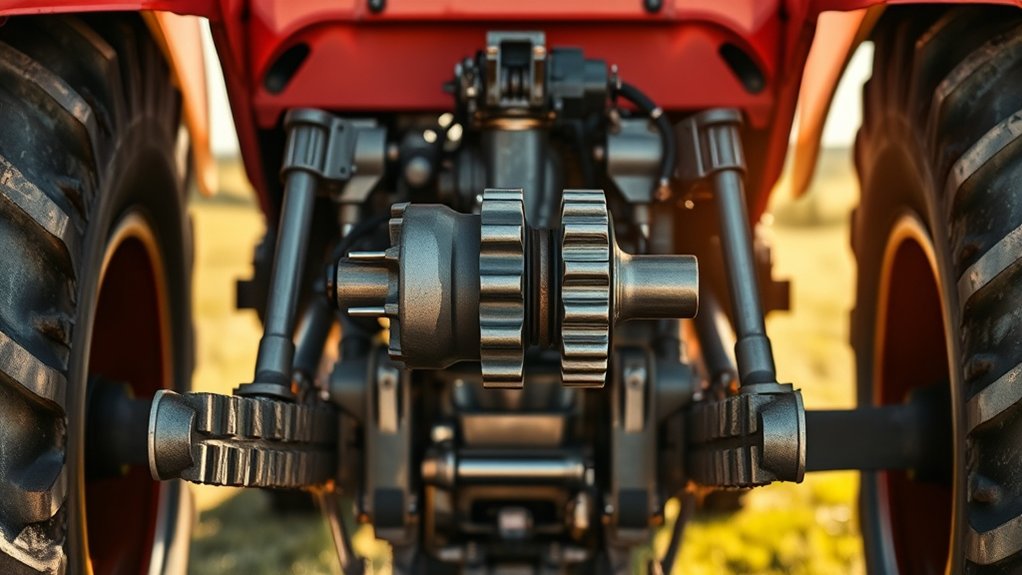
Although you might’ve seen the term PTO on tractors before, you may not know exactly what it stands for or why it’s important. PTO means Power Take-Off, and it’s a feature that allows your tractor to transfer engine power to other equipment.
This means you can use your tractor to run various attachments like mowers, balers, or tillers. The PTO is essential because it turns your tractor into a versatile machine capable of handling multiple tasks efficiently.
Without it, you’d need separate power sources for each attachment. When you see PTO mentioned, remember it’s all about harnessing your tractor’s engine power to do more work, making your farming or landscaping tasks much easier and more productive.
How Does a Tractor PTO Work?
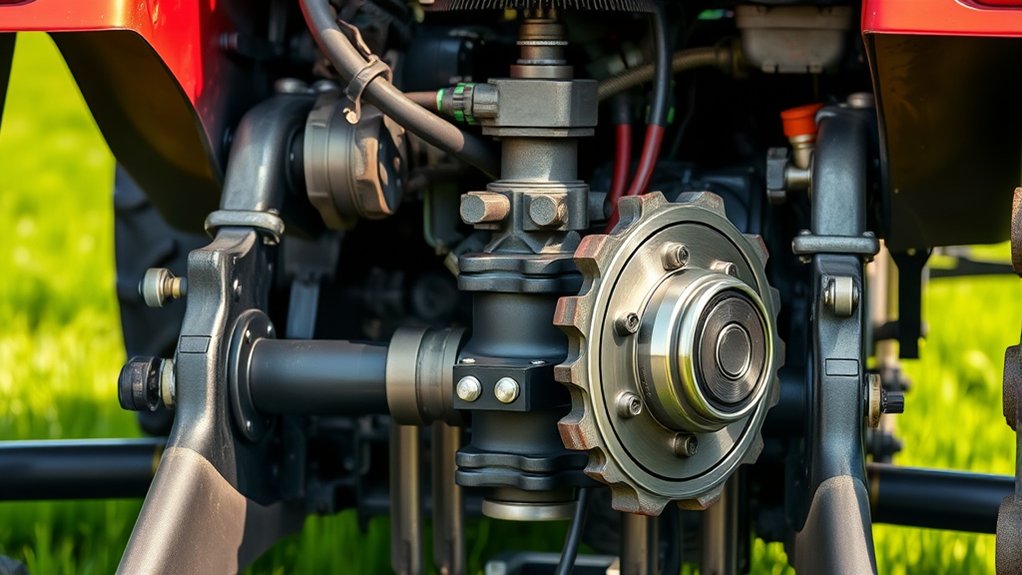
You’ll find that a tractor PTO works by transferring power from the engine through the PTO shaft to run attached equipment. Understanding how the power transmission and shaft operation connect is key to using it effectively.
Plus, knowing the safety mechanisms involved helps you prevent accidents while working.
Power Transmission Basics
When you engage a tractor’s PTO, you activate a system that transfers power from the engine to an attached implement. This power transmission relies on a series of mechanical components working together efficiently. Here’s what happens:
- The engine generates rotational energy.
- The PTO shaft connects directly to the transmission.
- A clutch or lever controls the PTO’s engagement.
- Power flows through gears or belts to the PTO output.
- The implement receives consistent rotational force to operate properly.
Understanding these basics helps you appreciate how your tractor powers tools like mowers, balers, or tillers. Without this system, the implements wouldn’t function, making the PTO a critical feature for versatility and productivity on your farm or job site.
PTO Shaft Operation
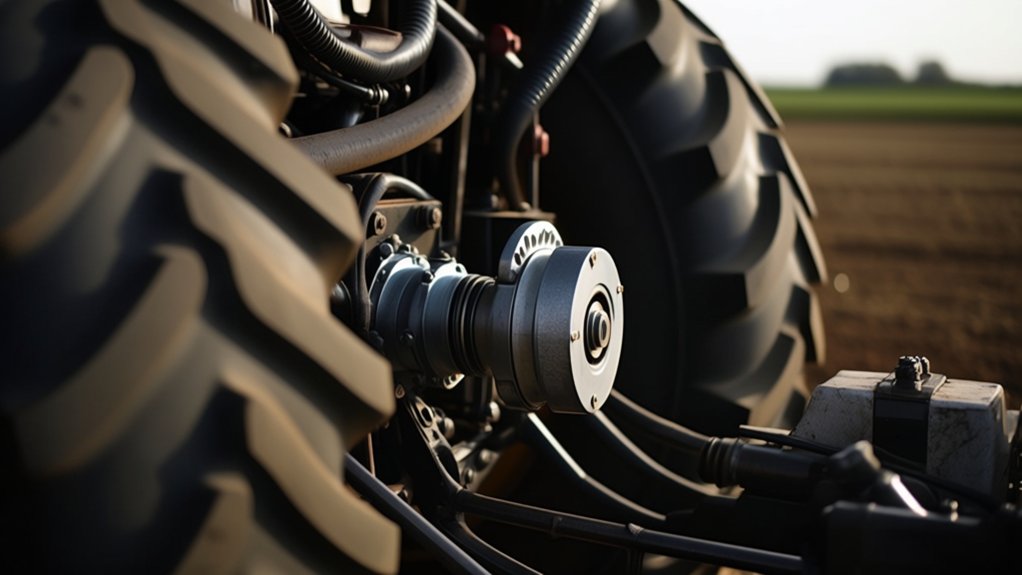
How exactly does the PTO shaft transfer power from your tractor to an implement? The PTO shaft connects directly to your tractor’s transmission output, spinning at a set speed when engaged.
As your engine runs, it turns the PTO shaft, which acts like a rotating drive shaft. This rotation transfers mechanical power through the shaft to the attached implement, such as a mower or baler.
The shaft’s splines fit snugly into the tractor and implement couplings, ensuring a secure, slip-free connection.
As the shaft spins, it drives the implement’s internal mechanisms, allowing them to operate efficiently.
You simply engage the PTO control lever to start or stop this power transfer, giving you precise control over the implement’s function while the tractor’s engine powers the motion.
Safety Mechanisms Involved
Although the PTO shaft transfers power efficiently, it can pose serious risks without proper safety mechanisms. You need to be aware of these protections to prevent accidents.
The spinning shaft can catch clothing or limbs, so safety measures are vital. Here are key safety features you should always check:
- PTO Shield: Covers the rotating shaft to prevent contact.
- Slip Clutch: Protects the PTO and equipment by slipping under overload.
- Safety Decals: Warn about dangers and proper handling.
- Locking Pin: Keeps the PTO shaft securely attached.
- Emergency Stop: Allows quick shutdown in case of danger.
Why PTO Matters for Your Farm Equipment
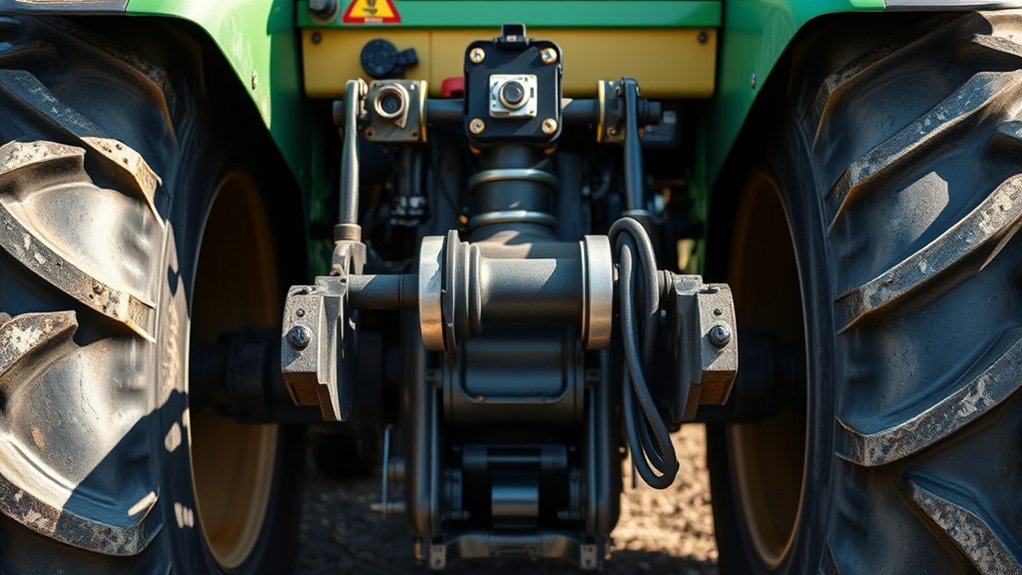
You rely on your PTO to transfer power efficiently from your tractor to various farm tools. This connection boosts the versatility of your equipment, letting you handle multiple tasks without extra machines.
Understanding why PTO matters helps you get the most out of your investment.
Power Transmission Importance
Why does the power take-off (PTO) play such an essential role on your tractor? It’s the key link that transfers engine power to your attached implements, making sure everything runs smoothly. Without the PTO, your tractor would be limited to just moving around, but with it, you can operate a variety of equipment efficiently.
Here’s why PTO power transmission matters to you:
- Delivers consistent power to implements for reliable performance
- Reduces the need for separate power sources on attachments
- Simplifies the connection between tractor and equipment
- Enhances safety by providing controlled power delivery
- Maximizes your tractor’s overall productivity on the farm
Understanding PTO’s role helps you maintain and use your equipment to its full potential.
Enhancing Equipment Versatility
Three key reasons make the PTO indispensable for boosting your tractor’s versatility: it powers a wide range of implements, allows quick equipment swaps, and adapts to different farming tasks.
When you connect your mower, tiller, or baler to the PTO shaft, you tap into your tractor’s engine power directly, eliminating the need for separate motors. This means you can switch between jobs efficiently without needing multiple machines.
The PTO’s standardized design guarantees compatibility with various attachments, so you won’t waste time searching for specialized equipment.
Whether you’re planting, harvesting, or clearing land, the PTO lets you tailor your tractor’s functionality to your specific needs. Ultimately, it transforms your tractor into a multifunctional tool, saving you time, money, and effort on the farm.
Types of PTO Systems on Tractors
How do different PTO systems impact your tractor’s performance? Understanding the types of PTO systems helps you match your tractor to the task efficiently. Here are the main PTO systems you’ll encounter:
Different PTO systems influence tractor performance by ensuring the right match for your farming tasks.
- Standard (Live) PTO: Engages independently of tractor movement, letting you power equipment while stationary.
- Transmission-driven PTO: Runs only when the tractor moves; simpler but less versatile.
- Independent PTO (IPTO): Offers full control, allowing you to start or stop PTO without affecting tractor motion.
- Ground-driven PTO: Powered by the tractor’s wheels, ideal for constant-speed tasks.
- Two-speed PTO: Provides options like 540 and 1000 RPM, adapting to various implements.
Choosing the right PTO system guarantees you get the performance and control needed for your specific farming activities.
Common Attachments Powered by PTO
You’ll find that many essential farm tools rely on the PTO for power. From mowers to balers, these attachments make your tractor much more versatile.
Let’s look at some of the most popular PTO-driven implements you might use.
Popular PTO-Driven Implements
Although PTO shafts may seem simple, they power a wide variety of implements that make your tractor much more versatile. You can easily switch between attachments to handle different tasks around your farm or property.
Some of the most popular PTO-driven implements include:
- Rotary mowers for cutting grass and weeds
- Post hole diggers to quickly create holes for fencing or planting
- Wood chippers that turn branches into mulch
- Snow blowers to clear driveways and paths in winter
- Fertilizer spreaders for even distribution of nutrients
Essential Farm Equipment
What makes PTO-powered attachments indispensable on a farm? You rely on them to boost your tractor’s versatility and efficiency. Essential equipment like rotary mowers, tillers, and balers connect directly to the PTO shaft, letting your tractor transfer power to perform critical tasks.
When you hook up a rotary mower, you can quickly manage overgrown fields. A PTO-driven tiller prepares your soil for planting with ease, saving time and labor. Balers use PTO power to compact hay or straw into manageable bales, indispensable for storage and transport.
Without these attachments, you’d need separate machines for each job, which is costly and space-consuming. By using PTO-powered equipment, you maximize your tractor’s capabilities, making your farm operations smoother and more productive.
Engaging and Disengaging the PTO Safely
When engaging or disengaging the PTO, you must prioritize safety to prevent accidents and equipment damage. Always follow proper steps to keep yourself and others safe on the farm.
Here are key safety tips to remember:
- Turn off the tractor engine before connecting or disconnecting the PTO.
- Ensure the PTO control lever is in the neutral or disengaged position.
- Never wear loose clothing or jewelry that could get caught.
- Keep bystanders, especially children, well away during operation.
- Use all protective shields and guards provided on the tractor and PTO shaft.
Understanding the PTO Shaft and Its Importance
Since the PTO shaft transfers power from your tractor’s engine to attached implements, understanding its function is crucial for efficient and safe operation. The PTO shaft is a rotating component that connects your tractor to tools like mowers, tillers, or balers.
The PTO shaft powers implements by transferring engine energy, ensuring efficient and safe tractor operation.
When engaged, it spins at a specific speed, delivering mechanical power directly to the implement. You’ll want to confirm the shaft is properly aligned and securely attached to prevent damage or injury.
Regular maintenance, such as greasing the shaft and checking for wear, keeps it running smoothly.
Never work near the PTO shaft while it’s turning, and always use protective guards.
PTO Horsepower and Tractor Performance
Properly maintaining and understanding the PTO shaft sets the stage for harnessing your tractor’s full potential. PTO horsepower directly impacts how well your tractor performs with attachments like mowers, balers, and tillers. The more PTO horsepower you have, the more efficient and powerful your tractor feels during tough jobs.
To optimize performance, keep these points in mind:
- Match the PTO horsepower rating with your implement’s requirements
- Regularly check and lubricate the PTO shaft for smooth power transfer
- Avoid overloading the PTO to prevent damage and maintain efficiency
- Recognize that PTO horsepower is different from engine horsepower
- Use the tractor’s PTO output to gauge how well it can handle specific tasks
Understanding PTO Speeds and RPMs
Although PTO horsepower plays a crucial role, understanding PTO speeds and RPMs is just as important for maximizing your tractor’s efficiency. PTO speed refers to how fast the shaft rotates, usually measured in revolutions per minute (RPM). Most tractors have standard PTO speeds like 540 or 1000 RPM. Matching your implement’s required PTO speed with your tractor’s output ensures smooth operation and prevents damage. Here’s a quick overview:
| PTO Speed (RPM) | Common Use | Implement Type |
|---|---|---|
| 540 | General farming | Mowers, balers |
| 1000 | High power tasks | Large tillers, pumps |
| 540E (economy) | Fuel efficiency | Light-duty tools |
Keep these speeds in mind to optimize your tractor’s PTO performance.
Troubleshooting Common PTO Problems
Why isn’t your PTO working as it should? You might be facing common issues that stop it from transferring power effectively.
To get your PTO back in action, check these areas first:
Start by inspecting these key areas to restore your PTO’s proper function quickly and safely.
- Loose or damaged PTO shaft connections
- Worn or broken PTO clutch components
- Faulty PTO engagement lever or linkage
- Low tractor engine RPMs preventing proper PTO operation
- Blocked or damaged PTO shield causing safety interlocks to engage
How to Maintain and Lubricate Your PTO System
Since your PTO system works under heavy strain, you’ll need to keep it well-maintained and lubricated to guarantee smooth operation and prevent premature wear.
Start by regularly inspecting the PTO shaft and driveline for any signs of damage or debris. Clean the components thoroughly before applying grease to the universal joints and slip yokes.
Use a high-quality grease recommended by your tractor’s manufacturer to assure compatibility and best protection.
Check the gearbox oil level frequently and change it according to the service schedule.
Also, tighten any loose bolts or fittings to avoid vibrations that can cause damage.
Safety Tips When Using PTO-Driven Implements
When you operate PTO-driven implements, staying alert and following safety protocols is essential to prevent accidents. The rotating shaft can be dangerous if you’re careless.
Here are key safety tips to keep in mind:
- Always disengage the PTO and turn off the tractor before making adjustments or repairs.
- Keep all protective shields and guards in place to prevent contact with moving parts.
- Avoid wearing loose clothing or jewelry that can get caught in the PTO shaft.
- Stay clear of the rotating shaft and never step over it while it’s engaged.
- Educate everyone on the farm about PTO hazards and safe operating procedures.
How PTO Improves Efficiency on the Farm
Although operating a tractor with a PTO may seem complex at first, it substantially boosts your farm’s efficiency by powering various implements quickly and reliably. You save time and effort since the PTO transfers power directly to equipment like mowers and balers, reducing manual labor. This seamless power delivery helps you complete tasks faster and with less fuel.
Here’s a quick look at how PTO benefits your farm:
| Benefit | Explanation |
|---|---|
| Versatility | Powers multiple attachments |
| Time-saving | Speeds up field operations |
| Fuel Efficiency | Uses tractor power efficiently |
| Reduced Labor | Minimizes manual work |
| Increased Output | Enhances productivity |
Choosing the Right PTO for Your Tractor and Attachments
Maximizing the benefits of a PTO depends on selecting the right one for your tractor and attachments. You’ll want to match the PTO’s speed and power output with your equipment’s requirements to guarantee smooth operation.
Choosing the right PTO ensures optimal performance and seamless compatibility with your tractor and attachments.
Consider these factors when choosing the right PTO:
- Tractor PTO speed: Common speeds are 540 RPM and 1000 RPM; check what your attachments need.
- Horsepower compatibility: Ensure the PTO can handle your attachment’s power demands.
- PTO shaft size and type: Match the shaft size and spline count for a secure fit.
- Attachment type: Different implements may require different PTO styles (e.g., live PTO).
- Safety features: Look for guards and shields to protect you during operation.
Picking the right PTO keeps your equipment running efficiently and extends its life.
How to Tell When Your PTO Needs Repair or Replacement
If your PTO starts making unusual noises or your attachments aren’t operating smoothly, it’s a clear sign you need to inspect it. Check for visible wear, such as cracked or bent shafts, and look for oil leaks around the PTO shaft housing.
Feel for excessive vibration or resistance when engaging the PTO; these often indicate internal issues. Also, pay attention to any slipping or loss of power transfer to your implements.
If you notice your PTO clutch slipping frequently or the PTO shaft won’t engage properly, it’s time for repair or replacement.
Regular maintenance helps, but when problems persist despite servicing, don’t delay fixing it—neglecting PTO issues can damage your tractor and attachments, leading to costly repairs.
Frequently Asked Questions
Can PTOS Be Used on Tractors of All Sizes?
Yes, you can use PTOs on tractors of all sizes, but you’ll need to match the PTO type and power output to your tractor’s size and capabilities to guarantee safe, efficient operation and avoid damaging your equipment or attachments.
What Are the Environmental Impacts of Using Pto-Driven Equipment?
You’ll find PTO-driven equipment can increase fuel consumption and emissions, contributing to air pollution. However, using efficient machinery and proper maintenance can reduce environmental impacts, helping you farm more sustainably and protect surrounding ecosystems.
Are There Legal Regulations Governing PTO Usage on Farms?
Of course, you’re totally free to spin PTO shafts wildly—no rules at all! Just kidding. You do have to follow safety regulations and standards to prevent accidents, so always check local laws before you jump on that tractor.
How Does PTO Technology Differ Internationally?
You’ll find PTO technology varies internationally in shaft size, rotation direction, and speed standards. Different countries adopt distinct safety regulations and connector types, so you’ll need to check local specs before using or buying PTO equipment abroad.
Can PTO Systems Be Upgraded or Customized?
You can definitely upgrade or customize PTO systems. In fact, over 70% of farmers tailor their PTO setups to improve efficiency, making adjustments like changing shaft lengths or adding safety features to match specific equipment and tasks.
Conclusion
Now that you know PTO stands for Power Take-Off and how it powers your tractor’s attachments, you can see why it’s the heartbeat of your farm equipment. Keeping your PTO in good shape guarantees your work flows smoothly, like a well-oiled machine. Remember, choosing the right PTO and following safety tips protects both you and your gear, making your farming tasks easier and more efficient every day.