
Clean Push Mower Carburetor in 3 Easy Steps
To clean your push mower carburetor in three easy steps, first gather tools like a socket wrench, screwdrivers, carburetor cleaner, and gloves. Disconnect the spark plug and remove the carburetor by detaching fuel lines and mounting bolts. Next, spray and brush away grime from jets and passages thoroughly. Finally, reassemble everything carefully, add fresh fuel, and start your mower to guarantee smooth operation. Keep going to uncover tips for perfect maintenance and troubleshooting.
Key Takeaways
- Disconnect the spark plug wire and drain the fuel tank to ensure safety before starting the cleaning process.
- Remove the carburetor by disconnecting the fuel line, throttle linkage, and unscrewing mounting bolts carefully.
- Spray carburetor cleaner on all surfaces, focusing on jets and passages, and use a brush or compressed air for thorough cleaning.
- Reassemble the carburetor by securely reconnecting all parts, ensuring gaskets and screws are properly aligned and tightened.
- Refill the fuel tank, start the mower, and verify smooth engine operation without sputtering or stalling.
Gather Tools and Prep Your Mower’s Carburetor
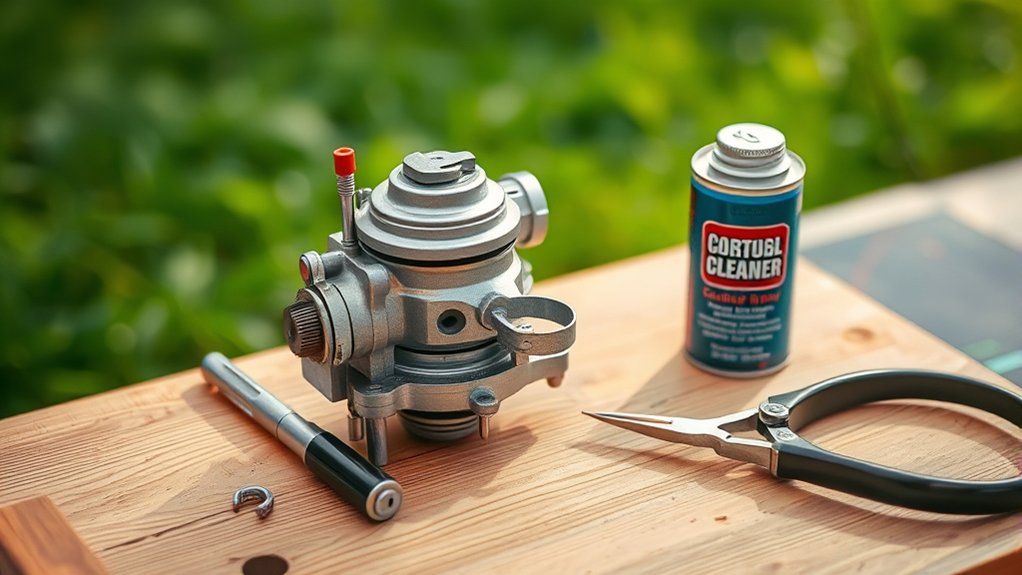
Before you start cleaning, gather all the necessary tools to make the job easier and more efficient. You’ll need a socket wrench set, screwdrivers (both flathead and Phillips), carburetor cleaner spray, a small brush, and some clean rags. Make sure you also have a container to catch any fuel spills and gloves to protect your hands.
Next, prep your mower by disconnecting the spark plug wire to prevent accidental starts. Drain the fuel tank or siphon the gas out to avoid leaks while working.
Position your mower on a flat surface with good lighting, so you can see what you’re doing clearly. Having everything ready before you begin means you won’t waste time searching for tools mid-task.
This preparation sets you up for a smooth cleaning process.
Remove and Clean the Carburetor
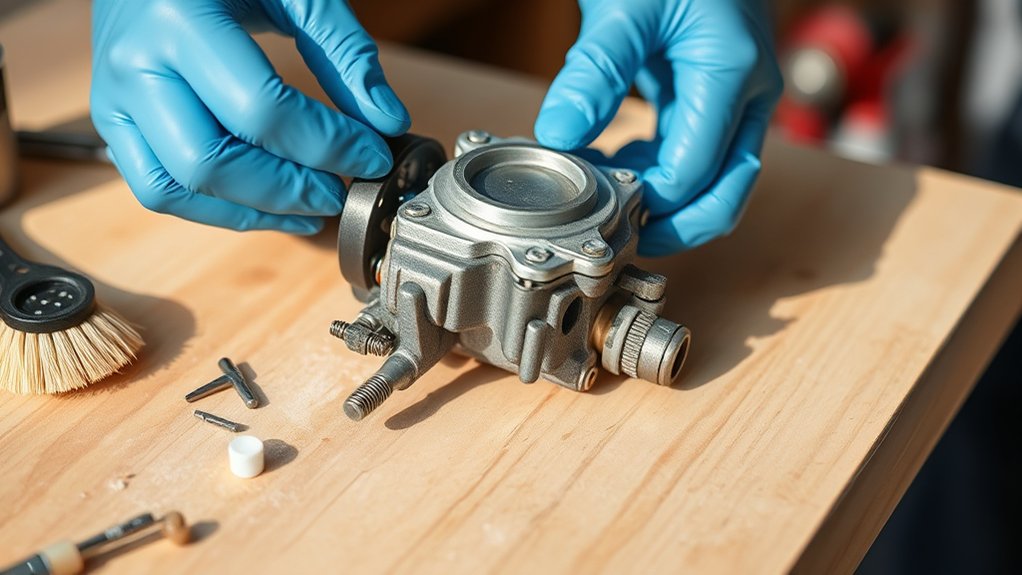
With your mower prepped and tools ready, you can now focus on removing the carburetor. First, disconnect the fuel line and throttle linkage carefully to avoid damage.
Unscrew the mounting bolts holding the carburetor to the engine. Once removed, inspect the carburetor for dirt, grime, and buildup. Use a carburetor cleaner spray to thoroughly clean all surfaces, paying close attention to jets and passages.
Remove carburetor bolts, inspect for buildup, and use cleaner spray to clear jets and passages thoroughly.
You can also use a soft brush or compressed air to clear stubborn debris.
Remember to:
- Wear gloves and eye protection
- Work in a well-ventilated area
- Keep small parts organized to avoid loss
- Avoid harsh scrubbing that could damage delicate parts
Cleaning the carburetor properly assures your mower runs smoothly.
Reassemble and Test Your Mower
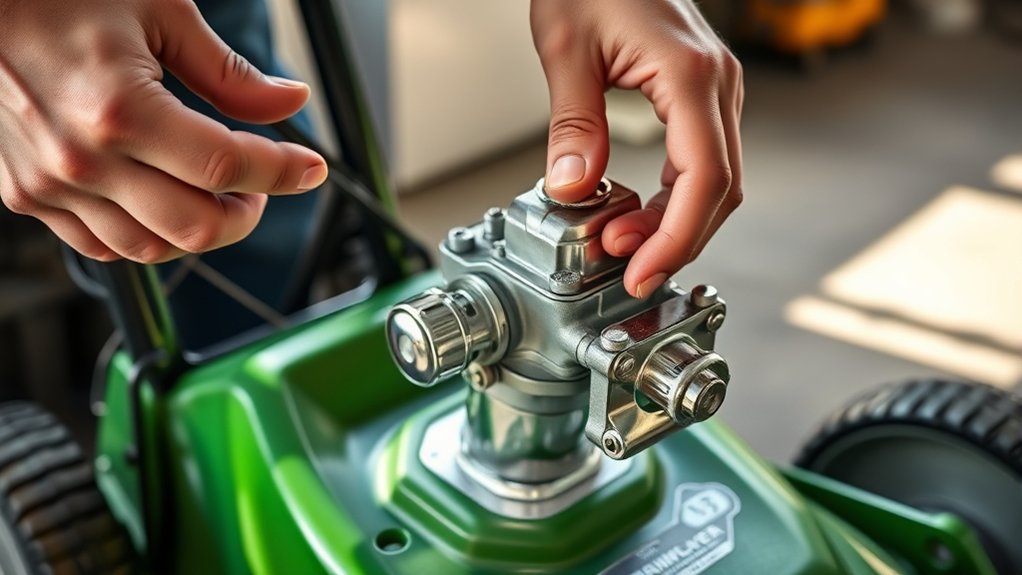
Once you’ve thoroughly cleaned the carburetor, you can start reassembling your mower by carefully reconnecting all parts in reverse order. Make sure each gasket and screw is properly aligned and tightened to prevent leaks.
Reattach the carburetor to the engine, then reconnect the fuel line and throttle linkages securely.
After everything’s back in place, fill the fuel tank with fresh gasoline. Before you start the mower, check for any leftover tools or loose parts around the engine.
Pull the starter cord a few times to prime the carburetor.
Finally, start the mower and listen for a smooth, steady engine sound. If it runs well without sputtering or stalling, you’ve successfully cleaned and reassembled your carburetor.
If not, double-check connections and cleanliness.
Frequently Asked Questions
How Often Should I Clean My Push Mower Carburetor?
You should clean your push mower carburetor at least once a season or after 25 hours of use. If you notice rough idling or difficulty starting, don’t wait—clean it sooner to keep your mower running smoothly.
What Type of Fuel Is Best for My Push Mower?
You should use fresh unleaded gasoline with an octane rating of 87 or higher for your push mower. Using stale fuel can reduce efficiency by up to 20%, so always opt for clean, fresh gas to keep it running smoothly.
Can I Use Carburetor Cleaner on All Mower Types?
You can use carburetor cleaner on most mower types, but avoid it on plastic or rubber parts. Always check your mower’s manual to verify compatibility and prevent damage to sensitive components before applying the cleaner.
What Are Signs of a Faulty Carburetor?
Like a heart skipping beats, your mower sputters, idles roughly, or won’t start—that’s a faulty carburetor. You’ll also notice black smoke, poor performance, or flooding. These signs mean it’s time to clean or fix it.
How Do I Prevent Carburetor Clogging in Storage?
You can prevent carburetor clogging by draining the fuel or adding a fuel stabilizer before storage. Also, run the engine briefly to circulate treated fuel, and store your mower in a clean, dry place to avoid moisture buildup.
Conclusion
Now that you’ve given your mower’s carburetor a little TLC, it’s ready to hum smoothly again. With just a bit of elbow grease and the right steps, you’ve nudged your mower back to its prime, avoiding any unexpected hiccups. Keep this gentle care routine in mind, and your push mower will keep rolling with ease, making your yard work feel less like a chore and more like a breeze.