
How to Put Snow Chains on a Lawn Tractor in 7 Easy Steps
To put snow chains on your lawn tractor in seven easy steps, first choose chains that fit your tire size and match your snow conditions. Prepare your tractor by parking on a flat surface with the brake engaged, then position it for easy access to the rear tires. Fit the chains evenly around the tires, making sure cross links lay flat, then secure and tighten them snugly with tensioners. Test by driving slowly and make any needed adjustments. Keep following to uncover tips on care and performance.
Key Takeaways
- Park the lawn tractor on a flat surface, engage the parking brake, and turn off the engine for safety before starting installation.
- Lay the snow chains flat and drape them evenly over the rear tires with the fastening side outward and no twists.
- Secure the chains by connecting hooks and tensioners, ensuring cross links are straight and snug against the tire tread.
- Spin the tires manually to check for even tension and adjust any slack or loose ends before operating the tractor.
- After use, clean the chains thoroughly and store them in a dry, cool place away from moisture and sunlight to prevent rust.
Choose the Right Snow Chains for Your Lawn Tractor Tires

Before you buy snow chains, check your lawn tractor’s tire size to make certain a perfect fit. You’ll typically find the tire size printed on the sidewall, something like 20×8-8. Knowing this guarantees you pick chains that wrap snugly without slipping or causing damage.
Next, consider the type of chains: ladder-style chains offer good traction on packed snow, while cable chains are lighter and easier to install but might wear faster.
Also, check the chain material—steel chains provide durability, while some coated versions resist rust better.
Don’t forget to verify the chain’s compatibility with your tire tread pattern and width.
Choosing the right chains upfront saves you hassle during installation and improves your tractor’s performance in snowy conditions.
Prepare Your Tractor and Work Area for Safe Installation

Before you start, clear the area around your tractor to give yourself plenty of room to work safely. Make sure the tractor is parked on a flat surface with the parking brake engaged.
Double-check that the engine is off and the keys are removed to prevent any accidents during installation.
Clear Workspace Setup
Where should you start when getting ready to install snow chains on your lawn tractor? First, clear a flat, dry area free of obstacles. This gives you room to work safely and keeps the chains clean and untangled. Next, gather all tools and chains nearby to avoid unnecessary trips.
Set up your workspace like this:
| Task | Reason |
|---|---|
| Clear flat surface | Prevents slipping and tripping |
| Remove debris | Avoids chain damage |
| Organize tools | Speeds up installation |
| Ascertain good lighting | Helps see chain links clearly |
Tractor Safety Checks
Although installing snow chains might seem straightforward, you’ll want to double-check your lawn tractor and surrounding area to make certain everything is safe and secure.
Start by turning off the engine, removing the key, and engaging the parking brake to prevent any accidental movement. Make sure the tractor is on a flat, stable surface to avoid sliding while you work.
Inspect the tires for any damage or excessive wear that could affect chain installation. Clear away any debris or obstacles around the work area to give yourself enough room to move freely.
Finally, wear gloves to protect your hands from sharp chain links and dirt. Taking these safety steps will help ensure a smooth, accident-free installation process.
Position the Tractor for Easy Chain Installation

To make installing snow chains easier, park your lawn tractor on a flat, stable surface where you have plenty of room to work. This setup guarantees the tractor won’t roll or shift while you’re handling the chains. Engage the parking brake and turn off the engine to keep the tractor secure.
If possible, position the tractor so the rear tires—the ones you’ll be fitting with chains—are easily accessible without you having to crouch awkwardly. Having good lighting and a clear workspace around the tires helps you see the chains and connect them smoothly.
Avoid uneven ground or slopes, as these can make the chains harder to manage and increase the risk of accidents during installation. Proper positioning saves you time and effort before you start fitting the chains.
Fit Snow Chains Around Rear Tires Correctly
Once you’ve positioned your lawn tractor securely, you can start fitting the snow chains around the rear tires.
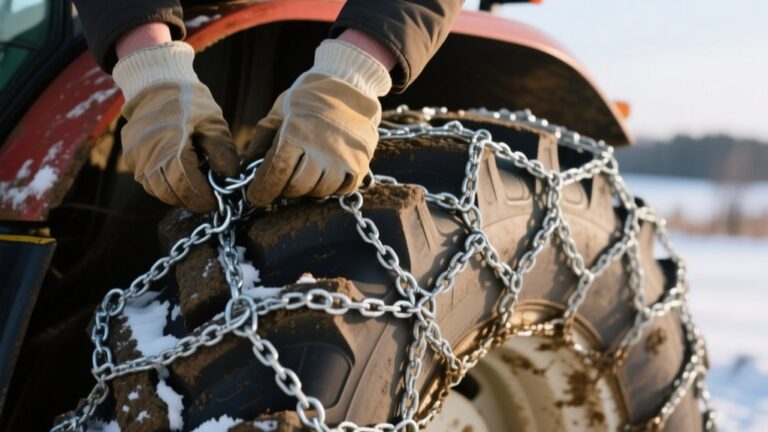
Begin by laying the chain flat on the ground and draping it over the top of the tire, ensuring the side with the fastening mechanism faces outward.
Make sure the chains are evenly distributed and cover the entire tire tread for maximum traction.
Avoid twisting or overlapping the chains, as this can cause damage or uneven wear.
Align the chains so that the cross links run straight across the tire surface, providing grip on snow and ice.
Check that the chain links sit flush against the tire sidewalls without gaps.
Taking the time to fit the chains correctly will help your tractor maintain stability and performance during snowy conditions.
Secure and Tighten the Chains for a Snug Fit
Now that the chains are wrapped around the tires, make certain they’re properly aligned to avoid slipping.
Tighten them carefully using the recommended techniques to keep everything secure.
Finally, double-check the fit to guarantee the chains sit snugly without any loose ends.
Proper Chain Alignment
Although fitting the chains onto your lawn tractor’s tires is a good start, you’ll need to make sure they’re properly aligned and tightened to prevent slipping or damage. Begin by positioning the chains so the cross links sit evenly across the tire tread, ensuring consistent contact with the ground.
Check that the side chains wrap snugly around the tire sidewalls without gaps or twists. Misaligned chains can cause uneven wear and reduce traction, so take time to adjust them carefully.
Once aligned, verify that the chains don’t interfere with any tractor components like brakes or steering mechanisms. Proper alignment not only enhances safety but also extends the life of both your tires and chains, so don’t rush this step for a secure, effective fit.
Tightening Techniques
Before you start tightening, make sure the chains are evenly positioned on the tire to prevent any slipping during use. Once aligned, you’ll want to secure the chains snugly to keep them in place while you operate your lawn tractor.
Here’s how to tighten the chains effectively:
- Pull the tensioner straps firmly but carefully to remove any slack.
- Fasten all hooks and clips securely, ensuring none are loose or twisted.
- Adjust the chains evenly around the tire by hand, checking that the chains sit flat without gaps.
Final Fit Check
After tightening the chains and securing all hooks and clips, take a moment to double-check their overall fit. Make sure the chains sit snugly against the tires without any loose or hanging sections. If you spot any slack, tighten the chains further to prevent shifting during use.
Spin the tires a quarter turn by hand, then pause to recheck the chains’ tension. This helps guarantee even coverage and confirms the chains won’t slip off.
Also, inspect each connection point to confirm all clips and hooks are locked securely. If any part feels weak or unstable, adjust it immediately.
Performing this final fit check assures your snow chains stay firmly in place, providing maximum traction and safety while you operate your lawn tractor in snowy conditions.
Test and Adjust Snow Chains by Driving Slowly
Once you’ve securely attached the snow chains, take your lawn tractor for a slow test drive to check their fit and performance. This step guarantees everything stays in place and functions smoothly.
- Drive forward slowly, listening for any unusual noises or vibrations that might indicate loose chains.
- Stop and inspect the chains for tightness, adjusting links or fasteners if you notice slack or shifting.
- Reverse gently to confirm the chains maintain grip and don’t slip or come loose when changing direction.
Maintain and Store Your Snow Chains
To keep your snow chains effective and ready for the next winter, you’ll need to clean and inspect them thoroughly after each use. Remove any dirt, salt, or debris with a brush and water, then dry them completely to prevent rust.
Check for damaged or bent links, and replace any worn parts promptly to avoid failure during use.
Once cleaned and inspected, store your chains in a dry, cool place, preferably in a sealed plastic bag or container to protect them from moisture. Avoid leaving them exposed to sunlight or extreme temperatures, as this can weaken the metal.
Regular maintenance and proper storage will extend the life of your snow chains and ensure they perform well every snow season.
Frequently Asked Questions
Can Snow Chains Damage My Lawn Tractor Tires?
Yes, snow chains can damage your lawn tractor tires if you install them incorrectly or use incompatible chains. Make sure to choose the right size and follow instructions carefully to avoid unnecessary wear or punctures.
Are Snow Chains Necessary for Front Tires?
You don’t usually need snow chains on front tires since lawn tractors are rear-wheel drive, which provides the traction. However, if the terrain is extremely slippery or uneven, adding front chains can improve stability and control.
How Do Snow Chains Affect Tractor Speed Limits?
Snow chains slow your tractor, reduce grip, and limit acceleration. You’ll need to drive cautiously, avoid sharp turns, and keep speeds low to maintain control and prevent damage. Don’t rush; safety comes first on slippery terrain.
Can I Use Snow Chains on Icy Roads?
Yes, you can use snow chains on icy roads to improve traction and safety. Just make sure they fit properly and are installed correctly to avoid damage and maintain control while driving on slippery surfaces.
What Materials Are Snow Chains Typically Made From?
You’ll find snow chains typically made from steel, stainless steel, or alloy. You’ll rely on their strength, durability, and resistance to rust. You’ll trust these materials to grip ice, enhance traction, and keep you safe.
Conclusion
Now that you’ve got your snow chains on, you’re ready to tackle winter with confidence. Just remember, practice makes perfect—take your time to test and adjust them before heading out. With the right chains snug on your lawn tractor’s tires, you’ll have no trouble getting through snow and ice like a walk in the park. Keep them well-maintained and stored properly, and they’ll be your trusty sidekick season after season.