How to Move a 5th Wheel With a Tractor in 10 Essential Steps
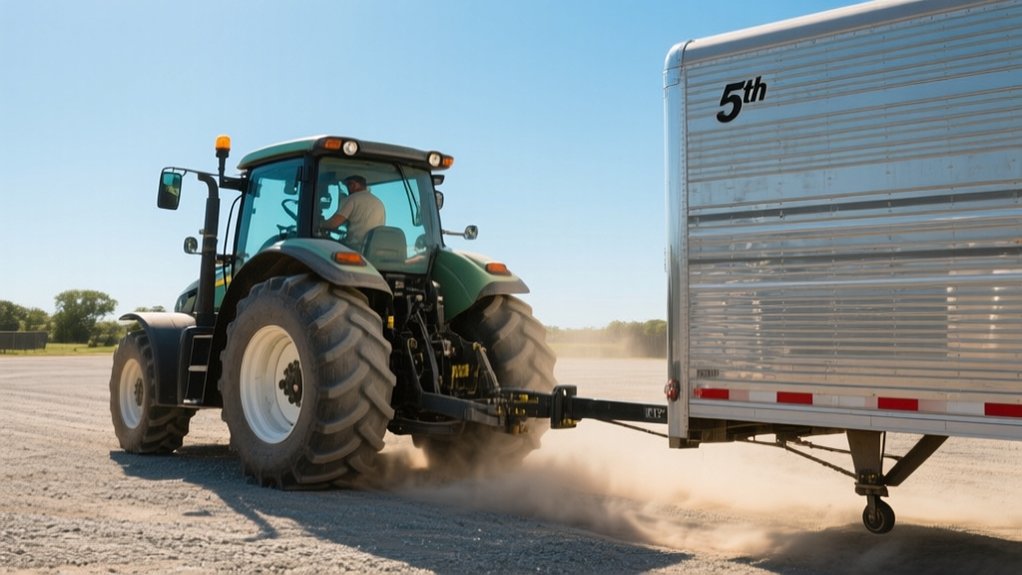
First, verify your tractor’s towing capacity and hitch compatibility with the 5th wheel. Inspect the trailer for structural soundness and secure all connections. Adjust your hitch height, lock it, and connect safety chains and cables carefully. Check tire pressure and suspension settings for stability. Drive smoothly, take wide turns, and back up patiently using mirrors or spotters. After parking, chock the wheels to secure the trailer. Keep these steps in mind, and you’ll be set to handle your move confidently, with more key tips waiting ahead.
Key Takeaways
- Verify tractor compatibility, towing capacity, and hitch system match the 5th wheel’s kingpin and weight requirements before moving.
- Inspect the 5th wheel trailer’s structure, hitch, safety chains, and electrical connections for damage and secure attachment.
- Connect the trailer by aligning the kingpin with the fifth wheel, locking the hitch, raising landing gear, and securing safety chains.
- Plan the route carefully, checking tire pressure, suspension settings, and ensuring clear, accessible paths for safe maneuvering.
- Drive smoothly with gradual acceleration and braking, take wide turns, back up cautiously, and secure the trailer with wheel chocks after moving.
Check If Your Tractor Can Tow a 5th Wheel Trailer
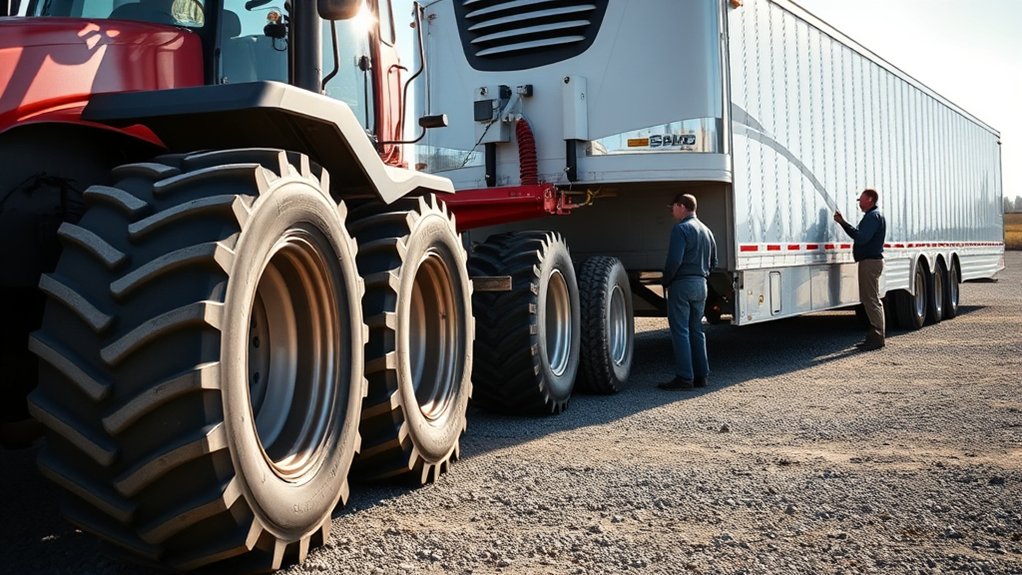
Before you hook up your 5th wheel trailer, make sure your tractor is capable of towing it safely. Check the tractor’s towing capacity in the owner’s manual or manufacturer’s specifications. Don’t guess—exceeding this limit risks damage or accidents.
Inspect the hitch system to verify it matches the 5th wheel’s kingpin size and weight rating. Confirm your tractor has the proper braking system, as heavy trailers need efficient brakes for control.
Also, verify that your tractor’s rear axle and tires can handle the trailer’s weight. If you’re unsure about any specs, consult a professional or dealer.
Taking these steps prevents costly damage and keeps you safe on the move. Remember, a well-matched tractor and trailer setup makes towing smooth and secure.
Inspect Your 5th Wheel Trailer Before Moving
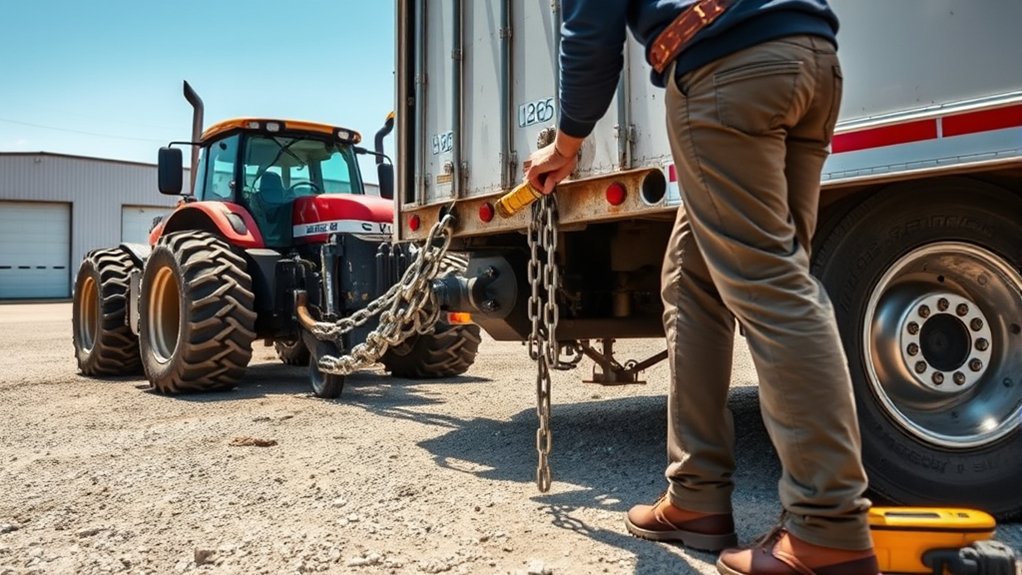
Before you start moving your 5th wheel, take time to inspect its structural integrity to guarantee everything is secure and damage-free.
Check the hitch and connections carefully to confirm they’re properly fastened and functioning.
This quick inspection helps prevent issues during towing and keeps you safe on the road.
Check Trailer Structural Integrity
Although it might be tempting to jump straight into hooking up your 5th wheel trailer, you need to thoroughly inspect its structural integrity first. Check for cracks, rust, and any signs of damage on the frame, axles, and suspension. A compromised structure can lead to unsafe towing conditions. Don’t forget to examine the flooring inside for soft spots or water damage that might weaken the trailer’s base.
| Component | What to Inspect | Signs of Concern |
|---|---|---|
| Frame | Cracks, rust, bends | Visible damage, corrosion |
| Axles & Suspension | Alignment, wear, rust | Loose parts, rust spots |
| Flooring | Soft spots, water damage | Sagging, discoloration |
| Joints & Welds | Cracks, corrosion | Crumbling welds, splits |
Address any issues before moving your trailer.
Verify Hitch and Connections
After confirming your trailer’s structure is sound, turn your attention to the hitch and all connection points. These are critical for safe towing and must be in perfect condition before you move the 5th wheel with your tractor.
Follow these steps:
- Inspect the hitch pin and locking mechanism to ensure they’re fully engaged and free of wear or damage.
- Check the kingpin for cracks or excessive wear; it must fit snugly in the hitch plate.
- Verify safety chains or cables are correctly attached and not frayed or corroded.
- Examine electrical connections for secure attachment and proper function of brake lights and signals.
Completing these checks will help prevent accidents and ensure smooth, secure towing.
Prepare Your Tractor’s Hitch for the 5th Wheel
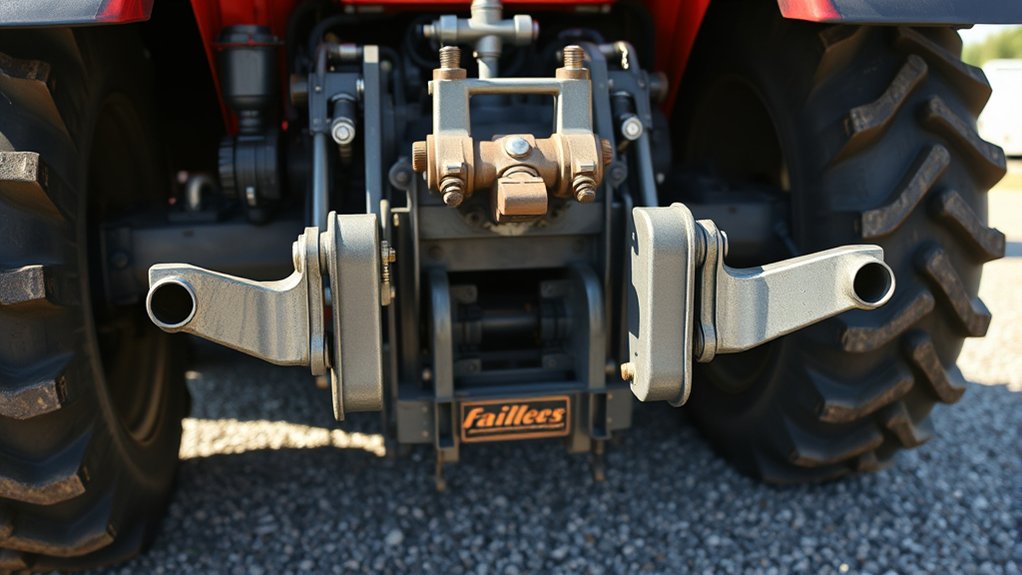
Before you start, make certain your tractor’s hitch is compatible with the 5th wheel. Double-check that the hitch is securely attached and locked in place.
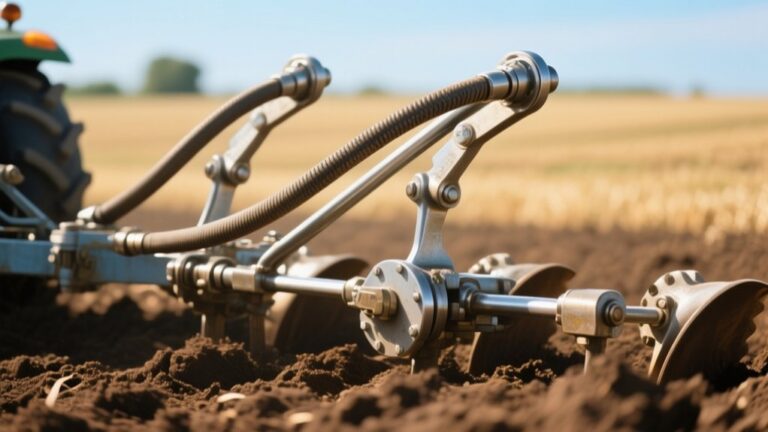
Don’t forget to inspect the hydraulic system to ensure everything operates smoothly.
Hitch Compatibility Check
Since your tractor’s hitch is the critical connection point, you need to guarantee it’s fully compatible with your 5th wheel before attempting to move it.
First, verify the hitch type matches your 5th wheel’s kingpin—most use a standard fifth wheel hitch, but some require special adapters.
Second, check the weight rating of your tractor’s hitch to ensure it can support the 5th wheel’s loaded weight safely.
Third, inspect the hitch for any damage, excessive wear, or rust that could compromise its integrity.
Finally, confirm the hitch’s height aligns with your 5th wheel’s coupling height to allow a level connection.
Following these steps ensures a reliable and secure hitch setup, preventing issues during transport.
Secure Hitch Attachment
Confirming your hitch matches and supports your 5th wheel sets the stage for a secure connection. First, position your tractor and 5th wheel on level ground. Lower the hitch plate to the proper height, then align the kingpin with the hitch opening. Slowly back your tractor until the kingpin slides into the hitch. Engage the locking mechanism fully to prevent accidental detachment. Don’t forget to insert safety pins or locks as required for extra security.
| Step | Action |
|---|---|
| 1. Position Tractor | Level ground alignment |
| 2. Adjust Hitch | Set hitch plate height |
| 3. Align Kingpin | Center kingpin to hitch plate |
| 4. Engage Lock | Secure locking mechanism |
| 5. Safety Check | Insert pins and double-check |
Following these steps guarantees a reliable, safe connection.
Hydraulic System Inspection
Although securing the hitch is crucial, you’ll also want to thoroughly inspect your tractor’s hydraulic system to guarantee smooth operation. A well-maintained hydraulic system ensures the hitch moves fluidly and safely when positioning the 5th wheel.
Start by:
- Checking hydraulic fluid levels and topping off if necessary to avoid pressure drops.
- Inspecting hoses and connections for leaks, cracks, or wear that could cause failure.
- Testing the hydraulic pump and cylinders for smooth, consistent movement without unusual noises.
- Ensuring all control valves respond correctly and don’t stick or jam during operation.
Connect the 5th Wheel Trailer to the Tractor Safely
Before you connect the 5th wheel trailer to the tractor, make sure both vehicles are on level ground and properly aligned.
Position the tractor so the kingpin is directly under the fifth wheel plate.
Lower the fifth wheel plate slowly using the tractor’s controls until it securely locks onto the kingpin.
Listen for the audible click, confirming the lock is engaged.
Next, raise the landing gear on the trailer to transfer weight to the tractor.
Attach the safety chains between the tractor and trailer, crossing them underneath the kingpin for added security.
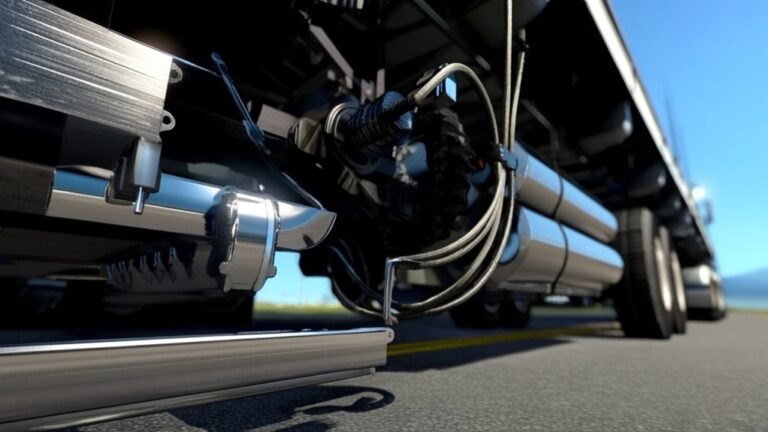
Finally, connect the electrical cables and air lines, ensuring each is firmly attached to maintain proper brake and light function.
Double-check all connections before proceeding.
Adjust Tractor and 5th Wheel Settings for Safe Control
Once you’ve securely connected the trailer, adjust the tractor and fifth wheel settings to guarantee smooth control during movement.
Start by checking the tractor’s tire pressure to ensure proper traction.
Next, adjust the fifth wheel height to align perfectly with the trailer’s kingpin, preventing any binding.
Third, set the tractor’s suspension stiffness based on the load to maintain stability on uneven terrain.
Finally, verify the steering responsiveness by gently maneuvering the tractor without the trailer, so you can anticipate handling once connected.
- Check and adjust tractor tire pressure.
- Align fifth wheel height with kingpin.
- Set suspension stiffness for load balance.
- Test steering responsiveness before moving.
These adjustments will help you maintain safe, precise control while moving your 5th wheel trailer.
Plan Your Route and Clear the Path to Move
After adjusting your tractor and fifth wheel settings for smooth control, the next step is to plan your route carefully and clear any obstacles along the way. Walk the path you intend to take, checking for low branches, uneven ground, or tight turns that could cause trouble.
Remove debris, rocks, or anything that might damage your tires or trailer. Make sure gates are open and fences won’t block your progress. If the terrain is slippery or muddy, consider adding gravel or boards for better traction.
Know where you’ll stop and turn, and measure tight spots to guarantee your rig fits comfortably. Taking these precautions upfront helps prevent accidents and saves you time during the actual move.
Preparing your path thoroughly sets you up for a smooth, stress-free relocation.
Drive Your Tractor and 5th Wheel Trailer Properly
Although maneuvering a tractor with a 5th wheel trailer may seem intimidating, staying calm and focused will help you maintain control throughout the move. To drive properly, follow these key steps:
Maneuvering a tractor with a 5th wheel trailer requires calm focus to maintain control throughout your move.
- Accelerate smoothly to avoid jerking the trailer, which can cause instability.
- Maintain a steady speed, especially on inclines or uneven terrain.
- Use gentle, gradual braking to prevent the trailer from pushing into the tractor.
- Keep your hands steady on the wheel and stay alert to road conditions and obstacles.
Navigate Turns and Back Up With Confidence
Mastering smooth driving sets the foundation for handling your tractor and 5th wheel trailer, but maneuvering turns and backing up will test your control even more.
When turning, remember the pivot point is at the kingpin, not the tractor’s rear axle. Take wide, gradual turns to prevent the trailer from clipping curbs or obstacles. Slow down before entering the turn and accelerate gently as you exit to maintain stability.
Backing up requires patience and small adjustments. Turn your steering wheel in the opposite direction of where you want the trailer to go. Use your mirrors and, if possible, have a spotter guide you. Make subtle corrections rather than large movements to avoid jackknifing.
With practice, you’ll back up and navigate turns confidently every time.
Secure Your 5th Wheel Trailer After Moving
Once you’ve moved your 5th wheel, make certain to properly chock the wheels to prevent any rolling.
Next, place the stabilizer jacks securely to keep the trailer steady.
Taking these steps ensures your trailer stays safe and stable after parking.
Proper Wheel Chocking
When you’ve positioned your 5th wheel trailer exactly where you want it, securing it with proper wheel chocks is essential to prevent any unwanted movement. Wheel chocks keep your trailer stable and safe, especially on uneven ground or slopes.
Here’s how to do it right:
- Choose sturdy chocks made from durable materials like rubber or heavy-duty plastic.
- Place chocks tightly against both sides of the trailer’s wheels to block forward and backward movement.
- Use at least two chocks per wheel, ensuring they sit firmly on the ground.
- Double-check the trailer’s level and adjust chocks as necessary to maintain stability.
Following these steps helps protect your investment and ensures safety for you and others around your 5th wheel.
Stabilizer Jack Placement
Although securing your 5th wheel with wheel chocks is essential, placing stabilizer jacks correctly is just as important to keep your trailer steady after moving.
Once you’ve parked your trailer, lower the stabilizer jacks near each corner to prevent rocking and swaying. Make sure the jacks sit on firm, level ground—use wooden blocks or pads if the surface is soft or uneven.
Avoid overextending the jacks; they’re meant to stabilize, not lift the trailer. Check that all jacks make solid contact and support the trailer’s weight evenly.
Proper placement reduces stress on your trailer’s frame and improves safety, especially during windy conditions or when you’re inside moving around.
Taking time with stabilizer jack placement guarantees your 5th wheel stays secure and comfortable after every move.
Check and Maintain Your Trailer Post-Move
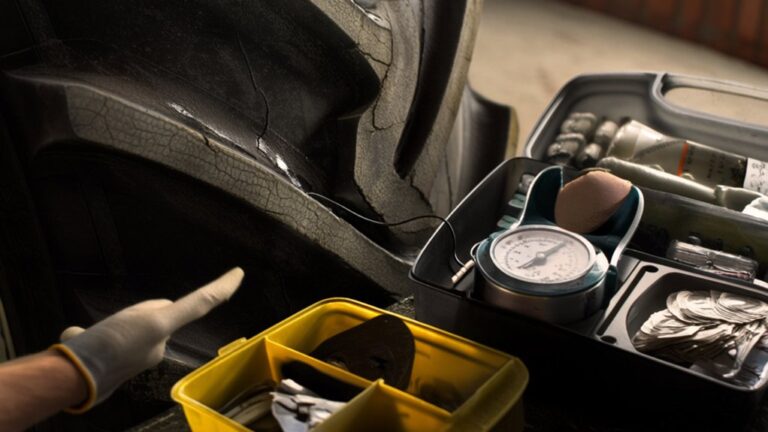
After you’ve successfully moved your 5th wheel with the tractor, you’ll want to thoroughly inspect your trailer to guarantee everything remains in good condition. Start by checking the tires for any damage or uneven wear caused during the move.
Next, inspect the hitch and connections to ensure they’re secure and free from stress cracks.
Don’t forget to examine the stabilizer jacks for proper placement and any signs of strain.
Finally, verify the trailer’s lights and brakes are working correctly to maintain safety on the road.
- Inspect tires for cuts, bulges, or low pressure.
- Check hitch and connection points for cracks or looseness.
- Examine stabilizer jacks for damage or misalignment.
- Test all lights and brake functions before your next trip.
Frequently Asked Questions
What Is the Average Cost of Renting a Tractor for Towing?
You’ll typically pay between $50 and $150 per day to rent a tractor for towing, depending on the tractor’s size, location, and rental duration. Always check local rental shops for the best rates and availability.
Can I Use a Standard Tractor or Is a Specialized One Required?
You can’t just use any tractor; it needs to be specialized, like a key fitting perfectly in a lock. Standard tractors often lack the necessary hitch strength and maneuverability required for safely moving a 5th wheel.
How Do Weather Conditions Affect Towing a 5th Wheel With a Tractor?
Weather conditions affect your towing by reducing traction and visibility. Wet, icy, or windy weather can make controlling the 5th wheel harder, so you’ll need to slow down, check your equipment, and stay extra cautious.
Are There Legal Restrictions on Towing 5th Wheels With Tractors?
Think towing’s a free-for-all? It’s not. You’ll face legal restrictions like weight limits, licensing, and road use rules. Check local laws carefully before you haul to avoid fines or safety issues on the road.
What Insurance Coverage Is Needed for Towing a 5th Wheel Trailer?
You’ll need thorough insurance covering both your tractor and 5th wheel trailer, including liability, collision, and cargo protection. Check your policy carefully to guarantee it covers towing, and consider additional coverage for roadside assistance and accidents.
Conclusion
Moving a 5th wheel with your tractor is like steering a ship through a narrow canal—precision, preparation, and patience keep you on course. Just as a captain trusts their compass and crew, you rely on your tractor’s strength and careful adjustments. Follow each step closely, and you’ll navigate smoothly, avoiding rough waters. Remember, every successful journey strengthens your skill, making the next move easier and safer. Keep steady, and you’ll reach your destination with confidence.