
How Does Shuttle Shift Work on a Tractor Step by Step
To use shuttle shift on your tractor, first move the shift lever gently to neutral, then push it forward or pull it back to select forward or reverse without using the clutch. The internal synchronizers match gear speeds, allowing smooth, quick direction changes while keeping control and power. This diminishes effort and wear on your transmission, especially during loader work. Following the correct steps guarantees reliable operation—and you’ll find more details on optimizing and maintaining the system ahead.
Key Takeaways
- Move the shuttle lever to the neutral position to prepare for direction change without using the clutch pedal.
- Gently push the lever forward for forward movement or pull it back for reverse direction.
- Internal mechanical linkages and synchronizers engage sliding collars to smoothly shift gears without stopping.
- Ensure the tractor speed is low or near a standstill before shifting to prevent gear damage.
- Confirm smooth engagement by feeling the lever’s response, enabling quick, clutchless directional changes.
What Is Shuttle Shift on a Tractor and Why It Matters

Although it might seem like just another feature, shuttle shift on a tractor plays a crucial role in how you control and maneuver the machine. It allows you to quickly switch the tractor’s direction from forward to reverse without using the clutch pedal.
This means you can make smooth, efficient turns, especially in tight spots or when working with front loaders. You’ll save time and reduce fatigue because you don’t have to constantly engage and disengage the clutch.
Shuttle shift gives you precise control during repetitive tasks like loading, digging, or grading. By simplifying direction changes, it enhances your overall productivity and comfort in the field.
Understanding its purpose helps you appreciate how essential it’s for effective tractor operation.
Key Components of Shuttle Shift Systems
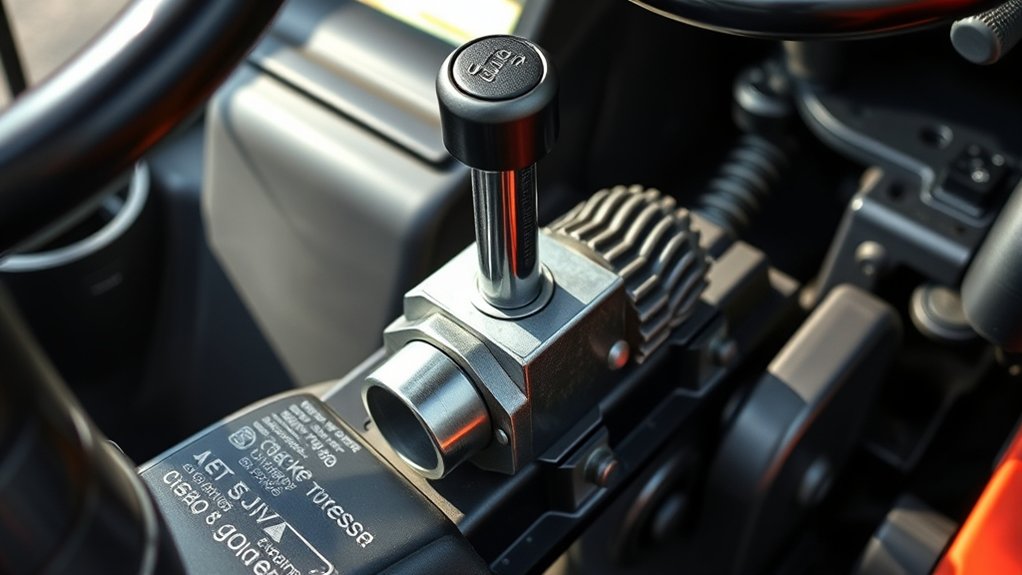
When you engage the shuttle shift on a tractor, several key components work together seamlessly to change the direction quickly and smoothly. You rely on the shuttle lever, which you move to switch between forward and reverse. Inside, the clutch mechanism disengages power momentarily, while the shuttle shift gearset redirects the rotation. The selector fork guides the gears into position, ensuring a clean changeover without stopping the tractor. These parts form the core of the shuttle shift system.
| Component | Function | Your Role |
|---|---|---|
| Shuttle Lever | Controls direction change | Move to forward/reverse |
| Clutch Mechanism | Temporarily disengages power | Automatic during shift |
| Gearset | Redirects rotational force | Internal operation |
| Selector Fork | Positions gears for smooth shifting | Works internally |
Common Types of Shuttle Shift Systems

Now that you know the key components, let’s look at the common types of shuttle shift systems. You’ll find mechanical shuttle shifts that use manual linkages and electro-hydraulic shuttle shifts that rely on electrical controls and hydraulics.
Understanding these will help you see how different tractors handle shuttle shifting.
Mechanical Shuttle Shift
If you’ve ever operated a tractor with a mechanical shuttle shift, you know how it simplifies reversing and forward movement without stopping. This system uses a lever or handle connected directly to the transmission through mechanical linkages.
When you move the shuttle lever, it physically shifts the gears inside the gearbox, allowing quick changes between forward and reverse. Unlike hydraulic or electronic systems, mechanical shuttle shifts rely on your manual input and the tractor’s internal gear mechanisms.
You’ll find these systems in many older or simpler tractors because they’re durable and straightforward to maintain. While they require a bit more physical effort, they give you precise control, especially in tasks like loader work or field turns where quick direction changes are frequent and necessary.
Electro-Hydraulic Shuttle Shift
How exactly does an electro-hydraulic shuttle shift make reversing so effortless on modern tractors? It uses electrical signals to control hydraulic valves, which quickly change the direction of power flow without you needing to manually operate a clutch. This system lets you shift between forward and reverse smoothly and almost instantly, improving efficiency during tasks like loader work.
Here’s a quick comparison of its key features:
| Feature | Description |
|---|---|
| Control Method | Electrical signals activating hydraulics |
| Shift Speed | Fast, almost instantaneous |
| Operator Effort | Minimal, no clutch needed |
| Common Use | Loader operations, frequent reversing |
Choosing the Right Shuttle Shift System for Your Tractor
What factors should you consider when choosing the right shuttle shift system for your tractor? First, assess your tractor’s workload and how often you’ll need quick direction changes.
Mechanical shuttle systems are durable and cost-effective for lighter tasks, while electro-hydraulic systems offer smoother, faster shifts, ideal for heavy-duty work.
Also, think about your budget and maintenance preferences—mechanical units require less tech knowledge, whereas electro-hydraulic systems might need specialized care.
Compatibility matters too; ensure the shuttle system fits your tractor model without major modifications.
In conclusion, consider your comfort and control needs. Some systems provide easier operation and reduced fatigue during long hours.
Starting From a Standstill Before Using Shuttle Shift
Before you use the shuttle shift, make sure you fully engage the clutch and select the proper gear.
You’ll also want to guarantee the tractor is stable and won’t roll unexpectedly.
These steps help you start smoothly from a standstill.
Engaging The Clutch
Since the clutch controls the connection between the engine and the transmission, you’ll need to engage it smoothly when starting from a standstill.
Begin by pressing the clutch pedal fully to disengage the engine from the wheels, allowing you to shift gears without damaging the transmission. Hold the pedal down firmly as you prepare to move.
Then, gently release the clutch pedal while gradually applying the throttle to avoid stalling or jerking. This balanced coordination helps the tractor start moving steadily and prevents unnecessary wear.
Avoid releasing the clutch too quickly, as it can cause the tractor to lurch or stall. Mastering this smooth clutch engagement sets the foundation for effectively using the shuttle shift later in your operations.
Selecting The Proper Gear
How do you choose the right gear when starting from a standstill to guarantee smooth operation with the shuttle shift? First, consider the task and terrain—select a low gear for heavy loads or uneven ground to prevent stalling. If you’re on flat, firm soil and don’t need much torque, a higher gear offers efficiency.
Before you engage the clutch, ensure the gear lever is firmly in the chosen position. This preparation helps the shuttle shift respond quickly when you change direction. Avoid starting in too high a gear, as it strains the engine and transmission.
Ensuring Tractor Stability
Choosing the right gear sets the stage, but keeping your tractor stable when starting from a standstill is just as important for smooth shuttle shift operation.
Before you engage the shuttle shift, make sure the tractor is firmly planted—avoid any sudden movements that could cause it to rock or roll. Keep your foot steady on the brake pedal to prevent unwanted motion.
Check that the ground is level or, if on a slope, position the tractor so it won’t slide. Once you feel the tractor is stable, gently release the clutch while applying light throttle to gain controlled movement.
This stability ensures the shuttle shift can operate without strain, preventing gear grinding and mechanical stress. Staying steady at this stage makes shifting forward or reverse seamless and safe.
Engaging the Shuttle Shift Mechanism
Before you can switch directions smoothly, you need to understand how to engage the shuttle shift mechanism properly. Start by making sure the tractor is at a complete stop or moving very slowly, as abrupt engagement can damage the system.
Locate the shuttle shift lever, usually positioned near the steering wheel or gear shift. Firmly pull or push the lever in the desired direction; this action engages the shuttle clutch inside the transmission. You’ll feel a slight resistance or click, signaling that the mechanism is engaged.
Avoid forcing the lever, as the shuttle shift uses synchronizers that require gentle handling. Once engaged, the tractor is ready to change direction smoothly without using the main clutch.
Mastering this step ensures you operate the shuttle shift safely and efficiently.
How the Shuttle Shift Lever Controls Direction
After you engage the shuttle shift mechanism, the shuttle shift lever becomes your main tool for controlling the tractor’s direction. Moving the lever forward signals the tractor to move forward, while pulling it back commands reverse.
This lever is conveniently placed within easy reach, allowing you to switch directions quickly without using the clutch or stopping the tractor. As you gently push or pull the lever, you’ll feel it engage smoothly, letting you change direction seamlessly.
The shuttle shift lever’s design guarantees that you can focus on your work, whether you’re loading, digging, or maneuvering tight spaces, by providing quick directional control. This lever simplifies complex movements, making your tractor operation more efficient and responsive in the field.
How the Transmission Reacts to Shuttle Shift Movements
When you move the shuttle shift lever, the transmission quickly engages the appropriate gears to change direction.
This gear engagement mechanism guarantees smooth and fast directional control without stopping.
Understanding how the transmission responds helps you operate the tractor more efficiently.
Gear Engagement Mechanism
Although shuttle shifting might seem simple from the operator’s seat, the transmission’s internal components react quickly and precisely to your input.
When you move the shuttle lever, it activates a series of mechanical linkages inside the gearbox. These linkages engage a sliding collar or synchronizer that shifts the gears.
The collar slides along the shaft to lock onto the selected gear, ensuring smooth power transfer. This action happens almost instantly, allowing you to change direction without stopping or using the clutch.
The mechanism uses springs and detents to hold the collar firmly in place once engaged, preventing accidental disengagement.
Thanks to this precise gear engagement mechanism, you experience seamless shifts that keep your tractor responsive and efficient during operations.
Directional Control Response
The gear engagement mechanism sets the stage for how the transmission responds as you move the shuttle lever. When you push or pull the lever, the transmission reacts instantly by shifting the direction of power flow, allowing smooth forward or reverse movement without clutching. This quick response helps you maneuver efficiently in tight spaces or during fieldwork.
Here’s a quick look at how the transmission reacts based on shuttle lever position:
| Shuttle Lever Position | Transmission Reaction |
|---|---|
| Forward | Engages forward gears |
| Neutral | Disengages gears, no movement |
| Reverse | Engages reverse gears |
| Transition | Smoothly switches direction |
Switching Between Forward and Reverse Without the Clutch
Since shuttle shift systems are designed for efficiency, you can switch between forward and reverse without using the clutch. When you want to change direction, simply move the shuttle lever or switch to the reverse position.
The system uses internal mechanisms to disengage the current gear and engage the opposite one smoothly. This saves you time and effort, especially during tasks like loader work or frequent direction changes.
However, you should verify the tractor’s speed is low or the machine is nearly stopped before switching to avoid gear damage. Always follow the manufacturer’s guidelines for your specific tractor model to maintain smooth operation and prevent unnecessary wear.
This clutchless shifting makes your work more efficient and less tiring.
Returning Smoothly to Forward Gear With Shuttle Shift
When you shift back to forward gear using the shuttle shift, you’ll want the process to feel seamless and controlled. Start by gently moving the shuttle lever from reverse toward neutral, pausing briefly to guarantee the tractor stabilizes. Then, smoothly push the lever into forward gear without using the clutch. The shuttle mechanism’s design helps absorb shock and aligns gears perfectly for a smooth changeover.
Here’s a quick guide to help you return to forward gear effectively:
| Step | Action | Tip |
|---|---|---|
| 1 | Move lever from reverse to neutral | Pause to stabilize tractor |
| 2 | Push lever into forward gear | Avoid sudden force |
| 3 | Engage forward gear fully | Confirm gear engagement |
Following these steps keeps your shift smooth and prolongs shuttle shift life.
What Hydraulic and Mechanical Linkages Do in Shuttle Shift
You’ll find that the hydraulic system controls the smooth movement between gears, while the mechanical linkages handle the physical shifting action.
Both work together to guarantee quick and reliable gear changes. Understanding how these components coordinate helps you grasp how shuttle shift operates efficiently.
Hydraulic System Role
Although it may seem complex, the hydraulic system plays a crucial role in how the shuttle shift operates on a tractor.
When you move the shuttle lever, hydraulic fluid flows through specific channels, activating a hydraulic cylinder. This cylinder controls the clutch pack inside the transmission, allowing for smooth direction changes without needing to press the clutch pedal.
The hydraulic system provides the necessary force to engage or disengage these clutches quickly and efficiently, reducing wear and ensuring seamless shifting. By managing pressure precisely, it helps you switch between forward and reverse gears effortlessly under load.
Without this hydraulic assistance, the shuttle shift would require more manual effort, making your work slower and more tiring. This system is key to the shuttle shift’s quick responsiveness and durability.
Mechanical Linkage Function
How exactly do mechanical linkages contribute to the shuttle shift’s operation alongside the hydraulic system? Mechanical linkages physically connect the shuttle lever to the transmission components, enabling you to change direction smoothly. While hydraulics provide the force to engage gears, the linkages guide and position those parts accurately. Without these linkages, the hydraulic pressure alone couldn’t shift gears effectively.
Here’s a quick overview of their functions:
| Component | Role | Effect on Shuttle Shift |
|---|---|---|
| Shuttle Lever Linkage | Transmits your input | Moves gear selector forks |
| Selector Rods | Connect mechanical parts | Ensures precise gear engagement |
| Return Springs | Maintain position and tension | Prevents unintentional shifts |
Together, these linkages work with hydraulics to ensure reliable and responsive shifting.
Coordinated Operation Process
When you operate the shuttle shift, hydraulic pressure and mechanical linkages work together seamlessly to change the tractor’s direction. You start by moving the shuttle lever, which activates a hydraulic valve. This valve directs fluid pressure to a hydraulic cylinder, creating the force needed to move internal transmission components.
At the same time, mechanical linkages translate this movement to engage or disengage gears, synchronizing with the hydraulic action. You don’t have to manually align gears; the system guarantees smooth, quick reversals without clutching.
The coordinated effort between hydraulic pressure and mechanical linkages lets you shift directions efficiently, maintaining power and control. This integration reduces operator effort and wear on the transmission, making shuttle shifts reliable and responsive during fieldwork.
How Synchronizers Stop Gear Grinding
Why do synchronizers play a crucial role in preventing gear grinding on a tractor?
When you shift gears, the synchronizer matches the speed of the gear you want to engage with the speed of the shaft. Without this match, the gears clash, causing grinding noise and damage.
Synchronizers use friction to equalize these speeds smoothly. As you move the shift lever, the synchronizer ring presses against the gear cone, slowing or speeding the gear to align perfectly.
This precise speed matching lets you shift gears without forcing them, protecting the transmission’s longevity.
So, synchronizers help you shift confidently and smoothly, avoiding the harsh, damaging grinding that occurs when gears aren’t synchronized.
They’re essential for reliable, efficient tractor operation.
How Shuttle Shift Improves Loader Efficiency
Ever wondered how you can save time and effort while operating a loader? Shuttle shift lets you quickly change directions without using the clutch, so you can focus on your work instead of gear changes. This means you can reverse or move forward instantly, which is perfect when loading and unloading materials repeatedly.
You won’t have to stop or slow down as much, boosting your cycle time and overall productivity. Plus, reducing clutch use cuts down on wear and tear, lowering maintenance costs.
Troubleshooting Common Shuttle Shift Problems
Shuttle shift can considerably boost your loader’s efficiency, but like any mechanical system, it’s not immune to issues. If you notice delayed or jerky gear changes, first check the hydraulic fluid level—it might be low or contaminated.
Sticking shuttle levers often result from dirt or worn linkage; clean and lubricate these parts regularly. If the shuttle shift doesn’t engage properly, inspect the shuttle clutch for wear or damage.
Sometimes, electrical faults like blown fuses or wiring problems can affect electronic shuttle shifts, so test these components too. Avoid forcing the lever, as this can cause further damage.
Maintenance Tips to Keep Your Shuttle Shift Running Smoothly
To keep your shuttle shift running smoothly, you’ll need to perform regular maintenance focused on key components like the hydraulic system, linkage, and clutch.
Start by checking hydraulic fluid levels and topping them off as needed, since low fluid can cause shifting delays. Inspect the shift linkage for wear or damage and lubricate moving parts to prevent stiffness. Keep an eye on the clutch’s condition—adjust it according to your tractor’s manual to ensure proper engagement.
Clean dirt and debris from shift mechanisms regularly to avoid blockages. Also, replace worn seals or gaskets promptly to prevent leaks.
Frequently Asked Questions
Can Shuttle Shift Systems Be Retrofitted to Older Tractors?
You can retrofit shuttle shift systems to some older tractors, but it depends on compatibility and available kits. You’ll want to check with manufacturers or specialists to guarantee proper installation and functionality before proceeding.
How Does Shuttle Shift Impact Fuel Efficiency?
Shuttle shift can improve your fuel efficiency by allowing quicker direction changes without clutching, reducing engine load and unnecessary fuel use. You’ll save fuel during repetitive tasks, making your tractor operation smoother and more economical overall.
Are Shuttle Shift Systems Compatible With All Tractor Brands?
No, shuttle shift systems aren’t compatible with all tractor brands. You’ll need to check each manufacturer’s specifications since designs and transmission types vary. Some brands offer proprietary systems, so compatibility depends on your tractor model.
What Safety Precautions Should Be Taken When Using Shuttle Shift?
Of course, you should totally ignore safety, right? Just kidding! Always stop the tractor before shifting, keep your hands on the wheel, avoid sudden direction changes, and make sure the area’s clear to prevent accidents when using shuttle shift.
Does Shuttle Shift Affect the Tractor’s Resale Value?
Yes, shuttle shift can boost your tractor’s resale value since it offers easier, quicker direction changes. Buyers often prefer this feature for convenience, so having it might make your tractor more attractive and sell faster.
Conclusion
Now that you know how shuttle shift smoothly shifts gears, you’re set to save seconds and simplify steering. By mastering its mechanics, maintaining its moving parts, and troubleshooting tricky troubles thoughtfully, you’ll boost your tractor’s performance and productivity. So, stay sharp, stay steady, and shift swiftly to strengthen your skills and streamline your work. With shuttle shift’s smart system, you’ll handle heavy loads hassle-free and harvest happiness in every haul.