How to Break Ground for a Garden With a Tractor in 3 Easy Steps
To break ground for a garden with a tractor, start by clearing your land of debris and ensuring the soil is damp but not muddy. Next, choose the right tractor attachments based on your soil type—use a rotary tiller for heavy clay or a disc harrow for sandy soil. Finally, till the soil thoroughly, then grade and condition it for a smooth, level surface ready for planting. Keep going to uncover tips that make your gardening foundation even stronger.
Key Takeaways
- Clear the garden area of debris, rocks, and weeds to prepare for tilling.
- Check soil moisture; water dry soil lightly a day before tilling for optimal conditions.
- Choose the appropriate tractor attachment based on soil type, such as a rotary tiller for clay or disc harrow for sandy soil.
- Use the tractor to till the soil, breaking up compaction and mixing organic matter evenly.
- Grade and level the soil with a box blade or landscape rake to create a smooth, plant-ready surface.
Prepare Your Land for Tilling
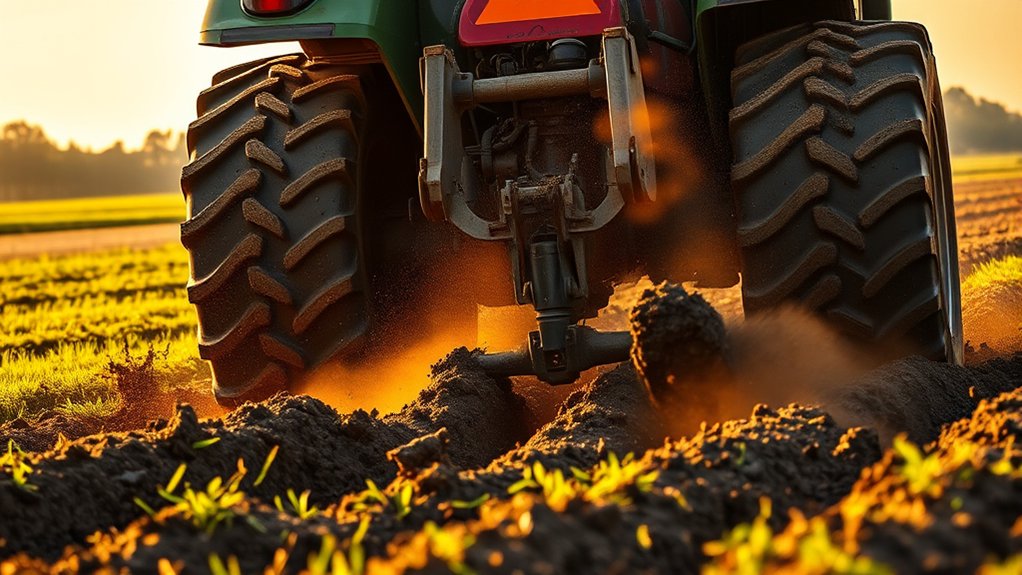
Before you begin tilling, clear your land of any debris, rocks, or weeds that could interfere with your tools and seedlings. Walk the area carefully, removing sticks, roots, and trash. This step prevents damage to your tractor and guarantees smoother tilling.
Next, mark any permanent structures or areas you want to protect. You’ll want to avoid tilling those spots accidentally.
Check the soil moisture: it should be damp but not muddy to avoid compacting or clumping. If the soil is too dry, lightly water it a day before tilling.
Finally, plan your tilling pattern to cover every inch evenly. Preparing your land thoroughly sets a solid foundation, making the tilling process efficient and ready for planting.
Choose the Right Tractor Attachments for Your Soil
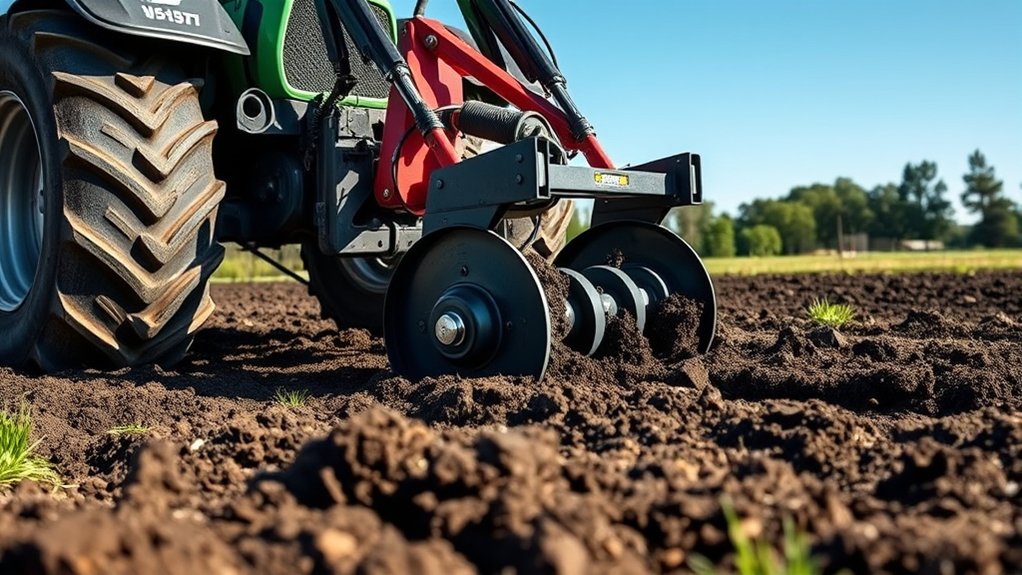
When selecting tractor attachments, consider your soil type to assure effective tilling and planting.
For heavy clay soils, a power tiller or rotary tiller works best, as it can break up dense soil and improve aeration.
Sandy or loose soils need less aggressive tools like a disc harrow to avoid over-disturbing the ground.
If your soil has lots of rocks or debris, a landscape rake attachment helps clear the surface before tilling.
Also, a box blade can help level uneven areas without disrupting soil structure excessively.
Match the attachment’s width and weight to your tractor’s power to maintain control and efficiency.
Choosing the right attachment ensures you prepare your garden bed properly, making planting easier and boosting your garden’s chances for success.
Till, Grade, and Condition Your Garden Soil Using the Tractor
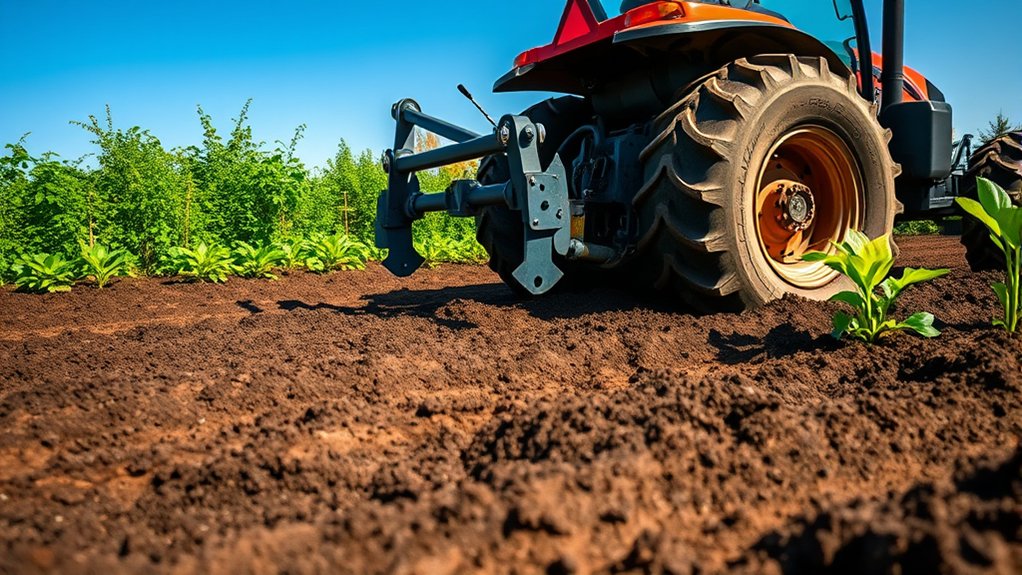
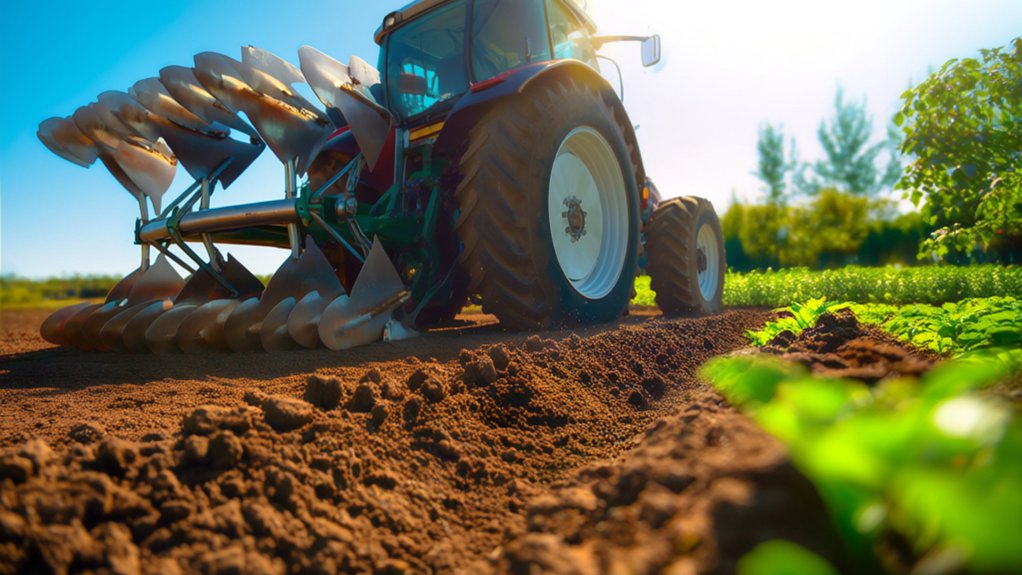
Once you’ve selected the right attachments, you’ll use your tractor to till, grade, and condition the soil efficiently. Start by tilling the soil to break up compacted areas and mix in organic matter, improving aeration and drainage.
Selecting the right attachments and tilling the soil improves aeration, drainage, and breaks up compacted areas.
Next, use a box blade or landscape rake attachment to grade the garden bed, creating a smooth, level surface that promotes proper water runoff and prevents pooling.
Finally, condition the soil by running the tractor over it with a harrow or cultivator, which breaks clods into finer particles and helps create an ideal seedbed.
Throughout the process, adjust your tractor’s speed and depth settings to avoid overworking the soil, preserving its structure and fertility for healthy plant growth.
Frequently Asked Questions
How Do I Safely Transport My Tractor to the Garden Site?
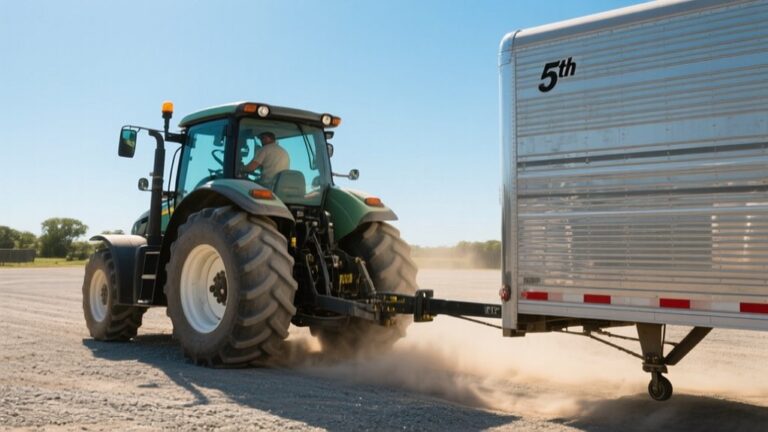
You’ll want to secure the tractor on a trailer using heavy-duty straps, check the trailer’s weight capacity, make sure lights and brakes work, drive slowly, and double-check everything before moving. Safety’s key throughout transport.
What Maintenance Does the Tractor Need Before and After Use?
Your tractor’s engine is the heart—check oil, fuel, and air filters before use, then clean and inspect afterward. Tighten bolts, grease fittings, and store it properly to keep your “heart” strong and ready for the next garden.
Can I Use a Tractor for Small Garden Spaces Effectively?
Yes, you can use a tractor for small garden spaces, but it might be less efficient than hand tools or smaller equipment. You’ll need a compact tractor and careful maneuvering to avoid damaging plants or tight areas.
How Do Weather Conditions Affect Tractor Tilling Schedules?
Don’t worry about rain ruining your plans; you should avoid tilling when soil’s too wet to prevent compaction. Wait for dry, crumbly conditions to guarantee your tractor works efficiently and your garden soil stays healthy and workable.
What Are Common Troubleshooting Tips for Tractor Attachment Issues?
You should check for loose bolts, guarantee proper attachment alignment, inspect hydraulic connections, and verify the PTO shaft is engaged correctly. Don’t forget to clean debris and lubricate moving parts to avoid common tractor attachment issues.
Conclusion
Now that you’ve got the basics down, you’re just moments away from transforming your garden. Picture the rich, tilled soil waiting beneath your tractor—ready to nurture your seeds and dreams. But before you jump in, remember: the right preparation makes all the difference. Follow these steps carefully, and soon you’ll watch your garden burst to life like never before. Are you ready to break ground and start something amazing?