5 Tips on How Often to Sharpen Lawn Mower Blades
You should sharpen your lawn mower blades every 20 to 25 hours of use or about once a month during the growing season. If you mow frequently, have a large lawn, or deal with tough, coarse grass and rough terrain, sharpen more often. Watch for signs like ragged grass or uneven clippings, which tell you it’s time. Keep your blades clean and balanced between sessions for best results. There’s plenty more to help you keep your mower in top shape.
Key Takeaways
- Sharpen lawn mower blades every 20-25 hours of use or roughly once a month during the growing season.
- Increase sharpening frequency for larger lawns, tougher grass types, and rough terrain with sticks or stones.
- Look for signs like torn grass, uneven clippings, vibrations, or visible blade damage to know when to sharpen.
- Track mowing hours to maintain a consistent sharpening schedule and prevent blade damage.
- Clean and inspect blades regularly between sharpenings to extend blade life and ensure optimal cutting performance.
How Often Should You Sharpen Lawn Mower Blades?
You should sharpen your lawn mower blades at least once every 20 to 25 hours of use to keep your grass healthy and your mower running efficiently.
Regular sharpening ensures clean cuts, which prevents tearing and promotes faster healing for your lawn.
If you mow once a week during the growing season, this usually means sharpening the blades every month or so.
However, if you mow more frequently or tackle tougher terrain with sticks and stones, you might need to sharpen them sooner.
On the other hand, if you only mow occasionally, you can extend the interval a bit.
Keeping track of your mowing hours helps you stay on schedule and avoid damage to both your grass and your mower’s motor.
Signs Your Lawn Mower Blades Need Sharpening
When your lawn mower blades start to dull, you’ll notice several clear signs that it’s time for sharpening. First, your grass will look ragged or torn instead of cleanly cut, which can stress the lawn and invite disease.
You might also see more grass clippings scattered unevenly instead of a neat, even spread. If your mower struggles to cut through the grass or you have to make multiple passes, that’s a strong indicator the blades are dull.
Additionally, if you hear unusual vibrations or noises while mowing, your blades could be damaged or out of balance. Paying attention to these signs helps you maintain a healthy lawn and ensures your mower works efficiently without unnecessary strain.
How Lawn Size and Grass Type Affect Sharpening Frequency
Although regular sharpening is essential, how often you need to sharpen your lawn mower blades depends largely on the size of your lawn and the type of grass you’re cutting.
If you have a large lawn, you’ll naturally use your mower more, which dulls the blades faster, so expect to sharpen more frequently. Conversely, smaller lawns require less blade maintenance.
The type of grass matters too—coarser, thicker grasses like Bermuda or St. Augustine wear blades down quicker than softer grasses like fescue or bluegrass.
Also, if your lawn has lots of weeds or tough stems, your blades will dull faster.
Paying attention to these factors helps you plan blade maintenance effectively and keep your mower running smoothly.
DIY Methods to Sharpen Lawn Mower Blades at Home
Understanding how lawn size and grass type affect blade dullness gives you a better idea of when to sharpen. When you decide to sharpen your mower blades at home, you’ll find it’s straightforward with the right tools.
Here’s how to do it yourself:
- Remove the blade safely by disconnecting the spark plug and using a wrench.
- Clean the blade thoroughly to remove dirt and grass buildup.
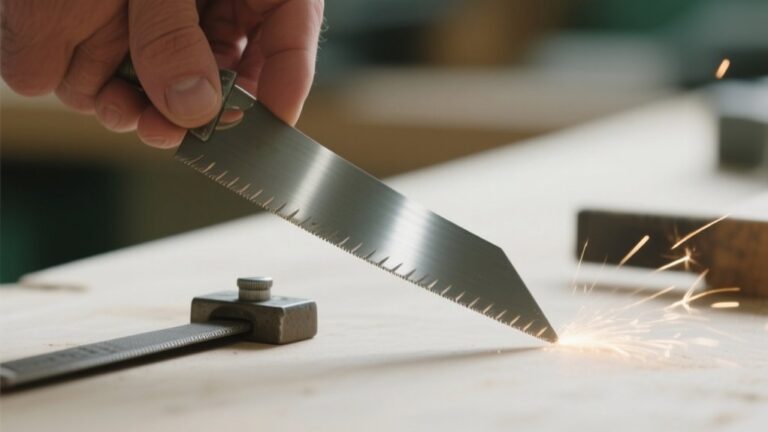
- Use a file or a bench grinder to sharpen the edges evenly, maintaining the original angle.
- Balance the blade by placing it on a blade balancer or nail to ensure smooth cutting.
Sharpening blades yourself saves money and keeps your mower performing well longer.
Tips to Maintain Lawn Mower Blades Between Sharpenings
To keep your lawn mower blades sharp longer, you should regularly clean and inspect them after each use. Remove grass clippings, dirt, and debris to prevent buildup that dulls the blades.
Check for any nicks, bends, or rust spots and address them promptly. You can lightly sand small rust patches and smooth out rough edges with fine-grit sandpaper.
Always tighten blade bolts to the manufacturer’s recommended torque to avoid vibrations that cause damage. Store your mower in a dry place to prevent corrosion.
Additionally, avoid mowing over hard objects like rocks or sticks, which quickly damage blades.
Frequently Asked Questions
What Type of Metal Are Lawn Mower Blades Typically Made Of?
Lawn mower blades are typically made of high-carbon steel, which you’ll find durable and resistant to wear. This metal holds a sharp edge well, helping you get clean cuts and maintain your lawn efficiently.
Can Dull Blades Damage My Lawn Mower Engine?
Yes, dull blades can reduce your mower’s efficiency by up to 30%, forcing the engine to work harder. This extra strain can lead to overheating and premature engine wear, so sharpening blades regularly protects your mower’s health.
Are There Professional Services for Sharpening Lawn Mower Blades?
Yes, you can find professional services at hardware stores or lawn care shops that sharpen mower blades. They use specialized tools to guarantee a precise edge, saving you time and keeping your mower running efficiently.
How Do Weather Conditions Affect Blade Sharpness?
Weather conditions can wreck your blades faster than a tornado in a trailer park! Rain rusts them, dry dirt dulls them, and tough grass wears them down. You’ll need to sharpen more often to keep mowing sharp.
What Safety Gear Is Recommended When Sharpening Blades?
You should wear safety goggles to protect your eyes, heavy-duty gloves to shield your hands, and ear protection to guard against noise. Also, wear a dust mask to avoid inhaling metal particles while sharpening your blades.
Conclusion
You might think lawn mower blades sharpen themselves while you’re mowing—but sadly, they don’t. If you ignore dull blades, your once-beautiful lawn will start looking like a patchy disaster zone. So, instead of waiting for your grass to scream for help, take a few minutes to sharpen those blades regularly. Your lawn—and your neighbors—will thank you. After all, a sharp blade is the secret weapon to a lawn that actually impresses!