How Does Hydrostatic Drive Work on a Lawn Tractor?
A hydrostatic drive on your lawn tractor uses fluid pressure instead of gears to power the wheels, letting you control speed and direction smoothly with a pedal or lever. The engine drives a hydraulic pump that pushes fluid to a motor, which turns the wheels without jerks or gear shifts. This setup offers precise, quiet operation and better handling on slopes or uneven ground. Keep going to uncover how it improves fuel efficiency and maintenance.
Key Takeaways
- Hydrostatic drive uses fluid pressure to transfer power smoothly from the engine to the wheels without manual gear shifting.
- The engine powers a hydraulic pump that pressurizes fluid, which then drives a hydraulic motor connected to the wheels.
- A control lever adjusts the pump’s output, allowing seamless speed and direction changes with precise, jerk-free movement.
- Fluid flow and pressure control eliminate mechanical resistance, enabling smooth acceleration, deceleration, and easy reversing.
- Key components include a hydraulic pump, motor, control valve, hoses, and sealed housing for efficient, reliable operation.
What Is a Hydrostatic Drive on a Lawn Tractor?
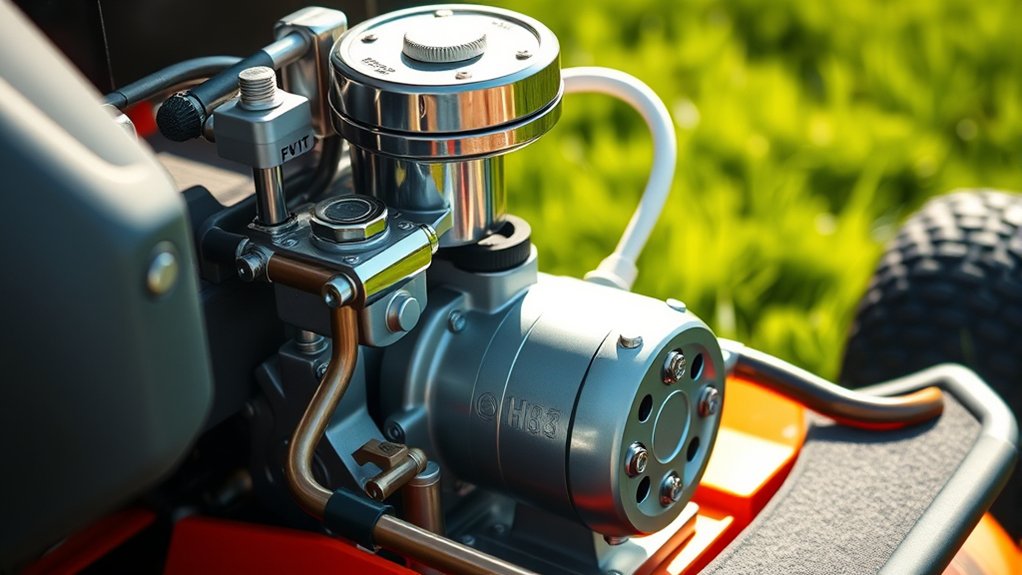
What makes a hydrostatic drive on a lawn tractor different from other drive systems? Unlike traditional gear or belt drives, a hydrostatic drive uses fluid pressure to transfer power from the engine to the wheels.
Hydrostatic drives use fluid pressure, unlike traditional gear or belt systems, for smooth power transfer to wheels.
This means you don’t have to worry about shifting gears manually. You’ll find it offers smooth, seamless speed adjustments, allowing you to increase or decrease speed just by pressing a pedal or moving a lever.
This system also provides better control on uneven or sloped terrain because it automatically adjusts power delivery. Plus, hydrostatic drives tend to be more durable and require less maintenance since they don’t use clutches or gear sets that wear out quickly.
If you want effortless operation, a hydrostatic drive is a smart choice for your lawn tractor.
How Does a Hydrostatic Transmission Work?
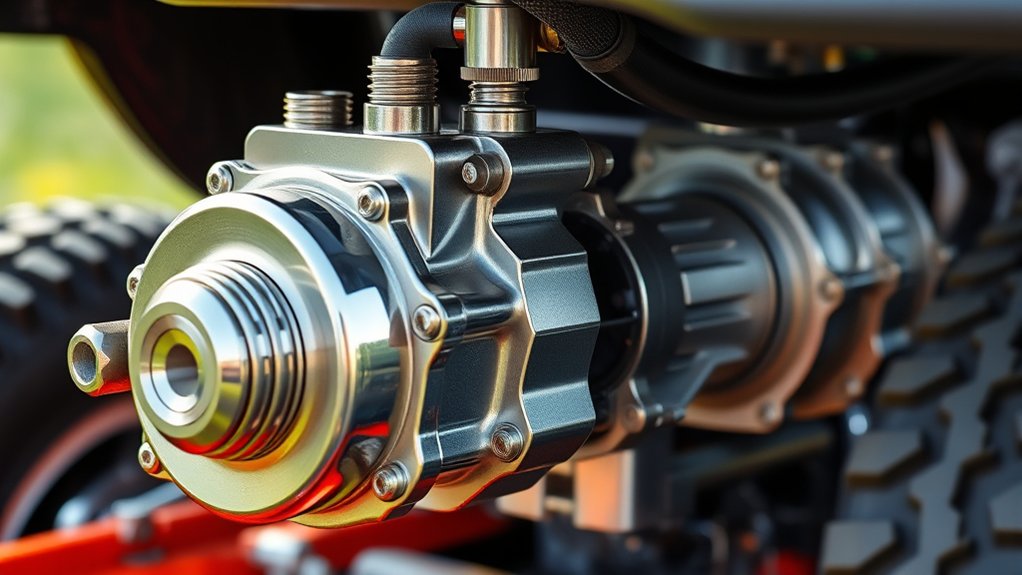
Although it might seem complex, a hydrostatic transmission works by using fluid to transfer power smoothly from the engine to your tractor’s wheels.
When the engine runs, it drives a pump that pushes hydraulic fluid through the system. This fluid flows under pressure to a hydraulic motor connected to the wheels.
By controlling the flow and pressure of the fluid, you can change the tractor’s speed and direction without shifting gears.
When you move the control lever, it adjusts the pump’s output, allowing you to accelerate, decelerate, or reverse with ease.
This setup gives you precise control and a seamless ride, especially useful for mowing or maneuvering around obstacles.
You won’t feel the jerks or lags typical in gear-based transmissions.
Main Parts Inside a Hydrostatic Drive System
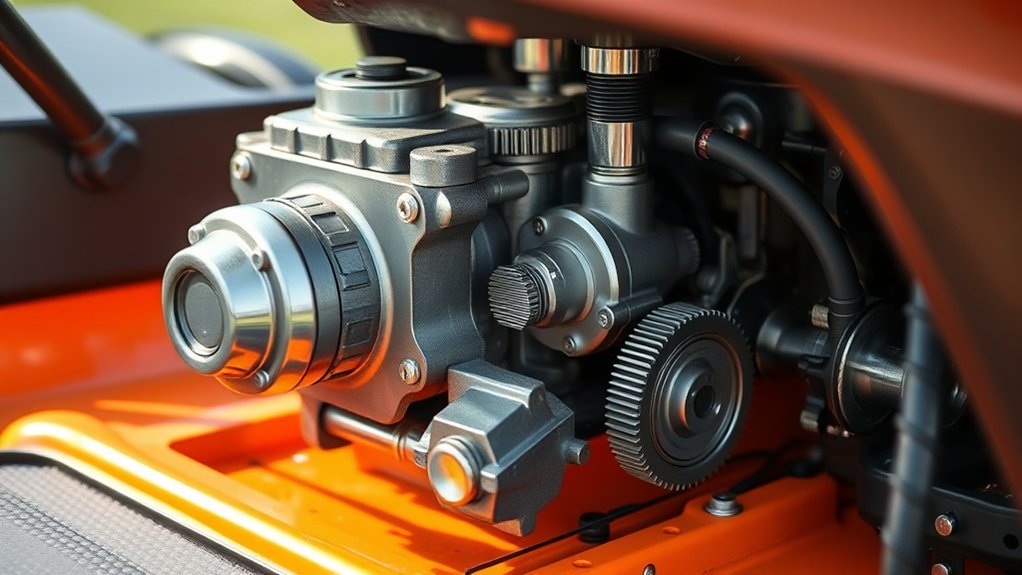
Now, let’s look at the main parts inside a hydrostatic drive system. You’ll find a hydraulic pump and a hydraulic motor working together to control power flow.
Understanding their roles will help you see how the system moves your lawn tractor smoothly.
Key Components Overview
Since understanding the key components inside a hydrostatic drive system is essential to maintaining and troubleshooting your lawn tractor, let’s take a closer look at the main parts that make it work.
You’ll find a hydraulic pump, a hydraulic motor, and a control valve working together to transfer power smoothly.
The pump converts mechanical energy from the engine into hydraulic fluid flow.
The motor then uses this fluid flow to generate rotational force that drives the wheels.
The control valve manages fluid direction and flow rate, allowing you to adjust speed and direction.
These components are connected by high-pressure hoses and sealed within the transmission housing to keep everything efficient and leak-free.
Knowing these parts helps you spot issues early and keep your tractor running smoothly.
Role of Hydraulic Pump
How does the hydraulic pump keep your lawn tractor moving smoothly? The pump converts mechanical power from the engine into hydraulic energy by pushing fluid through the system. This pressurized fluid flows to other components, enabling seamless speed and direction control without shifting gears. You can adjust the pump’s swashplate angle to vary fluid flow, controlling your tractor’s speed effortlessly.
Here’s a quick look at the hydraulic pump’s role:
| Feature | Purpose | Benefit |
|---|---|---|
| Fluid Pressurization | Converts mechanical power | Enables smooth motion |
| Variable Displacement | Adjusts fluid volume | Controls speed precisely |
| Compact Design | Fits within tractor chassis | Saves space, reduces weight |
Understanding the pump helps you appreciate how your tractor operates efficiently.
Function of Hydraulic Motor
What makes your lawn tractor move forward or backward after the hydraulic pump sends pressurized fluid? It’s the hydraulic motor’s job to convert that fluid’s energy into mechanical motion.
Inside the hydrostatic drive system, the hydraulic motor receives pressurized fluid through its inlet, causing internal components like gears, pistons, or vanes to spin. This rotation directly drives the tractor’s wheels or transmission, controlling its speed and direction.
When the fluid flow reverses, the motor spins the other way, making your tractor move backward.
The hydraulic motor works smoothly and efficiently, responding instantly to changes in fluid pressure and flow from the pump. Without this motor converting fluid power into motion, your tractor wouldn’t move at all.
How Fluid Power Moves Your Tractor’s Wheels
When you engage the hydrostatic drive on your lawn tractor, fluid power takes charge to move the wheels smoothly and efficiently. Inside the hydrostatic transmission, hydraulic fluid flows from the pump to the motor, creating pressure that turns the motor’s shaft.
This shaft connects directly to your tractor’s wheels, translating fluid energy into mechanical motion. By controlling the fluid flow, you regulate the wheel speed and direction without shifting gears.
The system responds instantly to your throttle and pedal inputs, giving you precise control over movement. Because the fluid power eliminates the need for clutches or gear changes, your tractor accelerates smoothly, climbs hills effortlessly, and maneuvers in tight spaces with ease.
This seamless transfer of power makes lawn work less strenuous and more enjoyable.
Comparing Hydrostatic and Manual Transmissions
Fluid power gives your lawn tractor smooth, responsive control through a hydrostatic drive, but manual transmissions still hold their own in many situations. You’ll find hydrostatic drives let you shift speeds seamlessly without clutching or stopping, while manual transmissions require more effort and skill to change gears.
Here’s a quick comparison to help you understand the key differences:
| Feature | Hydrostatic Transmission | Manual Transmission |
|---|---|---|
| Gear Shifting | Smooth, no clutch needed | Requires clutch and gear changes |
| Maintenance | Generally higher, more complex system | Simpler, easier to maintain |
| Control Precision | Variable speed control with ease | Fixed speeds, less flexible |
| Cost | Usually more expensive upfront | Typically lower initial cost |
When Should You Choose a Hydrostatic Drive Lawn Tractor?
You’ll want to choose a hydrostatic drive lawn tractor if you’re dealing with varied or uneven terrain that demands smooth control.
It’s perfect when you need easy operation without constant gear shifting.
Plus, understanding the maintenance and durability can help you decide if it fits your long-term needs.
Ideal Terrain Conditions
Because hydrostatic drive lawn tractors offer seamless speed control and smooth power delivery, they excel on uneven or hilly terrain where precise handling is essential. You’ll want to choose a hydrostatic drive when your lawn has challenging features that demand constant speed adjustments without jerky motion. This drive system keeps you in control, reducing strain and helping maintain traction.
Ideal terrain conditions include:
- Slopes and inclines where gradual speed changes prevent slipping
- Bumpy or rough ground that requires smooth power progression
- Narrow paths or tight corners needing precise maneuvering
- Mixed terrain with varying surfaces like grass, gravel, or dirt
If your lawn fits any of these conditions, a hydrostatic drive tractor will make your mowing safer and more efficient.
Ease Of Operation
Although hydrostatic drive lawn tractors may come at a higher initial cost, they offer unmatched ease of operation that saves you effort and time in the long run. You’ll benefit from smooth, seamless control without the need to shift gears manually. This makes mowing more comfortable, especially if you navigate around obstacles or need frequent speed adjustments.
If you prefer a straightforward, user-friendly experience or have limited mechanical skills, a hydrostatic drive is an excellent choice. It’s also ideal when you want to minimize fatigue during longer mowing sessions. Simply press the pedals to control speed and direction, letting you focus on a precise, clean cut without distractions.
Choosing a hydrostatic drive lawn tractor means you prioritize convenience and efficiency in your yard work.
Maintenance And Durability
How often should you maintain a hydrostatic drive lawn tractor to keep it running smoothly? You’ll want to check the hydraulic fluid level and condition every 50 hours of use and replace it according to your tractor’s manual, usually annually. Regular maintenance prevents wear and ensures durability, especially if you mow frequently or on rough terrain.
Choose a hydrostatic drive if you value low-maintenance reliability paired with smooth control. Keep an eye on these key areas:
- Hydraulic fluid clarity and level
- Drive belt tension and condition
- Clean air filters to prevent engine strain
- Tire pressure for consistent traction
Why Hydrostatic Drives Are Popular for Lawn Tractors
When you operate a lawn tractor, smooth and responsive control is essential, and hydrostatic drives deliver just that. They’re popular because they let you change speed and direction effortlessly, without shifting gears manually. This means you can focus more on your mowing and less on handling the transmission.
Hydrostatic drives also reduce wear and tear since they use fluid pressure instead of mechanical parts, making them more reliable over time. Plus, you get precise control at low speeds, which is perfect for tricky lawn work or tight spaces.
Many users appreciate how quiet these systems run, adding comfort during long mowing sessions. Overall, hydrostatic drives combine ease of use, durability, and performance, making them a top choice for lawn tractors.
How Hydrostatic Drive Makes Speed Control Smoother
You’ve already seen how hydrostatic drives make operating your lawn tractor easier by eliminating manual gear shifts. What makes speed control even smoother is the seamless adjustment of hydraulic fluid flow. As you gently press the pedal, the system responds instantly, allowing you to fine-tune your speed without jerks or sudden changes.
Imagine this smooth control like:
- Gradually easing onto a quiet country road
- Adjusting volume with a dial instead of flipping switches
- Gliding your foot on a gas pedal with zero lag
- Effortlessly slowing down as you approach a tight turn
This precise modulation helps you maintain consistent speed, improving cutting accuracy and reducing operator fatigue. You’ll appreciate the fluid, responsive feel every time you mow.
Operating a Hydrostatic Drive Lawn Tractor
Operating a hydrostatic drive lawn tractor is straightforward once you get the hang of starting, stopping, and controlling speed smoothly. You’ll use a pedal or lever to adjust your pace precisely, making maneuvering easier around obstacles.
Let’s explore the key techniques to help you handle your tractor with confidence.
Starting And Stopping
How do you guarantee a smooth start and stop with a hydrostatic drive lawn tractor? You begin by ensuring the tractor is in neutral before starting the engine. This prevents sudden movement.
When you’re ready to move, gently press the pedal or lever forward to engage the drive.
To stop, slowly ease off the pedal and let the tractor come to a complete halt.
Finally, shift back to neutral before turning off the engine.
Keep these steps in mind:
- Confirm the drive lever is neutral before ignition
- Apply steady pressure on the pedal to start moving
- Gradually release the pedal for a controlled stop
- Shift to neutral before shutting down the engine
Following these actions helps avoid jerks and keeps control smooth.
Speed Control Mechanism
Where do you find the controls that let you adjust speed on a hydrostatic drive lawn tractor? Typically, you’ll use a foot pedal or a hand lever located conveniently near the operator’s seat.
Pressing the pedal forward or pushing the lever increases your speed smoothly, while pulling back slows you down.
Unlike traditional transmissions, the hydrostatic system allows you to vary your speed continuously without shifting gears. This means you can make fine adjustments to your pace, whether you’re mowing or moving between spots.
The control responds instantly to your input, providing a seamless driving experience. You don’t have to worry about gear changes disrupting your work, so you can focus fully on the task at hand.
Maneuvering Techniques
Adjusting your speed smoothly with the controls sets you up for precise handling when maneuvering a hydrostatic drive lawn tractor. Because the system allows seamless speed changes without shifting gears, you can easily navigate tight corners and obstacles.
To get the most from your tractor, use gentle pressure on the pedal or lever, avoiding sudden movements that might destabilize the machine. Practice controlling acceleration and deceleration, especially on slopes or uneven terrain.
Keep these tips in mind:
- Use slow, steady turns for tight spaces
- Gradually increase speed on straight paths
- Apply slight reverse pressure to pivot smoothly
- Avoid abrupt stops to maintain traction
Mastering these techniques ensures safer, more efficient mowing with your hydrostatic lawn tractor.
Essential Maintenance Tasks for Hydrostatic Drives
Maintaining your hydrostatic drive guarantees smooth operation and extends its lifespan. First, regularly check the hydraulic fluid level and top it off with the manufacturer-recommended type if needed. Clean the fluid reservoir and replace the fluid periodically, usually once a season, to prevent contamination and wear.
Next, inspect hoses and fittings for leaks or cracks; replace any damaged parts immediately to avoid system failure. Keep the drive’s cooling fins and surrounding areas free of debris to prevent overheating.
Also, check the drive belt tension and condition, adjusting or replacing it as necessary. Finally, follow the tractor’s service schedule for professional inspections and lubrication.
Staying on top of these tasks ensures your hydrostatic drive remains dependable and efficient.
Fixing Common Hydrostatic Drive Issues
If your hydrostatic drive starts slipping or loses power, you’ll want to address the issue promptly to avoid further damage. Start by checking the hydraulic fluid level and quality—low or dirty fluid can cause poor performance.
Inspect the drive belt for wear or looseness, as a slipping belt reduces power transfer. Also, examine the hydrostatic pump and motor for leaks or damage, since these parts are vital for smooth operation.
Check the drive belt and hydrostatic components for wear or leaks to ensure efficient power transfer and operation.
FINALLY, ensure the control linkage is properly adjusted to maintain correct drive engagement.
- Low or contaminated hydraulic fluid pooling under the tractor
- Worn or cracked drive belt slipping on pulleys
- Visible hydraulic fluid leaks near pump or motor
- Loose or misaligned control linkage affecting responsiveness
Fixing these common issues keeps your lawn tractor running smoothly.
How Hydrostatic Drive Affects Fuel Efficiency
You’ll notice that hydrostatic drive can change how much load the engine handles, which directly affects fuel use.
With variable speed control, you can match power exactly to the task, avoiding waste.
Plus, reduced mechanical losses mean the engine’s effort goes further, improving overall fuel efficiency.
Impact On Engine Load
How does a hydrostatic drive influence your lawn tractor’s engine load and fuel efficiency? It smooths out power delivery, so the engine doesn’t have to work as hard during speed changes or on uneven terrain. This means you’ll notice less strain on the engine, which can help reduce fuel consumption over time.
With hydrostatic drive, you can expect:
- Consistent engine RPM even when adjusting speed
- Reduced mechanical resistance during acceleration
- Less frequent gear shifting, easing engine stress
- Improved load handling on slopes or thick grass
Variable Speed Control
Why does variable speed control matter when it comes to fuel efficiency on your lawn tractor? With hydrostatic drive, you can smoothly adjust your speed without shifting gears, which helps the engine run at ideal RPM. This adaptability means you avoid wasting fuel by overworking the engine or running it too slowly. You get better control over power output, leading to improved fuel economy during mowing or transport.
| Speed Setting | Fuel Efficiency Impact |
|---|---|
| Low Speed | Saves fuel in tight spots |
| Medium Speed | Balanced fuel use |
| High Speed | Higher fuel consumption |
| Gradual Acceleration | Reduces fuel spikes |
| Constant Speed | Maintains steady fuel use |
Reduced Mechanical Losses
Beyond variable speed control, hydrostatic drive improves fuel efficiency by cutting down mechanical losses within your lawn tractor. Unlike traditional gear-driven systems, it relies on fluid dynamics instead of multiple moving parts, which means less energy wasted through friction and wear.
This streamlined power transfer lets your engine work smarter, not harder, saving fuel in the process. You’ll notice smoother acceleration and less strain on the motor, extending both engine life and fuel economy.
Imagine:
- Fewer metal gears grinding against each other
- Minimal energy lost to heat from friction
- Continuous, efficient power flow without jerks
- Reduced maintenance demands due to simplified mechanics
Cost Differences: Hydrostatic vs. Gear Drives
Although hydrostatic drives often come with a higher upfront price than gear drives, they offer benefits that can justify the investment depending on your needs. Hydrostatic systems provide smoother control and easier operation, which can save you time and effort. However, gear drives typically cost less initially and may have lower maintenance expenses.
Here’s a quick cost comparison to help you decide:
| Feature | Hydrostatic Drive |
|---|---|
| Initial Cost | Higher |
| Maintenance Cost | Moderate to High |
| Longevity | Long-lasting |
| Ease of Use | Very Easy |
| Repair Complexity | More Complex |
If you value convenience and smooth operation, hydrostatic drives might be worth the extra cost. Otherwise, gear drives remain a budget-friendly choice.
Upgrading or Repairing Your Hydrostatic Drive System
Investing in a hydrostatic drive means you’ll eventually need to contemplate upgrading or repairing the system to keep your lawn tractor running smoothly. When you notice decreased responsiveness or unusual noises, it’s time to act.
Start by inspecting the hydraulic fluid—dirty or low levels can cause performance issues. Replacing worn seals and hoses prevents leaks and maintains pressure. Upgrading to higher-quality fluids or newer components can improve efficiency and extend lifespan.
Here’s what you might focus on:
- Checking and replacing hydraulic fluid regularly
- Inspecting and swapping out worn seals and hoses
- Upgrading to modern, efficient components
- Tightening or replacing loose or damaged fittings
Frequently Asked Questions
Can Hydrostatic Drives Be Used on Other Types of Machinery?
Yes, you can use hydrostatic drives on various machinery like skid steers, excavators, and agricultural equipment. They offer smooth, variable speed control and efficient power transfer, making them ideal for many applications beyond lawn tractors.
Are Hydrostatic Drives Environmentally Friendly?
Yes, hydrostatic drives are environmentally friendly because they reduce fuel consumption and emissions by providing smoother power control. You’ll also find they minimize mechanical wear, leading to less waste and longer equipment life.
How Long Does a Hydrostatic Drive Typically Last?
You can expect a hydrostatic drive to last about 1,500 hours with proper care. That’s roughly 10 years of regular mowing. Just keep the fluid clean and check for leaks to extend its life.
Can I Tow Heavy Trailers With a Hydrostatic Drive Lawn Tractor?
You can tow moderately heavy trailers with a hydrostatic drive lawn tractor, but don’t expect it to handle very heavy loads. Its smooth power delivery helps, but weight limits depend on your tractor’s model and engine strength.
Do Hydrostatic Drives Require Special Training to Operate?
No, you don’t need special training to operate hydrostatic drives. They’re designed to be user-friendly, letting you smoothly control speed and direction with simple pedal or lever movements, making mowing easier and more efficient.
Conclusion
Think of your hydrostatic drive as the heart pumping smooth power through your lawn tractor, giving you effortless control and precision. It turns fluid pressure into seamless movement, making mowing feel like a breeze rather than a chore. While it might cost a bit more upfront, the ease and reliability you gain are worth every penny. With a little care, your hydrostatic system will keep your tractor humming like a well-oiled machine season after season.