How Does a Two-Stage Tractor Clutch Work Step by Step
When you press the pedal on a two-stage tractor clutch, you first engage the primary clutch plates for smooth, partial power transfer that prevents jolts. As you press further, the secondary plates gradually engage, boosting torque for heavier tasks. Fully depressing the pedal locks all plates for maximum power transfer. This staged engagement helps protect your tractor, reduce fatigue, and extend clutch life. Keep exploring to understand key components, adjustments, and maintenance that maximize efficiency and longevity.
Key Takeaways
- The clutch pedal is pressed partially to engage the first stage, allowing gentle power transfer via primary clutch plates.
- Further pressing the pedal engages the second stage, gradually activating secondary clutch plates for increased power flow.
- Full pedal depression completes clutch engagement, firmly clamping all plates for maximum torque transfer to the drivetrain.
- The two-stage process ensures smooth power delivery, preventing sudden jolts and protecting machinery components.
- Controlled engagement phases improve tractor responsiveness, reduce operator fatigue, and extend clutch lifespan.
What Is a Two-Stage Tractor Clutch and Why It Matters
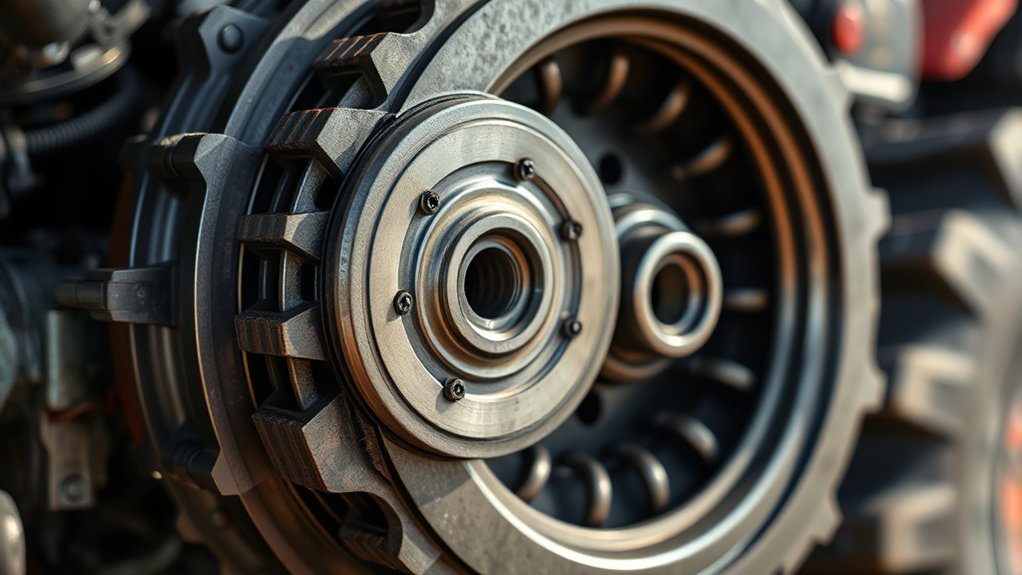
Although you mightn’t notice it at first, a two-stage tractor clutch plays a crucial role in how your tractor operates. This clutch type lets you engage power in two distinct steps, giving you more control over your tractor’s movement and power delivery.
When you press the pedal halfway, the first stage engages, allowing you to move the tractor smoothly without fully transferring power to heavy equipment. Pressing it all the way completes the second stage, connecting the PTO and other implements.
This staged engagement helps you avoid sudden jolts, protects your machinery, and improves efficiency during tasks like plowing or hauling. Understanding this clutch’s function helps you operate your tractor more effectively and maintain its longevity.
How a Two-Stage Clutch Differs From a Single-Stage Clutch
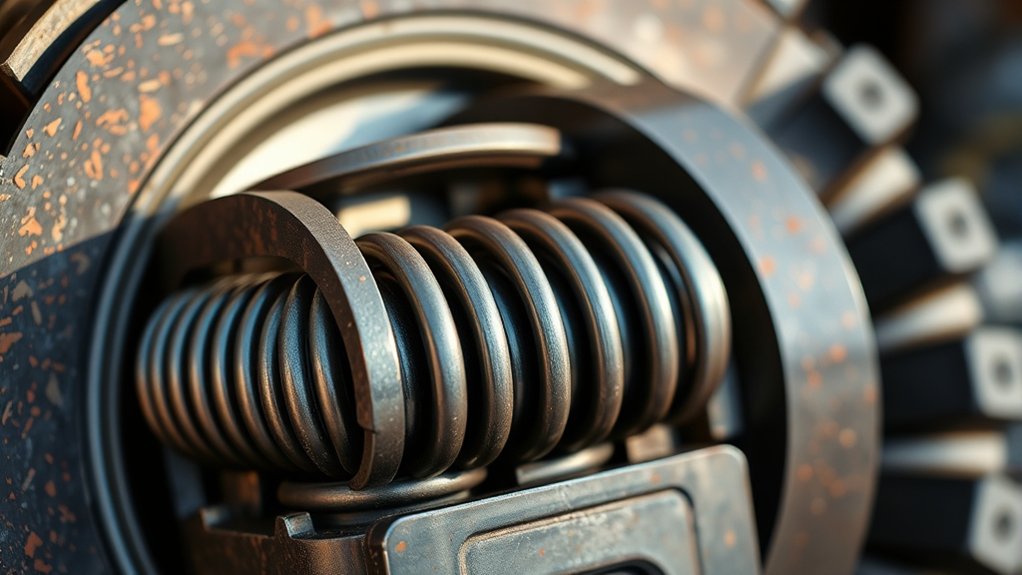
You’ll notice a two-stage clutch engages differently than a single-stage one, giving you smoother control over torque transmission.
It uses a distinct method to handle power, which improves efficiency during operation.
Understanding these differences helps you see why two-stage clutches offer better control and performance in tractors.
Engagement Process Differences
How exactly does a two-stage tractor clutch change the way power transfers compared to a single-stage clutch?
With a two-stage clutch, you experience a more controlled engagement process. Instead of the clutch fully engaging all at once like in a single-stage system, the two-stage clutch engages in two distinct phases. First, it allows partial engagement, letting you smoothly start moving without sudden jerks. Then, as you press further, it fully engages to transmit maximum power.
This gradual engagement helps you manage heavy loads and reduces drivetrain shock.
In contrast, a single-stage clutch moves from fully disengaged to fully engaged in one step, which can feel abrupt.
Torque Transmission Methods
The way power flows through a two-stage clutch sets it apart from a single-stage system. With a single-stage clutch, torque transfers in one smooth motion. But a two-stage clutch breaks this into two distinct steps, giving you more control and precision.
Here’s how it differs:
- Sequential Engagement: You first engage a partial torque transfer, easing the tractor into motion without shock.
- Full Torque Transfer: After initial engagement, the clutch fully transmits torque for maximum power delivery.
- Reduced Wear: By splitting torque transfer, it minimizes sudden stress on components, extending clutch life.
This method means you’re not just starting and stopping abruptly—you’re managing power with finesse, making your tractor’s performance smoother and more reliable.
Control and Efficiency Variations
Although both clutch types aim to manage power transfer, a two-stage clutch gives you greater control and efficiency by dividing engagement into distinct phases. You can smoothly initiate movement with the first stage, then fully engage with the second, reducing wear and optimizing fuel use. In contrast, a single-stage clutch engages all at once, which can cause jerky starts and more energy loss.
Here’s how they compare:
| Feature | Single-Stage Clutch | Two-Stage Clutch |
|---|---|---|
| Engagement | Instant full engagement | Gradual, phased engagement |
| Control | Limited, abrupt | Precise, smooth |
| Efficiency | Lower due to slippage | Higher with staged power transfer |
| Wear | Faster clutch wear | Reduced wear, longer lifespan |
This staged approach makes a two-stage clutch ideal for heavy machinery like tractors.
Key Components and Their Roles in a Two-Stage Tractor Clutch
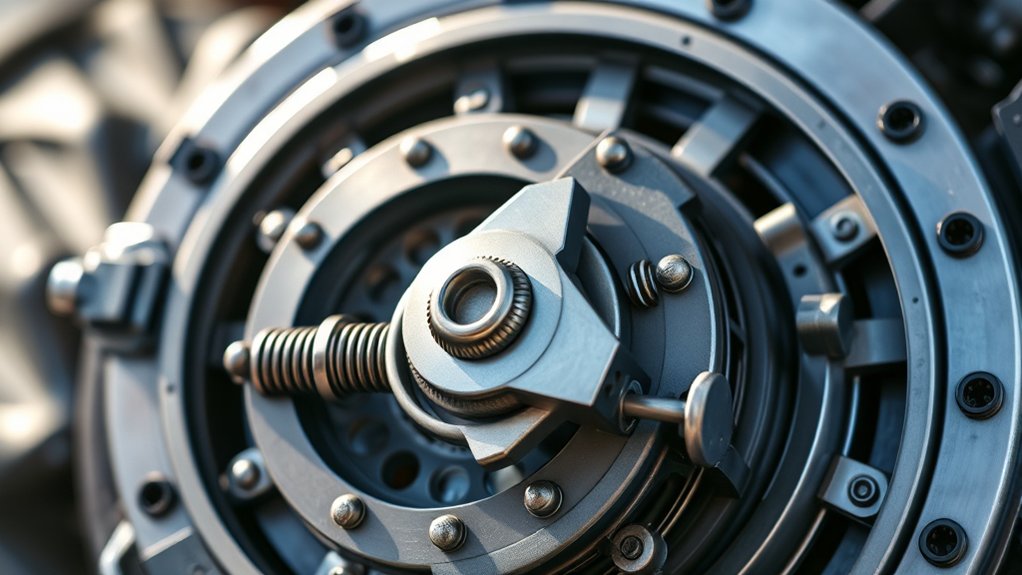
You’ll find that a two-stage tractor clutch relies on several key components working together. Each part has a specific function that guarantees smooth power transfer and control.
Let’s explore these primary components and how they contribute to the clutch’s operation.
Primary Clutch Components
When you examine a two-stage tractor clutch, you’ll find several key components working together to manage power transmission efficiently. Each part plays an essential role, ensuring smooth operation and control.
Here are the primary clutch components you’ll encounter:
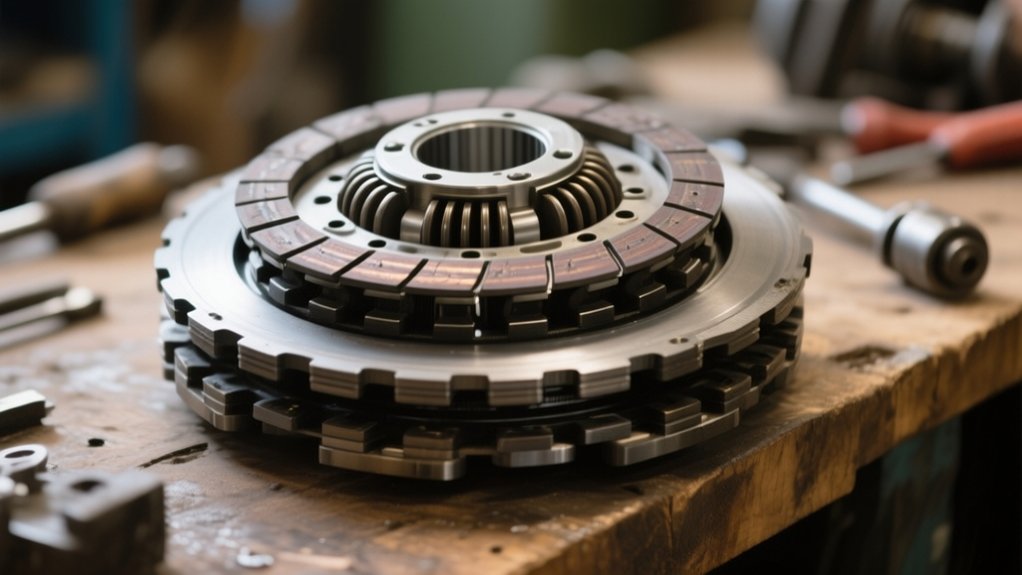
- Clutch Plates – These friction surfaces engage and disengage to transfer power, essential for smooth starts and stops.
- Pressure Plate – It applies force to the clutch plates, controlling how tightly they engage and ensuring reliable power flow.
- Release Mechanism – This system, often a lever or hydraulic actuator, disengages the clutch plates when you depress the pedal, allowing controlled power interruption.
Understanding these parts sets the stage for grasping how your tractor’s clutch performs its critical function step by step.
Function of Each Part
Since each component in a two-stage tractor clutch has a specific role, understanding their functions helps you operate the system effectively.
The primary clutch plate transmits power from the engine to the transmission, engaging first to allow smooth startup.
The secondary clutch plate engages next, handling higher torque demands as you increase load.
The pressure plate applies force to the clutch plates, ensuring firm contact when engaged and releasing them when you press the pedal.
Springs maintain consistent pressure, helping the clutch engage and disengage smoothly.
The release mechanism, activated by the clutch pedal, separates the plates to interrupt power flow, allowing gear changes.
Knowing each part’s function lets you troubleshoot issues and maintain your tractor’s performance better.
How the Clutch Pedal Controls Each Engagement Stage
Although the clutch pedal looks simple, it plays an essential role in managing each engagement stage of a two-stage tractor clutch. When you press the pedal, it precisely controls how power transfers from the engine to the transmission.
The clutch pedal may seem simple but is vital for controlling power transfer in a two-stage tractor clutch.
You’ll notice the pedal’s travel divides into stages, each activating different clutch plates.
Here’s how it works:
- Initial Press – You feel a light resistance as the first stage starts engaging, allowing smooth power transfer without jerks.
- Mid-Travel – The pedal deepens, fully engaging the first clutch stage while preparing the second for action.
- Full Depression – You press all the way down, disengaging both stages completely for safe gear changes.
This control gives you confidence and precision while operating your tractor.
How the First Stage Engages Power Smoothly in Two-Stage Clutches
Because the first stage of a two-stage tractor clutch handles initial power transfer, it engages smoothly to prevent sudden jolts or slips. When you begin to release the clutch pedal, the first stage starts to connect the engine to the transmission gradually.
This happens through a friction surface designed to slip slightly, allowing power to build up without locking abruptly. You’ll notice a gentle increase in torque, which helps the tractor move forward steadily, especially at low speeds or during delicate maneuvers.
This controlled engagement protects the drivetrain and enhances your control over the tractor’s movement. By managing this smooth power transfer, the first stage sets the foundation for effective clutch operation before the second stage fully engages.
How the Second Stage Engages Power in Two-Stage Clutches
How exactly does the second stage of a two-stage tractor clutch take over power transfer? Once the first stage has smoothly engaged the clutch, the second stage kicks in to handle higher torque demands. It firmly grips the flywheel, ensuring full power flow without slippage. You’ll notice this stage activates when you push the pedal further, signaling the clutch to engage more aggressively.
Here’s what happens when the second stage engages power:
- It clamps the remaining clutch plates tightly, boosting torque capacity.
- It eliminates any slippage, giving you solid, reliable power transmission.
- It prepares the tractor for heavy-duty tasks by locking the clutch fully.
This design balances smooth starts with strong performance, giving you complete control as you operate your tractor.
How Power Moves Through a Two-Stage Clutch, Step by Step
Now, let’s look at how power flows through a two-stage clutch, step by step.
You’ll see how each clutch engagement phase controls the transfer of power smoothly.
Understanding this sequence helps you grasp why the system works so efficiently.
Power Transfer Sequence
What happens when you engage a two-stage tractor clutch? You initiate a precise power transfer that guarantees smooth operation and control.
As you press the clutch pedal, power doesn’t just abruptly shift—it moves through a carefully orchestrated sequence.
- First, the primary clutch plates begin to mesh, allowing partial power flow. You’ll feel the tractor start to respond gently, avoiding sudden jolts.
- Next, the secondary plates engage, gradually increasing the power transfer. This stage builds momentum while maintaining smoothness.
- Finally, full power transmits from the engine to the drivetrain, giving you complete control and efficiency.
This sequence guarantees you harness the tractor’s power effectively, preventing damage and optimizing performance every time you operate the clutch.
Clutch Engagement Phases
Although it might seem complex, the clutch engagement in a two-stage tractor clutch happens through distinct phases that you can anticipate and control.
First, when you press the pedal slightly, the primary clutch begins to engage, allowing partial power transfer to the transmission. This soft engagement helps you start moving without jolts.
As you press the pedal further, the secondary clutch gradually engages, increasing power flow smoothly until full connection is achieved. During this phase, power moves steadily from the engine, through both clutch stages, to the drivetrain.
By controlling these phases, you manage the tractor’s speed and torque effectively, preventing damage and ensuring smooth operation.
Understanding these engagement phases helps you operate the tractor efficiently and prolong clutch life.
How the Two-Stage Clutch Helps Prevent Engine Stalling
Because the two-stage clutch gives you finer control over power delivery, it helps prevent engine stalling during tricky maneuvers. You can gradually engage the clutch, matching engine speed with load demands, which keeps the engine running smoothly even under heavy resistance.
Here’s how it helps you avoid stalling:
- Smooth Power Shift: You’ll feel less jerking as power shifts, reducing sudden engine strain.
- Better Load Adaptation: You can adjust clutch engagement to match varying field conditions, preventing stalls on uneven terrain.
- Increased Confidence: Knowing you have precise control lets you tackle tough jobs without second-guessing your clutch use.
With this control, you maintain momentum and avoid frustrating stops, making your tractor work more efficiently and your job easier.
How to Spot Common Two-Stage Clutch Problems
Having precise control over your two-stage clutch makes your work smoother, but like any mechanical system, it can develop issues that affect performance. You’ll want to watch out for signs like slipping, unusual noises, or difficulty engaging gears. Catching these early prevents costly repairs and downtime.
| Symptom | Possible Cause |
|---|---|
| Clutch slipping | Worn clutch plates |
| Hard to engage gears | Misadjusted linkage |
| Grinding noises | Damaged release bearing |
| Clutch pedal feels soft | Low hydraulic fluid or air in system |
If you notice any of these symptoms, inspect your clutch components carefully or consult a mechanic to keep your tractor running smoothly.
Adjusting a Two-Stage Clutch for Best Performance
When you adjust a two-stage clutch correctly, you guarantee smoother gear shifts and longer clutch life. Proper adjustment ensures the clutch engages and disengages at just the right points, preventing slippage and wear. Here’s how to get it right:
- Set the free play – Make sure the clutch pedal has the recommended free play as per your tractor’s manual. Too little or too much affects engagement.
- Adjust the first stage – This controls the initial clutch engagement; fine-tune it so the tractor begins to move without jerking.
- Tune the second stage – This handles full power transfer; adjust it for firm, smooth operation without dragging.
Maintenance Tips to Keep Your Two-Stage Clutch Running Smoothly
To keep your two-stage clutch operating smoothly, you need to perform regular maintenance checks and address any issues promptly. Start by inspecting the clutch linkage and cables for wear or looseness. Lubricate moving parts to prevent rust and guarantee smooth engagement. Check the clutch fluid level if your system uses hydraulic actuation. Replace worn friction plates promptly to avoid slippage. Finally, keep the clutch housing clean to prevent dirt buildup.
| Maintenance Task | Frequency |
|---|---|
| Inspect linkage/cables | Monthly |
| Lubricate moving parts | Every 3 months |
| Check fluid level | Monthly (if hydraulic) |
Following these tips helps you avoid premature wear and costly repairs, ensuring your tractor’s clutch performs at its best.
Troubleshooting Common Two-Stage Clutch Issues
Regular maintenance helps prevent many issues with your two-stage clutch, but occasional problems can still arise. When your clutch slips, hesitates, or feels stiff, don’t panic—you can troubleshoot effectively.
Here are three common issues you might face:
- Clutch slipping – Check for worn friction plates or insufficient hydraulic pressure. This can cause frustration when power doesn’t transfer smoothly.
- Hard pedal feel – Often caused by air in the hydraulic system or a faulty master cylinder, making operation tough and tiring.
- Clutch dragging – If the clutch doesn’t fully disengage, inspect for misadjusted linkage or warped pressure plates. This can lead to gear grinding and costly repairs.
How Two-Stage Clutch Design Enhances Tractor Control and Efficiency
Although operating a tractor can be challenging, a two-stage clutch design gives you precise control and boosts efficiency. By separating the clutch engagement into two distinct stages, you can smoothly modulate power delivery.
The first stage lets you gently engage the transmission without stalling, perfect for starting heavy loads. The second stage fully connects the clutch plates, providing maximum power transfer for demanding tasks.
This design minimizes wear and tear, extending clutch life and reducing maintenance. Plus, it helps you avoid sudden jerks or stalls, improving overall tractor handling.
With this enhanced control, you can optimize fuel consumption and maintain consistent operation, making your work more efficient and less tiring. The two-stage clutch truly makes your tractor more responsive and reliable in the field.
Frequently Asked Questions
What Types of Tractors Commonly Use Two-Stage Clutches?
You’ll commonly find two-stage clutches in heavy-duty tractors like those used for farming and construction. They handle high torque and allow smoother control, especially in brands like John Deere, Case IH, and New Holland.
Can a Two-Stage Clutch Be Retrofitted on Older Tractors?
You can think of a two-stage clutch as upgrading your tractor’s heartbeat—yes, you can retrofit older tractors, but it’ll take careful fitting and adjustments to sync the new clutch’s rhythm with your tractor’s original pulse.
How Does Weather Affect Two-Stage Clutch Performance?
You’ll notice wet or cold weather can make your two-stage clutch slip or engage unevenly. Moisture reduces friction, while cold thickens fluids, so you’ll need to adjust or maintain it more frequently for smooth performance.
Are There Safety Concerns Unique to Two-Stage Clutches?
Yes, you should watch for sudden engagement causing jerks and wear. Two-stage clutches need careful use to avoid overheating and slipping, so always guarantee proper adjustment and avoid riding the clutch to keep things safe and smooth.
What Are the Cost Differences Between Single and Two-Stage Clutches?
You’ll find two-stage clutches usually cost more upfront than single-stage ones due to their complexity and durability. However, their longer lifespan and better performance can save you money on repairs and replacements over time.
Conclusion
Now that you know how a two-stage tractor clutch works step by step, you’re better equipped to handle your tractor like a pro. It’s not just about pressing the pedal; it’s about mastering smooth power delivery and control. Keep your clutch well-adjusted and maintained, and you’ll avoid many headaches down the road. Remember, when it comes to tractor clutches, a little fine-tuning goes a long way—don’t let small issues snowball into big problems!