How to Fix Cracked Tractor Tires Step by Step
To fix cracked tractor tires, start by thoroughly inspecting for cracks, especially on sidewalls, using good lighting. Clean and dry the damaged area, then roughen it for better adhesion. Use a repair kit with patches, rubber cement, and filler as needed, following curing instructions carefully. After repair, monitor pressure and tire condition during a test drive. Maintaining proper inflation and avoiding harsh conditions helps prevent future cracks. Keep exploring to master all the repair steps and tips.
Key Takeaways
- Regularly inspect tractor tires for cracks, focusing on sidewalls, tread, and high-flex areas using proper lighting.
- Decide repairability based on crack size and location, opting for replacement if cracks are large or deep.
- Clean, dry, and roughen the cracked area before applying patches or rubber filler with recommended tools and materials.
- Follow manufacturer curing instructions carefully, ensuring proper heat and undisturbed setting for strong adhesion.
- After repair, test drive and monitor tire pressure, inspecting for leaks or damage to ensure long-term reliability.
How to Identify Cracks in Tractor Tires Early
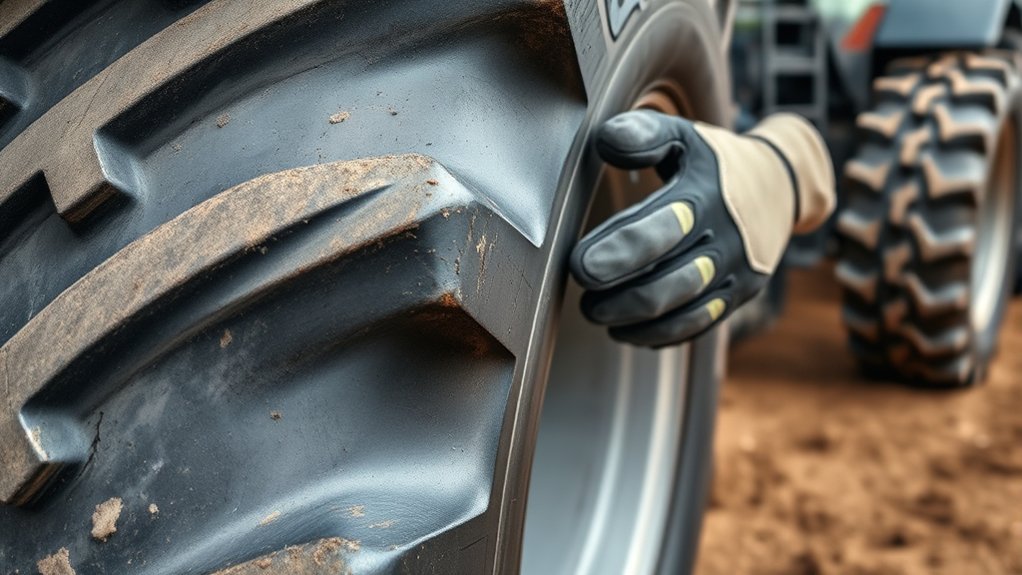
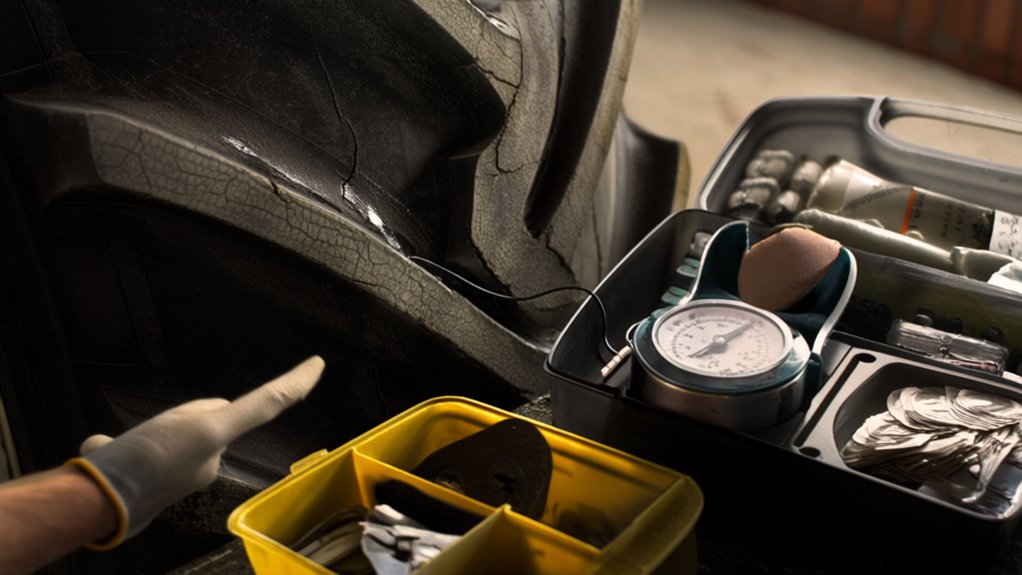
Although tractor tires are built tough, you’ll want to spot cracks early to prevent bigger problems. Start by inspecting your tires regularly, especially after heavy use or exposure to harsh conditions. Check the sidewalls and tread for any fine lines or splits—these can be the first signs of cracking.
Use a flashlight to see cracks that mightn’t be visible in daylight. Pay close attention to areas near the bead and where the tire flexes the most. Also, look for any dry, brittle patches or discoloration that signal aging rubber.
If you notice any unusual bulges or chunks missing, that’s a warning sign, too. Catching these issues early helps maintain tire integrity and safety on your tractor.
Should You Repair or Replace a Cracked Tractor Tire?
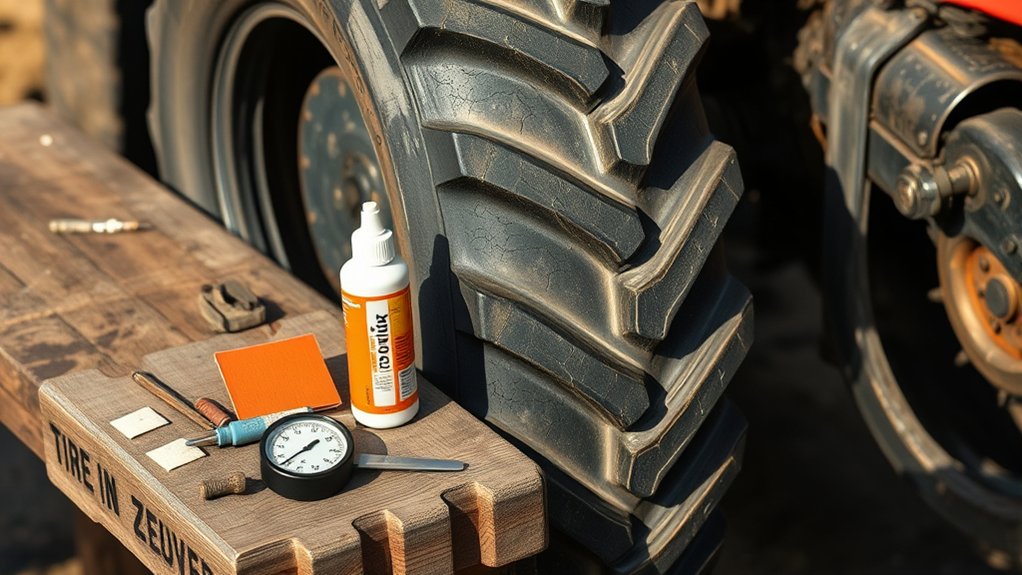
You’ll want to carefully assess the extent of the tire damage before deciding your next step.
Comparing the repair costs against the price of a replacement can help you make a practical choice.
Let’s explore how to evaluate both options effectively.
Assessing Tire Damage
How do you determine whether a cracked tractor tire can be repaired or needs replacing? Start by closely inspecting the crack’s size, depth, and location. Small surface cracks usually mean a repair is possible, but large or deep cracks near the sidewall often require replacement. Also, check for additional damage like bulges or exposed cords.
Use the table below to guide your assessment:
| Crack Size | Location | Recommended Action |
|---|---|---|
| Small (<1/4 inch) | Tread area | Repair |
| Medium (1/4-1/2 inch) | Between tread and sidewall | Evaluate further |
| Large (>1/2 inch) | Sidewall | Replace |
Cost Comparison Analysis
When deciding whether to repair or replace a cracked tractor tire, understanding the cost differences can save you money and downtime. Repairing minor cracks often costs substantially less—usually just a fraction of a new tire’s price—and can get you back in the field quickly.
However, if cracks are extensive or compromise the tire’s structure, repairs might be temporary and lead to repeated expenses. Replacing a tire involves a higher upfront cost but ensures long-term reliability and safety.
Consider factors like tire age, crack severity, and your budget. If you rely heavily on your tractor, investing in a new tire can prevent costly failures.
Weigh repair costs against replacement benefits carefully to choose the most cost-effective and dependable solution.
Essential Tools and Materials for Repair
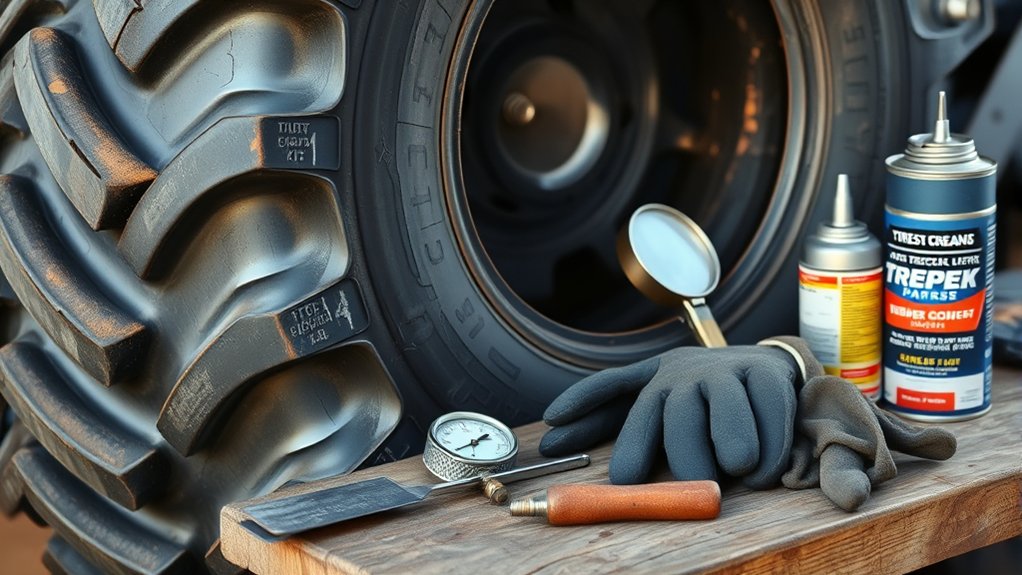
What tools and materials do you need to effectively repair cracked tractor tires? First, gather a tire repair kit that includes patches, rubber cement, and a tire rasp to roughen the surface. You’ll also need a tire plugger, a sharp utility knife, and a tire pressure gauge.
A jack and tire iron are essential for removing the tire safely. Don’t forget safety gloves and eye protection to keep yourself safe during the repair process.
If the cracks are deep, having a rubber filler compound helps seal larger gaps. Ultimately, a heat gun or hairdryer can speed up the curing of adhesives.
How Weather and Usage Affect Tractor Tire Cracking
With the right tools and materials on hand, you can address many issues with your tractor tires, but understanding why they crack in the first place helps you prevent future damage. Weather plays a big role—exposure to harsh sunlight and extreme temperatures causes your tires’ rubber to dry out and lose flexibility, making cracks more likely.
Cold weather can stiffen the rubber, increasing the risk of cracking under pressure. Additionally, how you use your tractor impacts tire health. Frequent heavy loads, rough terrain, or improper inflation add stress, accelerating wear and tear.
How to Clean and Prepare the Tire Surface for Repair
Before you start repairing a cracked tractor tire, you need to thoroughly clean and prepare the damaged area. This step guarantees the repair materials adhere properly and last longer.
First, remove any dirt, mud, or debris stuck in and around the crack.
Then, dry the surface completely to prevent moisture from weakening the repair.
Next, use sandpaper or a wire brush to roughen the area, improving adhesion.
Finally, wipe the surface with a clean cloth and a suitable solvent like isopropyl alcohol to eliminate oils or grease.
- Scrape away dirt and debris
- Dry the tire surface completely
- Roughen the damaged area with sandpaper
- Clean with a solvent to remove oils
These steps set the foundation for a successful tire repair.
How to Apply a Tire Patch for Cracks
Once you’ve thoroughly cleaned and prepared the cracked area, you can move on to applying the tire patch.
First, select a patch that’s slightly larger than the crack.
Apply a thin layer of rubber cement or adhesive to both the patch and the damaged area on the tire.
Let the adhesive become tacky—this usually takes a few minutes.
Carefully position the patch over the crack, pressing firmly to guarantee it sticks without air bubbles.
Use a roller or your hand to press the patch evenly, especially around the edges.
Allow the patch to cure according to the adhesive manufacturer’s instructions.
This guarantees a strong bond that seals the crack effectively.
Once set, inspect the patch for secure adhesion before reinflating the tire.
Using Tire Sealant for Small Cracks in Tractor Tires
If you’ve got small cracks in your tractor tires, choosing the right sealant is key to a lasting fix. You’ll want to pick one that matches your tire type and follow specific application tips to get the best results.
Let’s go over how to apply sealant properly and what tricks can make the process easier.
Choosing The Right Sealant
Although small cracks in tractor tires might seem minor, choosing the right sealant is essential to prevent further damage and maintain tire integrity. You want a product that seals effectively without harming the tire’s rubber or inner lining.
When selecting a sealant, consider these key factors:
- Compatibility with your tire type to avoid chemical damage
- Flexibility to handle tire expansion and contraction
- Resistance to water and mud for long-lasting protection
- Ease of removal in case future repairs are needed
Application Tips And Tricks
Before applying the sealant, make sure you clean the tire thoroughly to remove dirt, mud, and debris that could prevent proper adhesion. Use a brush and water, then dry the surface completely. Apply the sealant evenly over the cracks, avoiding excess that could drip or pool. Rotate the tire slowly to let the sealant settle inside. After application, let the tire rest for at least 24 hours to cure properly.
| Step | Action | Tip |
|---|---|---|
| 1 | Clean tire surface | Use a stiff brush and water |
| 2 | Dry tire | Guarantee no moisture remains |
| 3 | Apply sealant evenly | Avoid over-application |
| 4 | Rotate tire | Helps sealant reach cracks |
| 5 | Let cure | Wait 24 hours before use |
How to Check Tire Pressure and Condition After Repair
Once you’ve completed the repair, you’ll want to carefully check the tire pressure to guarantee it meets the manufacturer’s recommended levels. Proper pressure assures safety and peak performance.
Start by using a reliable tire pressure gauge to measure the pressure.
Next, inspect the tire visually for any signs of uneven wear, bulges, or remaining cracks.
Don’t forget to check the valve stem for leaks or damage.
Finally, monitor the tire after a short test drive to confirm there are no pressure drops or abnormal noises.
Follow this checklist:
- Measure tire pressure with a gauge
- Visually inspect tire surface and sidewalls
- Check valve stem for leaks or damage
- Test drive and recheck pressure for stability
This routine keeps your tractor tire reliable and safe after repair.
How to Cure and Set Tractor Tire Repairs
After you apply the repair materials, you’ll need to cure and set them properly to guarantee a strong, lasting bond. First, follow the manufacturer’s instructions regarding curing time and temperature. Most repairs require the tire to remain undisturbed for several hours at room temperature or slightly warmer.
Proper curing time and temperature are essential for a durable, long-lasting tire repair bond.
Avoid exposing the tire to moisture or dirt during this period. If your repair kit includes a heat-activated compound, use a heat gun or place the tire in a warm environment to speed curing, but never exceed recommended temperatures.
Once cured, inspect the patch or filler for firmness and adhesion. Proper curing ensures the repair holds under pressure and stress.
Only after this step should you proceed to re-inflate the tire and test it under normal operating conditions.
Preventive Measures to Avoid Future Tractor Tire Cracks
To prevent future cracks in your tractor tires, you need to keep them properly inflated at all times. Regular tire inspections will help you catch small issues before they become major problems.
Staying proactive with these steps will extend your tires’ lifespan and save you money.
Proper Tire Inflation
Although it may seem simple, maintaining proper tire inflation plays a crucial role in preventing cracks on your tractor tires. When your tires are inflated correctly, they distribute weight evenly and reduce stress on the rubber, minimizing wear and tear.
Under-inflation leads to excessive flexing, while over-inflation makes tires brittle and prone to cracking.
To keep your tires in top shape, make sure you:
- Check tire pressure regularly with a reliable gauge
- Inflate tires to the manufacturer’s recommended PSI
- Adjust pressure based on load and field conditions
- Avoid driving on rough terrain with improper inflation
Regular Tire Inspections
Since tractor tires endure tough conditions daily, you need to inspect them regularly to catch cracks early and prevent bigger problems. Set a routine to check your tires before and after each use.
Look closely at the sidewalls and tread for any signs of cracking, cuts, or bulges. Don’t forget to examine the bead area where the tire meets the rim; damage here can lead to leaks or sudden failure.
Use a flashlight to spot smaller cracks that might be missed in poor lighting.
Also, monitor tire pressure consistently, as under- or over-inflation can cause premature cracking.
Troubleshooting Tractor Tire Repair Problems
When you attempt to repair cracked tractor tires, you might face unexpected challenges that can hinder the process. Identifying and addressing these issues quickly guarantees a successful fix.
Common problems include improper patch adhesion, difficulty removing damaged tires, or dealing with deep cracks that require special attention. To troubleshoot effectively, consider these points:
- Check if the tire surface is clean and dry before applying patches.
- Use the right tools to avoid further damage during tire removal.
- Inspect cracks carefully; some may need professional repair or replacement.
- Verify that repair materials are compatible with your tire type.
Frequently Asked Questions
What Types of Tractor Tires Are Most Prone to Cracking?
You’ll find that older, bias-ply tires and those exposed to harsh weather or UV rays crack more easily. If you don’t store them properly or use them on rough surfaces, they’ll deteriorate faster and develop cracks.
Can Cracked Tractor Tires Affect Fuel Efficiency?
Yes, cracked tractor tires can reduce your fuel efficiency because they cause uneven wear and increase rolling resistance. You’ll end up using more fuel to maintain performance, so it’s important to address cracks promptly.
How Long Do Repaired Tractor Tires Typically Last?
Repaired tractor tires typically last between 6 months to 2 years, depending on damage severity and usage. You’ll want to regularly inspect them and avoid heavy loads to extend their lifespan and maintain safety.
Are There Specific Brands Recommended for Durable Tractor Tires?
You’ll want to check out Michelin and Firestone—they lead the market with over 30% of durable tractor tires sold. These brands offer tough, long-lasting tires that handle rough terrain and heavy loads without cracking easily.
What Safety Risks Are Associated With Driving on Cracked Tractor Tires?
You risk blowouts, loss of control, and accidents when driving on cracked tractor tires. Cracks weaken the tire structure, making it prone to sudden failure, which can seriously endanger your safety and others around you.
Conclusion
Fixing cracked tractor tires is like patching a sail before a storm—you guarantee smooth sailing ahead. Remember, early detection and proper repair keep your tractor rolling strong, just like one farmer who saved hundreds by acting fast. With the right tools and care, your tires can weather many seasons. Stay vigilant, maintain pressure, and prevent cracks before they grow, so your tractor stays as reliable as the sunrise on a busy farm day.