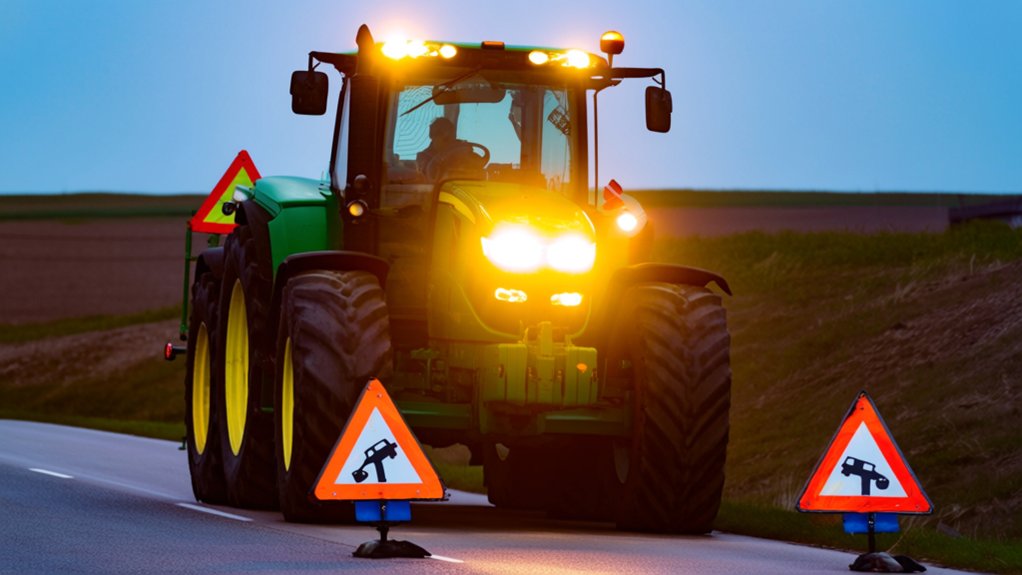
How to Drive a Tractor on Roads Without Driving Illegally
To drive a tractor legally on roads, guarantee it’s registered with proper lighting, reflectors, and functioning signals. Check your tires and spare before heading out, and follow speed limits designed for slow-moving vehicles. Plan your route carefully, avoiding busy roads and poor conditions. Stay focused by minimizing distractions, use clear hand signals, and always adjust your mirrors. Keep safety gear handy and be prepared to cooperate if stopped by police. You’ll find more tips on safe, legal tractor road use just ahead.
Key Takeaways
- Ensure your tractor is registered, insured if required, and equipped with working lights, reflectors, and a visible license plate.
- Drive only on permitted roads, avoid busy highways, and comply with regional speed limits and traffic laws.
- Use proper hand signals and mirrors to communicate intentions clearly to other drivers.
- Plan trips during daylight, avoid peak traffic hours, and use routes with minimal traffic and good visibility.
- Perform pre-drive inspections and maintain the tractor regularly to ensure roadworthiness and legal compliance.
Legal Requirements for Driving Tractors on Roads
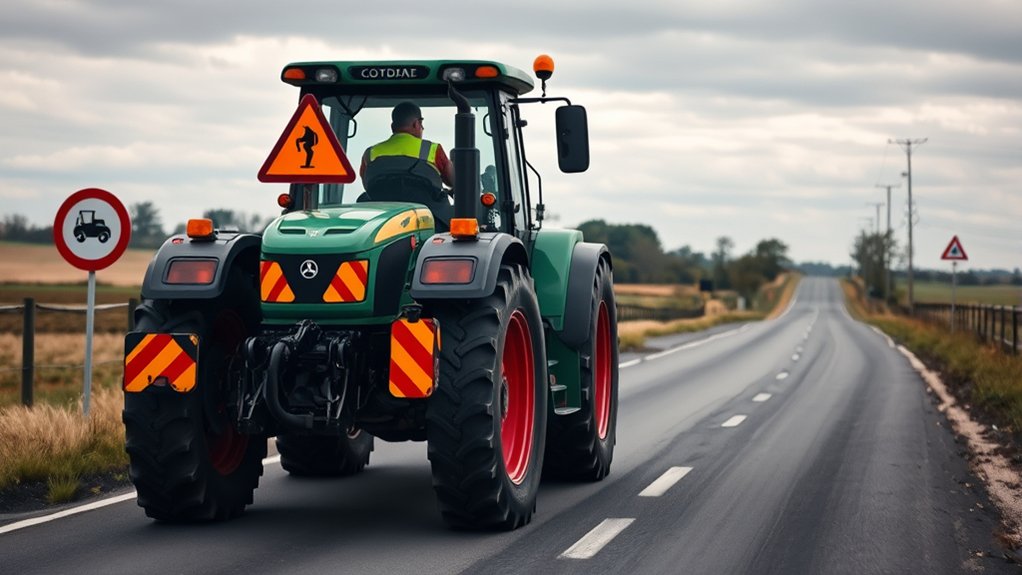
Although tractors are primarily designed for farm use, you can legally drive them on public roads if you follow specific requirements.
First, make sure your tractor is registered and displays a valid license plate if your state or country mandates it.
You’ll need to have proper lighting—headlights, taillights, and turn signals—especially if you plan to drive at night or in low visibility.
Speed limits usually apply, so keep your speed within posted limits for slow-moving vehicles.
Also, you must carry proper insurance coverage if required.
Finally, driving a tractor on roads often requires you to stay on the shoulder or designated routes to avoid obstructing traffic.
Following these rules keeps you safe and compliant while operating your tractor on public roads.
Check Your Tractor’s Roadworthiness Before Driving
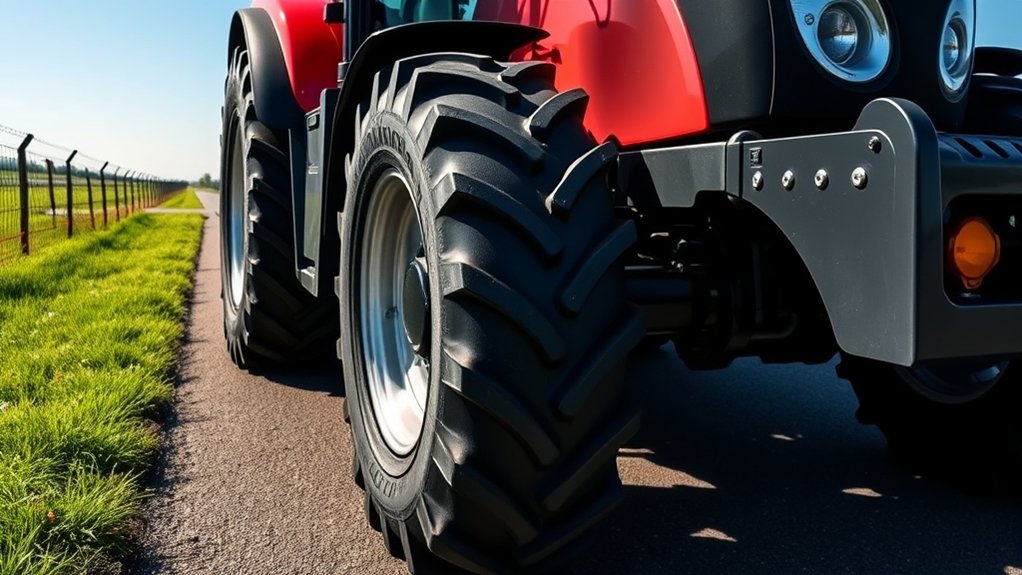
Before you hit the road, make certain your tractor’s lights and signals are working properly.
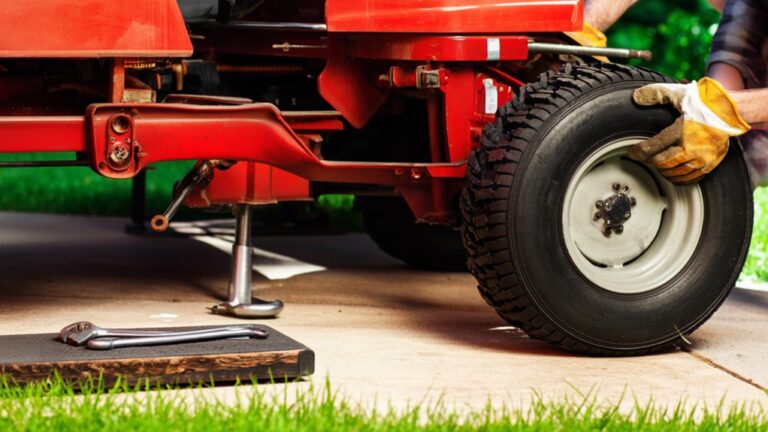
Check the tire condition to guarantee they’re safe and road-ready.
These simple inspections help you avoid accidents and stay compliant with regulations.
Inspect Lights And Signals
How can you guarantee your tractor is safe and visible on the road? Start by inspecting all lights and signals before you hit the road. Check your headlights, tail lights, brake lights, and turn signals to make sure they’re working properly. Replace any burnt-out bulbs immediately. Clean the lenses so they’re clear and bright, improving visibility in low-light conditions.
Don’t forget to test your hazard lights, especially if you plan to drive in traffic or during poor weather. Functioning lights help other drivers anticipate your actions, reducing the risk of accidents.
Also, verify that reflective markers or decals are intact and visible. Taking these steps ensures your tractor complies with road safety regulations and keeps you and others safe while driving.
Verify Tire Condition
Since your tractor’s tires are the only contact points with the road, you need to check their condition thoroughly before driving.
Start by inspecting tread depth; worn tires reduce traction and increase the risk of slipping, especially on wet or uneven surfaces.
Look for cracks, cuts, or bulges on the sidewalls that could cause sudden blowouts.
Make sure the tires are properly inflated to the manufacturer’s recommended pressure, as underinflated or overinflated tires affect handling and fuel efficiency.
Don’t forget to check the spare tire as well.
If you spot any damage or uneven wear, fix or replace the tires before hitting the road.
Proper tire maintenance not only keeps you legal but also guarantees your safety and the safety of others while driving your tractor on public roads.
Know When and Where to Drive Your Tractor on Roads
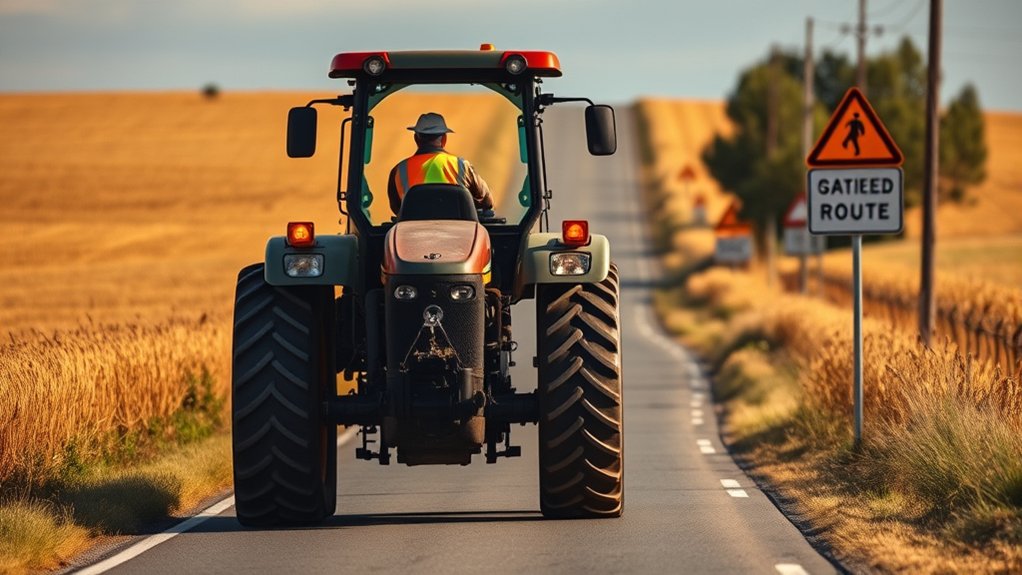
Although tractors are built for farm work, you can drive them on public roads when necessary—but only under specific conditions. First, limit your road driving to essential trips, like moving between fields or reaching a repair shop. Avoid busy highways or peak traffic times to reduce risks. Stick to routes where tractor traffic is permitted; some roads might have restrictions or require special permits.
Always check local laws about where and when tractors can operate on public roads, as rules vary by region. Also, avoid driving after dark or in poor weather unless absolutely necessary, since tractors lack the speed and maneuverability of regular vehicles.
Prepare Your Tractor With Proper Lighting and Reflectors
Before you hit the road, make certain your tractor is equipped with proper lighting and reflectors to guarantee visibility.
Check that your headlights and taillights work, especially if you’ll be driving at dawn, dusk, or nighttime. Install amber warning lights if possible to alert other drivers of your slow-moving vehicle.
Reflectors placed on the rear and sides of your tractor help improve visibility in low light or bad weather conditions. Make sure all lights and reflectors are clean and unobstructed.
Using reflective tape can further increase your tractor’s visibility. These steps aren’t just for safety—they’re often required by law to prevent accidents and ensure other drivers notice you on the road.
Preparing your tractor this way keeps you safe and compliant.
Follow Speed Limits and Traffic Rules for Tractor Drivers
Ensuring your tractor is properly lit and visible sets the stage for safe driving, but following speed limits and traffic rules keeps you safe and legal while on the road. Always adhere to posted speed limits, which are often lower for tractors due to their size and handling. Driving too fast can cause accidents or damage your equipment.
Obey all traffic signs and signals just like any other vehicle. Use turn signals when changing lanes or turning, and yield right-of-way when required. Avoid weaving through traffic or driving in the wrong lane.
Secure Loads and Attachments Safely on Your Tractor
When you haul loads or use attachments on your tractor, you must secure them properly to prevent accidents and damage. First, always use appropriate tie-downs or chains rated for the weight of your load.
Always secure tractor loads with weight-rated tie-downs to ensure safety and prevent damage.
Second, double-check that all fasteners and connections on attachments are tight and locked.
Third, distribute the load evenly to maintain stability and avoid tipping.
Fourth, inspect your securing equipment regularly for wear or damage, replacing anything compromised before hitting the road.
Choose the Best Time and Route to Minimize Traffic Risks
You’ll want to plan your tractor trips during off-peak hours to avoid heavy traffic and reduce risks.
Choosing routes with less congestion can make your drive safer and smoother.
Identifying these ideal times and paths helps you stay legal and keep everyone on the road safe.
Optimal Driving Hours
Although tractors move slower than most vehicles, choosing the right time to drive can considerably reduce your risk of accidents and traffic delays. To optimize your driving hours, keep these points in mind:
- Drive during off-peak hours, typically early mornings or late afternoons, to avoid heavy traffic.
- Avoid rush hours, usually 7–9 AM and 4–6 PM, when commuter traffic is heaviest.
- Consider daylight conditions; driving in well-lit hours improves visibility for you and other drivers.
- Check local weather forecasts to steer clear of fog, rain, or other hazardous conditions that reduce safety.
Selecting Low-Traffic Routes
Because traffic volume greatly impacts your safety and travel time, selecting low-traffic routes is essential when driving a tractor on roads. You’ll want to plan routes that avoid busy highways and opt for quieter country roads or designated farm routes. Checking local traffic reports and using GPS apps with real-time updates can help you pick safer paths. Avoid rush hours and school zones where congestion spikes. Here’s a quick guide to help you choose:
| Route Type | Best Time to Travel |
|---|---|
| Rural Roads | Early morning, late afternoon |
| Secondary Roads | Mid-morning, mid-afternoon |
| Avoid Highways | Anytime, if possible |
Wear the Right Safety Gear When Driving on Roads
When driving a tractor on roads, wearing the right safety gear protects you from potential hazards and increases your visibility to other drivers. You want to make sure you’re seen and safe at all times.
Here’s what you should wear:
- A high-visibility vest or jacket to stand out in low light or bad weather.
- A sturdy helmet to protect your head in case of sudden stops or accidents.
- Durable gloves that provide a good grip and protect your hands.
- Steel-toed boots to shield your feet from heavy objects and improve traction.
Stay Focused and Avoid Distractions While Driving
Wearing the right safety gear helps keep you protected and visible, but staying focused behind the wheel is just as important. When driving a tractor on roads, distractions can cause dangerous situations quickly. Keep your attention on the road and avoid using your phone, eating, or adjusting controls while moving. Staying alert helps you react to sudden changes or obstacles.
Here’s a quick guide to minimizing distractions:
| Avoid These Distractions | Do This Instead |
|---|---|
| Using mobile devices | Keep your phone out of reach |
| Eating or drinking | Stop safely before taking breaks |
| Loud music or noise | Keep volume low or off |
| Daydreaming or fatigue | Take breaks and stay alert |
Signal Clearly and Use Mirrors to Communicate With Drivers
You need to signal your intentions clearly using effective hand signals to keep other drivers informed.
Make sure your mirrors are properly adjusted to give you the best possible view of traffic around you. This helps you communicate safely and avoid surprises on the road.
Effective Hand Signal Techniques
Although tractors move slower than most vehicles, you still need to signal clearly and use your mirrors effectively to communicate your intentions to other drivers.
Hand signals remain essential, especially when your tractor’s lights aren’t visible or working.
Here are four key tips for effective hand signaling:
- Extend your left arm fully to indicate a left turn, keeping your hand flat and steady.
- Bend your left arm upward at a right angle to signal a right turn, palm open.
- Bend your left arm downward to show that you’re slowing down or stopping.
- Use deliberate, slow movements to make certain other drivers notice your signals in time.
Proper Mirror Adjustment Tips
Clear hand signals help other drivers understand your intentions, but mirrors play an equally important role in keeping you aware of your surroundings. Before hitting the road, adjust your tractor’s mirrors so you have a clear view of both lanes and any vehicles behind you.
Position them to minimize blind spots, ensuring you can spot cars approaching quickly or preparing to pass. As you drive, check your mirrors frequently—especially before turning or changing lanes—to communicate your actions effectively.
Using mirrors alongside clear hand signals lets other drivers anticipate your moves, reducing risks. Remember, well-adjusted mirrors keep you informed and help maintain smooth traffic flow, making your tractor trips safer and more predictable for everyone on the road.
What to Do If You Get Stopped by Law Enforcement?
If law enforcement pulls you over while driving a tractor on the road, stay calm and be polite. How you handle the stop can make a big difference.
- Roll down your window and keep your hands visible on the steering wheel.
- Provide your driver’s license, registration, and proof of insurance when asked.
- Listen carefully to the officer’s questions and answer honestly but briefly.
- If you believe you’re being stopped unfairly, remain respectful and wait to contest it later in court.
Maintain Your Tractor Regularly for Road Use
Since tractors aren’t primarily designed for road use, you need to keep yours in top shape to guarantee safety and legality when driving on public roads. Regular maintenance helps prevent breakdowns and assures your tractor meets legal requirements like working lights and brakes. Check tires, lights, signals, and brakes frequently. Keep fluids topped up and replace worn parts promptly. Staying proactive protects you and others.
| Maintenance Task | Impact on Safety | Emotional Benefit |
|---|---|---|
| Tire Inspection | Prevents blowouts | Peace of mind |
| Brake Check | Ensures stopping power | Confidence on roads |
| Light & Signal Test | Visibility and signaling | Feeling secure |
| Fluid Levels | Smooth operation | Control and reliability |
| Parts Replacement | Avoids unexpected failure | Less stress |
Keeping your tractor road-ready isn’t just smart—it’s essential.
Frequently Asked Questions
Can I Tow a Trailer With My Tractor on Public Roads?
Yes, you can tow a trailer with your tractor on public roads, but you’ll need to follow local regulations, guarantee proper lighting, and keep within weight limits. Always check your area’s specific rules before hitting the road.
Are There Insurance Requirements for Tractors Driven on Roads?
About 40% of tractor accidents involve road use, so yes, you usually need liability insurance if you drive on public roads. Check your state’s rules, as requirements vary, and always keep proof handy while driving.
How Do Weather Conditions Affect Tractor Road Driving Safety?
You’ll find wet or icy roads reduce traction, making steering and braking harder. Fog lowers visibility, and strong winds can push your tractor. Always adjust speed and stay alert to handle these weather challenges safely.
Can I Use My Tractor for Commercial Deliveries on Roads?
You can use your tractor for commercial deliveries only if local laws allow it. Make sure you have the proper permits, follow weight limits, and adhere to road safety regulations to avoid legal issues while driving.
What Are Common Causes of Tractor Accidents on Roads?
Isn’t it ironic how tractors cause accidents when you’re just trying to be slow and steady? Common causes include poor visibility, inattentive drivers, improper lighting, and sharp turns. Stay alert and keep others safe on the road.
Conclusion
Driving a tractor on roads legally keeps you safe and avoids costly fines. Did you know that over 60% of tractor-related road incidents happen because drivers ignore basic rules? By checking your tractor’s roadworthiness, using proper signals, and following speed limits, you’ll protect yourself and others. Stay alert, maintain your tractor regularly, and always respect traffic laws. It’s not just about avoiding trouble—it’s about being responsible every time you hit the road.