Do Tractors Have VIN Numbers?
Yes, most tractors have VIN numbers that uniquely identify them for ownership, registration, and safety purposes. You’ll typically find the VIN stamped on the frame near the engine or operator’s seat. Tractor VINs differ from car VINs in length and information, often focusing on manufacturing and equipment details. They’re essential for tracking maintenance, recalls, and insurance. If your tractor’s VIN is missing or damaged, there are steps to follow. You can explore more details about tractor VINs and their uses here.
Key Takeaways
- Most tractors have a Vehicle Identification Number (VIN) to uniquely identify them, similar to cars.
- Tractor VINs are typically located on the frame near the engine, chassis, or operator’s area.
- Tractor VINs often vary in length and format, differing from the standardized 17-character car VINs.
- VINs help with registration, ownership verification, maintenance tracking, and preventing theft.
- Farm tractors may lack VINs due to exemptions, while construction tractors usually require VINs for legal compliance.
Do Tractors Have VIN Numbers?
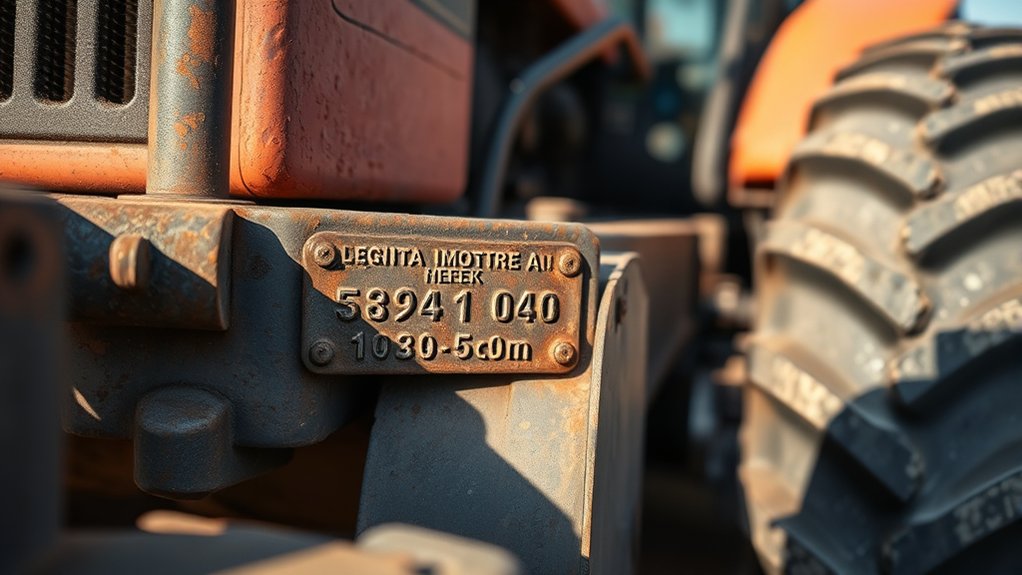
Wondering if tractors have VIN numbers? Yes, they do. Just like cars, most tractors come with a Vehicle Identification Number that uniquely identifies them. This VIN helps you track the tractor’s history, ownership, and manufacturing details.
It’s usually found on the tractor’s frame or engine block, making it easy to locate. When you’re buying or selling a tractor, checking the VIN ensures you’re dealing with the right machine and helps avoid fraud.
Additionally, the VIN is vital if you need to order parts or get service information specific to your tractor’s make and model. So, if you’re handling tractors, knowing about their VIN numbers is indispensable for proper identification and record-keeping.
How Tractor VINs Differ From Car VINs
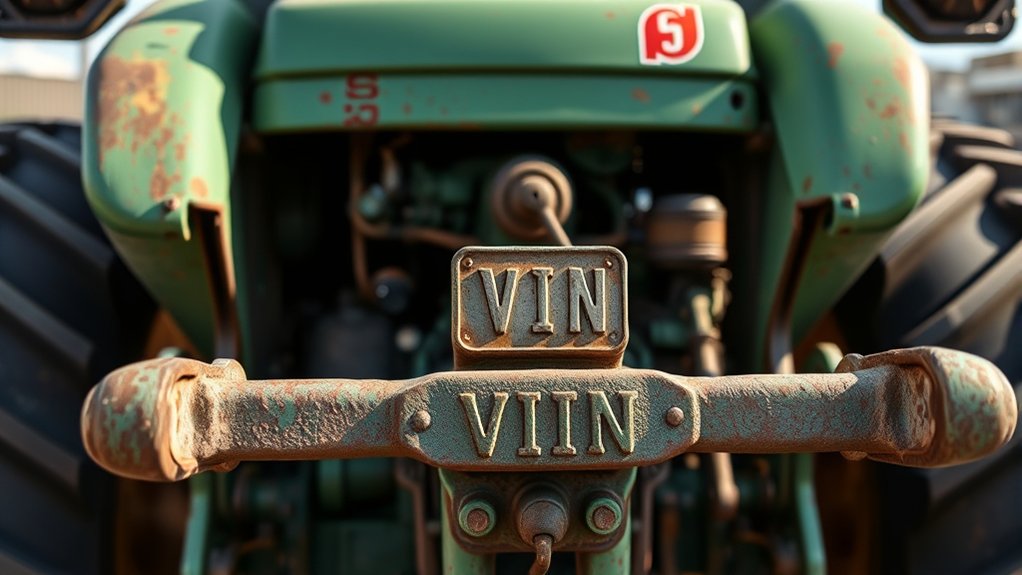
You’ll notice tractor VINs have a different structure compared to car VINs, reflecting their unique design and use.
Regulations for assigning and using these numbers also vary between tractors and cars.
Let’s explore what sets tractor VINs apart and why those differences matter.
Tractor VIN Structure
How exactly do tractor VINs differ from the typical VINs you see on cars? While both serve to uniquely identify vehicles, tractor VINs often follow a different structure. Most car VINs use a standardized 17-character format defined internationally, but tractors may have shorter or varying lengths depending on the manufacturer and model year.
Tractor VINs typically include a combination of letters and numbers that represent the manufacturer, model, engine type, and production sequence, but the exact placement and meaning of these characters can differ from car VIN standards. You’ll notice that tractor VINs might emphasize equipment-specific details, like PTO type or horsepower class, which aren’t relevant for passenger vehicles.
Understanding these structural differences helps you decode the info embedded in tractor VINs accurately.
Regulatory Differences
Why do tractor VINs follow different regulations than car VINs? Unlike cars, tractors are primarily designed for agricultural or industrial use, so regulatory agencies tailor identification standards accordingly.
When you look at a tractor’s VIN, you’ll notice it doesn’t always conform to the standardized 17-character format used for vehicles on public roads. Instead, tractor VINs often vary depending on the manufacturer and the country’s specific agricultural vehicle regulations.
You won’t find the same stringent federal requirements here because tractors aren’t subject to standard automotive safety and emissions rules. Instead, their VINs focus more on manufacturing details and less on road compliance.
Where to Find the VIN on Your Tractor

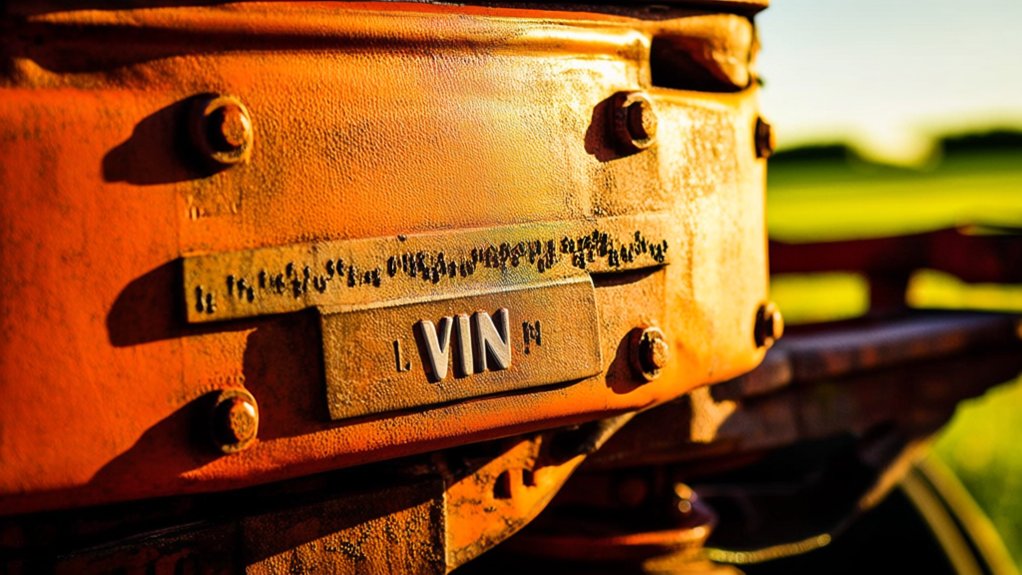
Although VIN locations can vary by manufacturer, you can typically find the VIN on your tractor in a few common spots. Look around the frame near the engine or transmission housing, as many manufacturers stamp the VIN there for easy access.
Check the tractor’s main chassis, often on the left or right side, where a metal plate with the VIN might be riveted or welded.
Some tractors also display the VIN on the dashboard or near the operator’s seat.
If your tractor has a hood or side panel, inspect those areas carefully, as the VIN might be there too.
If you’re having trouble locating it, consult your owner’s manual or contact the manufacturer for specific guidance based on your tractor model.
What Information Does a Tractor VIN Include?
Your tractor’s VIN holds a lot more than just a random string of characters. It includes specific elements like the manufacturer, model year, and production plant.
Understanding these details helps you identify key information encoded in the VIN.
VIN Composition Elements
When you examine a tractor’s VIN, you’ll find it contains specific elements that reveal key details about the machine. The VIN is a 17-character code made up of letters and numbers, divided into distinct sections.
The first three characters identify the manufacturer and country of origin. Next, the following characters represent the vehicle attributes, such as model, engine type, and body style.
The ninth character serves as a check digit, ensuring the VIN’s validity.
After that, the tenth character indicates the model year. Then, the eleventh character specifies the assembly plant.
Finally, the last six characters form the unique serial number for that specific tractor.
Each element works together to create a unique identifier, helping you trace the tractor’s origins and specifications.
Data Encoded in VIN
Since tractor VINs serve as unique identifiers, they pack a wealth of information into their 17 characters. When you look at a VIN, you’ll find details about the manufacturer, country of origin, and the specific tractor model.
You’ll also see the engine type, transmission, and sometimes the production plant. The VIN encodes the year the tractor was built, helping you pinpoint its age precisely.
Additionally, it includes a serial number that distinguishes your tractor from others produced in the same series. This combination makes it easy for you to track maintenance, verify authenticity, or order the right parts.
Understanding the data embedded in a tractor’s VIN helps you manage its history and value more effectively.
How to Decode a Tractor VIN Step-by-Step
Although tractor VINs may look complex at first, you can decode them by breaking down each section systematically. Start by identifying the World Manufacturer Identifier (WMI), which tells you the maker. Next, check the Vehicle Descriptor Section (VDS) for details like model and engine type. Lastly, interpret the Vehicle Identifier Section (VIS) to find the year, factory, and serial number.
| VIN Section | Position Range | What It Means |
|---|---|---|
| WMI | 1–3 | Manufacturer |
| VDS | 4–9 | Model & Engine Info |
| VIS | 10–17 | Year, Plant, Serial |
Why Tractor VINs Matter for Owners and Buyers
Because a tractor’s VIN holds essential information about its origin and specifications, it plays a critical role for both owners and buyers. When you know the VIN, you can verify the tractor’s history and authenticity, which helps you avoid costly mistakes.
It also allows you to confirm the exact model and features, ensuring you get what you expect. For buyers and owners, understanding the VIN means you can:
- Track maintenance and repair records tied to the specific tractor
- Identify recalls or manufacturer updates that might affect safety or performance
- Confirm ownership history to prevent fraud and secure a fair transaction
How Tractor VINs Affect Registration and Insurance
When you register your tractor, the VIN plays a key role in verifying its identity and compliance with state requirements.
Insurance companies also use the VIN to assess coverage options and calculate premiums based on your tractor’s specifics.
Understanding how the VIN impacts these processes can help you avoid delays and get the right protection.
Registration Requirements Explained
How do tractor VINs impact registration and insurance? When you register your tractor, the VIN plays a crucial role in verifying its identity and ownership. Without a proper VIN, you might face delays or complications during registration. Here’s what you need to know:
- Verification: The VIN confirms the tractor’s make, model, and year, ensuring accurate registration records.
- Legal Compliance: Some states require a VIN for registration to prevent theft and fraud.
- Ease of Transfer: When selling or transferring ownership, the VIN streamlines the process by providing a unique identifier.
Understanding these registration requirements helps you avoid legal issues and ensures your tractor is properly documented. Make sure your tractor’s VIN is legible and matches registration documents to keep everything running smoothly.
Insurance Implications Overview
Why does your tractor’s VIN matter for insurance? It uniquely identifies your tractor, helping insurance companies verify its make, model, and history. Without a VIN, insurers may struggle to assess risk accurately or provide coverage.
When you apply for insurance, the VIN ensures your tractor is properly registered in their system, preventing potential fraud or disputes. It also speeds up claims processing if your tractor gets damaged or stolen.
Having a valid VIN simplifies proving ownership, which is essential during claims. In short, your tractor’s VIN plays a key role in securing proper insurance coverage, establishing legitimacy, and protecting your investment.
Using Tractor VINs to Track Recalls and Safety Alerts
Because tractor recalls and safety alerts can directly impact your equipment’s performance and your safety, using the tractor’s VIN helps you quickly identify any outstanding issues. By entering the VIN into official recall databases or manufacturer websites, you can verify if your tractor requires any urgent repairs or updates. This proactive step prevents potential breakdowns and costly damages.
Keep in mind, tracking recalls with your tractor’s VIN allows you to:
- Stay informed about safety risks specific to your tractor model
- Schedule timely repairs or part replacements recommended by manufacturers
- Maintain the tractor’s resale value by ensuring it’s up-to-date with safety standards
Using the VIN for recall tracking puts you in control of your tractor’s reliability and safety on the field.
What to Do If Your Tractor VIN Is Missing or Damaged
Keeping track of your tractor’s VIN is key to managing recalls and safety alerts, but what happens if the VIN is missing or damaged? First, inspect your tractor carefully for alternative VIN locations—some manufacturers place them on the engine or frame.
If you still can’t find a legible VIN, contact the manufacturer or dealer with your tractor’s details; they might help verify or replace the VIN plate. Next, check with your local motor vehicle department or agricultural agency about reporting a missing or damaged VIN.
They’ll guide you through applying for a replacement VIN or an inspection process to verify your tractor’s identity. Avoid trying to alter or recreate a VIN yourself, as that’s illegal and could cause issues with registration and resale.
Farm vs. Construction Tractors: Differences in VIN Requirements
Although both farm and construction tractors serve heavy-duty purposes, their VIN requirements differ markedly due to variations in regulations and usage. You’ll find that farm tractors often don’t require VINs because they operate primarily on private land and fall under agricultural exemptions.
Farm tractors often lack VINs due to private land use and agricultural exemptions.
Construction tractors, however, usually need VINs since they operate on public roads or job sites subject to stricter safety and identification rules.
Here’s why it matters:
- Regulatory oversight: Construction tractors must meet Department of Transportation standards; farm tractors often don’t.
- Usage environment: Construction equipment moves between sites, increasing the need for clear identification.
- Legal registration: Construction tractors usually require registration and VINs for insurance and resale purposes, unlike many farm tractors.
Understanding these differences helps you comply with the law and safeguard your equipment.
Frequently Asked Questions
Can Tractor VINS Help in Theft Recovery?
Yes, tractor VINs can help you recover stolen equipment by providing a unique identifier for law enforcement and insurance companies. You’ll have a better chance of tracking and proving ownership if your tractor is stolen.
Are VINS Required for Vintage Tractors?
You generally don’t need VINs for vintage tractors since they were often made before VIN requirements existed. However, some states might require identification numbers for registration or resale, so check local regulations to be sure.
Do Tractor VINS Expire or Need Updates?
Tractor VINs don’t expire or need updates since they’re permanent identifiers. You should keep the VIN intact and accurate for registration and resale, but you won’t have to change or renew the number itself over time.
How Do Tractor VINS Impact Resale Value?
Tractor VINs directly impact resale value by verifying authenticity, history, and condition. You’ll attract more buyers and get better offers when your tractor’s VIN confirms it’s legitimate, well-maintained, and free from major issues or theft.
Are There International Standards for Tractor VINS?
Yes, you’ll find international standards for tractor VINs, mainly through ISO regulations. These guarantee consistency worldwide, helping you identify tractors easily, track history, and maintain resale value across different countries and markets.
Conclusion
Now that you know tractor VINs are like the tractor’s fingerprint, you’re ready to navigate registration, insurance, and recalls with confidence. Think of that number as your tractor’s secret code—unlocking its history and identity. Whether you’re farming fields or building dreams, understanding VINs puts you in the driver’s seat, ensuring your tractor stays as reliable as the sunrise. Keep that VIN safe; it’s your tractor’s key to the road ahead.