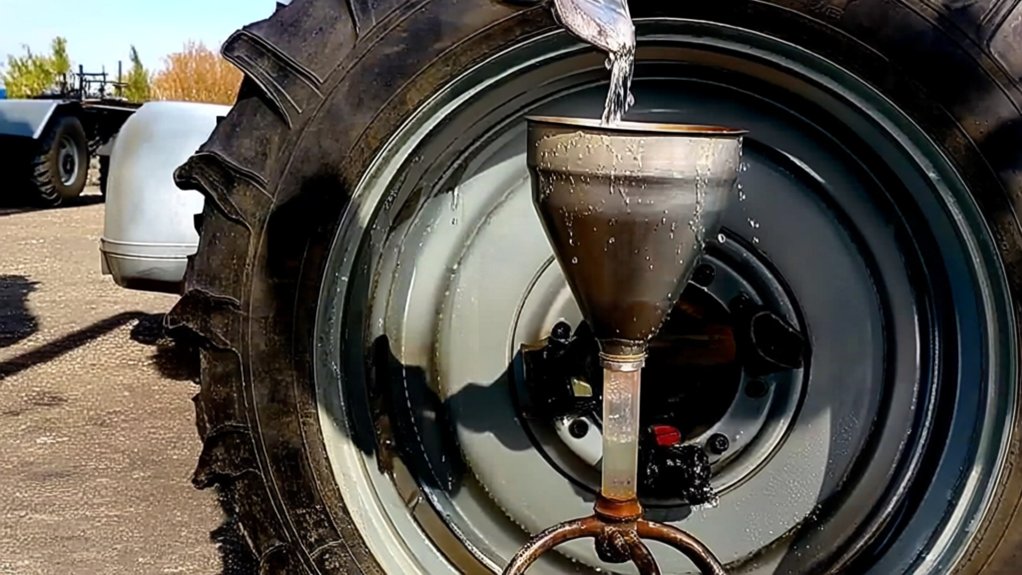
How to Fill Tractor Tires With Fluid in 5 Easy Steps
To fill your tractor tires with fluid, first park on level ground and chock the wheels for safety. Remove the valve stem core to let air escape easily. Use a transfer pump to slowly pour the recommended fluid through the valve, checking levels to avoid overfilling. Once filled, reinstall the valve core and inflate tires to the right pressure. Keep your tires secure and long-lasting by mastering these key steps—and discover how to choose the best fluid and maintain your tires for peak performance.
Key Takeaways
- Park the tractor on level ground and securely chock the wheels to prevent movement.
- Remove the valve stem core to allow air to escape during fluid filling.
- Use a transfer pump to slowly fill the tire with the recommended fluid through the valve stem.
- Frequently check fluid level to avoid overfilling during the filling process.
- Reinstall the valve core, inflate the tire to the specified pressure, and clean any fluid spills.
Why Fill Tractor Tires With Fluid? Benefits Explained
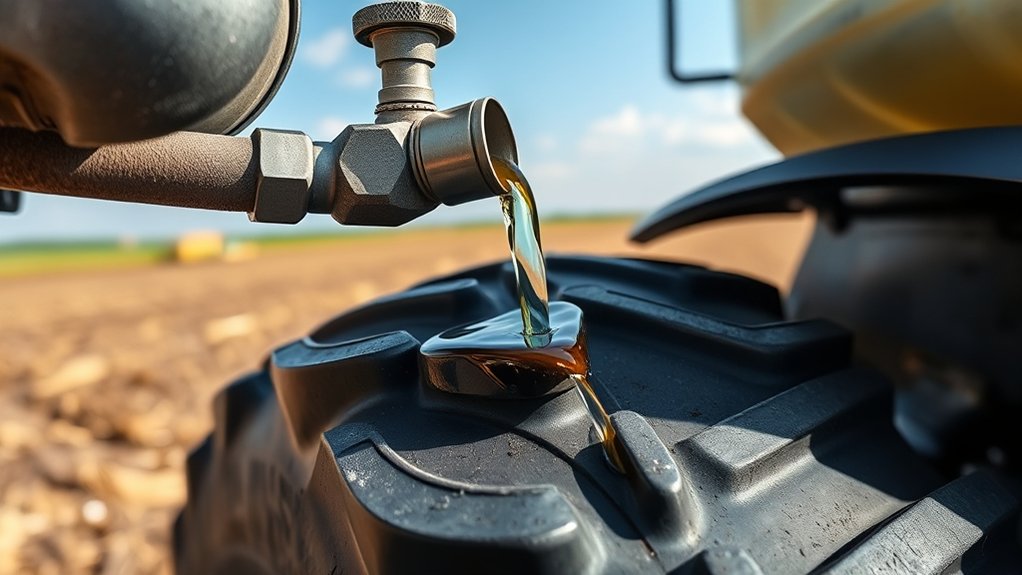
Although it might seem unnecessary at first, filling your tractor tires with fluid offers several key benefits that can improve performance and safety.
You’ll notice better stability when operating on uneven terrain, as the added weight lowers the center of gravity, reducing the chance of tipping. The fluid also cushions impacts, protecting the tire from damage caused by sharp objects or rough ground. This can extend the life of your tires and save you money on replacements.
Additionally, fluid-filled tires are less likely to suffer from sudden flats, giving you peace of mind during long hours in the field.
Picking the Right Fluid for Your Tractor Tires
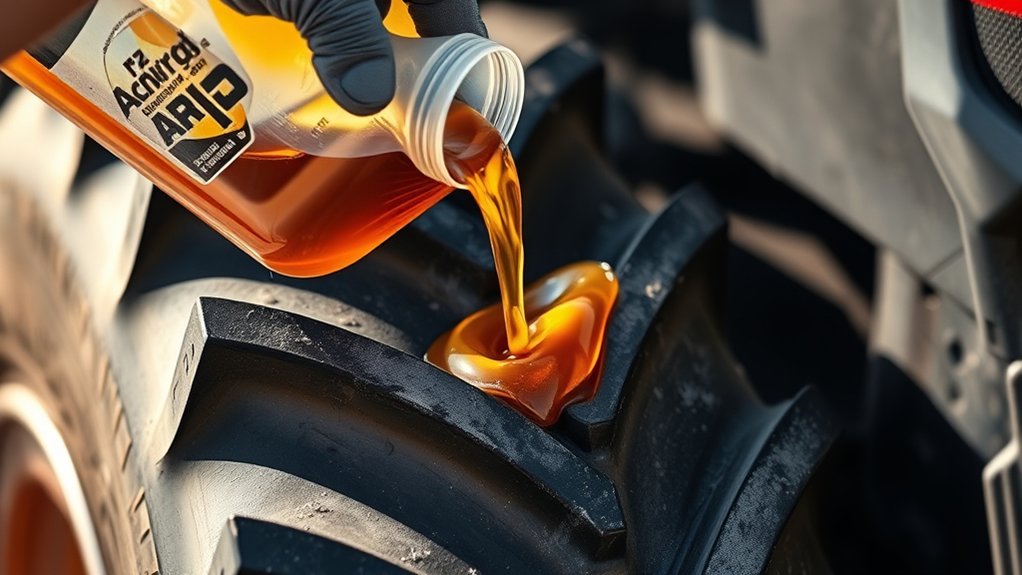
Understanding the benefits of filling your tractor tires with fluid is just the first step; selecting the right type of fluid is what makes those advantages possible. You’ll want a fluid that provides added weight, reduces tire damage, and resists freezing or corrosion. Common choices include water mixed with antifreeze, tire balancing beads, and specialized tire filling fluids.
| Fluid Type | Key Benefits |
|---|---|
| Water + Antifreeze | Adds weight, prevents freezing |
| Tire Balancing Beads | Reduces vibration, no corrosion |
| Specialized Fluids | Anti-corrosive, long-lasting |
Choose based on your climate, tire type, and budget. Avoid pure water, as it can freeze and cause damage. Using the right fluid guarantees your tractor tires perform effectively and last longer.
Getting Your Tractor Tires Ready: Draining Old Fluid Safely
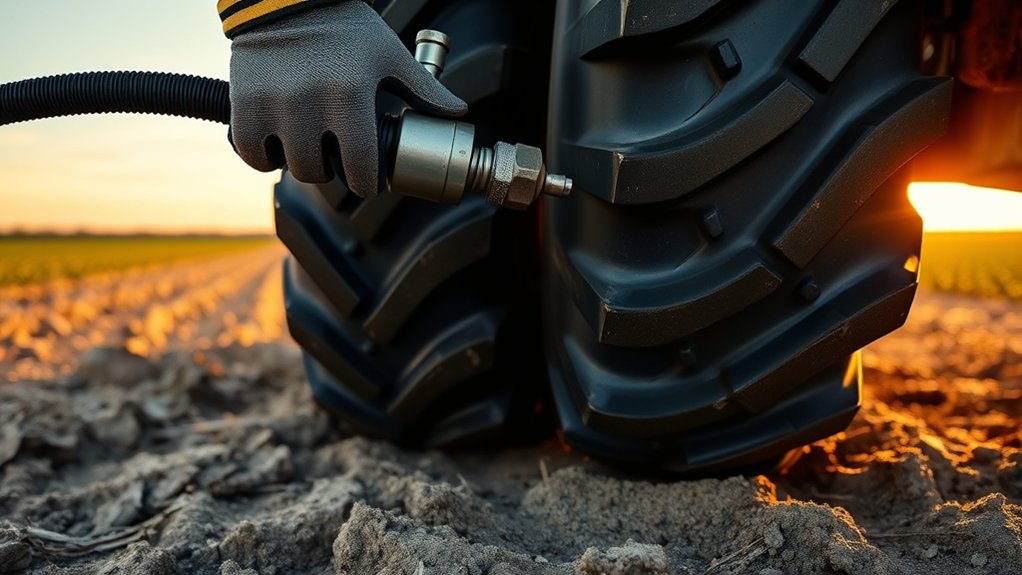
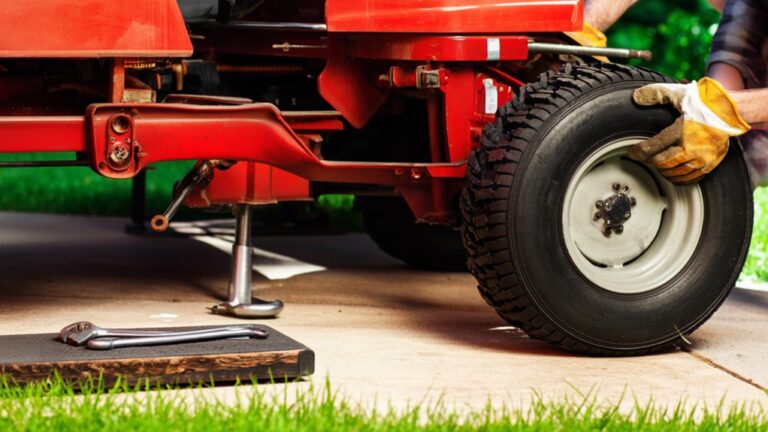
Before you add new fluid to your tractor tires, you need to safely drain the old fluid to prevent contamination and guarantee peak performance. Start by parking your tractor on a flat surface and securing it with wheel chocks to avoid movement.
Use a clean drain valve or remove the valve stem carefully to let the old fluid flow out into a suitable container. Wear protective gloves and eye protection to guard against spills or splashes.
Make sure to dispose of the drained fluid according to local environmental regulations. Once the fluid is fully drained, clean the valve area and inspect the tire for any damage or debris.
Properly draining the old fluid sets the stage for a smooth, effective refill.
Filling Your Tractor Tires With Fluid: Step-by-Step
Once you’ve drained the old fluid and prepared your tractor tires, you can begin filling them with fresh fluid to guarantee peak performance and durability. Start by positioning your tractor on a level surface and securely chocking the wheels. Remove the valve stem core to allow air to escape easily during filling.
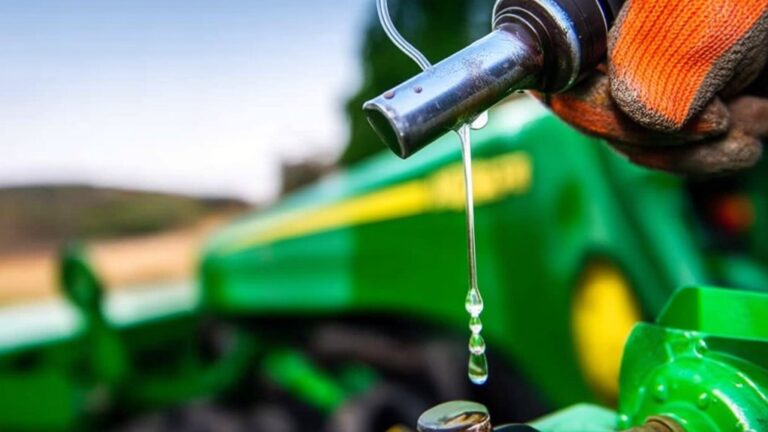
Using a fluid transfer pump, pour the recommended tire fill solution directly into the tire through the valve stem. Fill slowly, checking the fluid level frequently to avoid overfilling. Once filled, reinstall the valve core tightly.
Next, inflate the tire to the manufacturer’s specified pressure with an air compressor. Finally, wipe away any spilled fluid from the tire and rim to prevent corrosion. This method ensures your tires stay balanced and protected for long-term use.
How to Keep Your Fluid-Filled Tractor Tires in Top Shape
To keep your fluid-filled tractor tires performing well, you need to check them regularly for leaks, damage, and proper fluid levels. Inspect the tires visually before each use, looking for cracks, punctures, or bulges that could indicate problems.
Use a tire pressure gauge to ensure the tires maintain the correct pressure, as improper pressure can cause uneven wear or damage.
Monitor fluid levels by checking the tire’s fill point; if you spot a leak, address it promptly to avoid further damage.
Keep the tires clean and free of debris to prevent corrosion and fluid contamination.
Regular maintenance, combined with timely repairs, will help extend the life of your fluid-filled tires and keep your tractor running smoothly.
Frequently Asked Questions
Can Fluid-Filled Tires Affect Tractor Fuel Efficiency?
Yes, fluid-filled tires can affect your tractor’s fuel efficiency. They add weight, which may increase fuel consumption, but they also improve traction and reduce tire damage, potentially saving fuel in rough or uneven terrain over time.
How Does Tire Fluid Impact Tractor Handling on Slopes?
Wondering how tire fluid affects your tractor on slopes? It improves stability by lowering the center of gravity and enhancing traction, so you’ll handle inclines more confidently without worrying about slipping or tipping over.
Are There Environmental Concerns With Disposing of Old Tire Fluid?
Yes, you should avoid pouring old tire fluid down drains or on soil since it can harm wildlife and contaminate water. Instead, take it to a hazardous waste facility or recycling center for proper disposal.
Can Fluid-Filled Tires Be Used in All Tractor Models?
You can’t use fluid-filled tires on all tractor models because some tires and rims aren’t designed for the extra weight or pressure. Always check your tractor’s specifications to guarantee compatibility before filling tires with fluid.
What Are the Signs of a Fluid Leak in Tractor Tires?
You’ll notice signs like a sudden drop in tire pressure, visible wet spots or fluid around the tire, unusual tire wobbling, or a distinct odor. Check frequently to catch leaks early and avoid damage or downtime.
Conclusion
Filling your tractor tires with fluid is like giving them a strong backbone, ready to tackle any terrain with confidence. By choosing the right fluid and following simple steps, you turn your tires into steady, reliable partners. Keep them well-maintained, and they’ll hum smoothly, absorbing shocks like a gentle river flowing over stones. Embrace this easy upgrade, and watch your tractor roll with power and grace, every time you hit the field.