How to Install Snow Chains on a Lawn Tractor in 10 Easy Steps
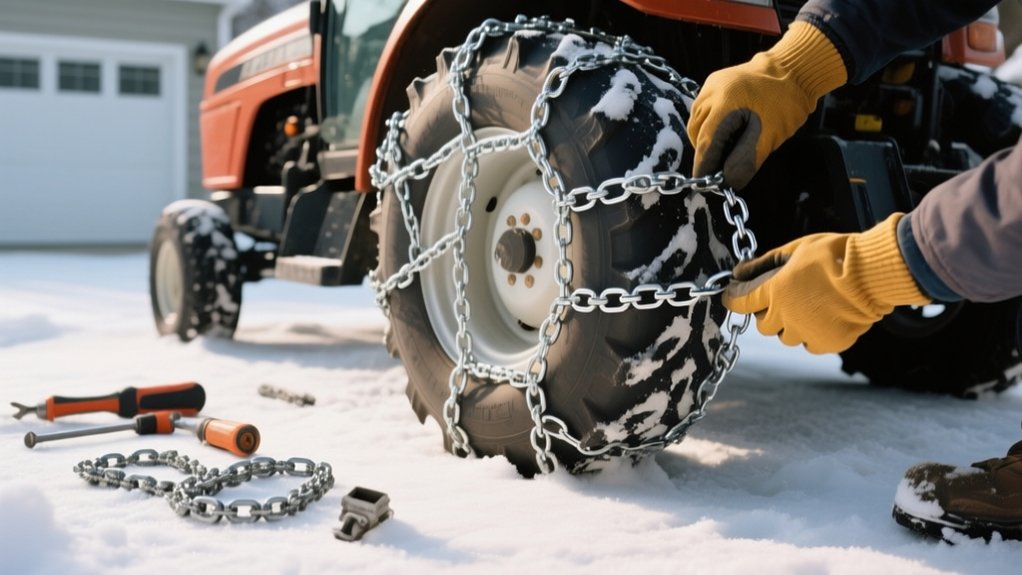
To install snow chains on your lawn tractor quickly, first choose chains that fit your tire size and terrain needs. Park on firm, level ground with the brake engaged, then clean and prep your tires. Lay the chains flat beside each tire, drape them evenly, and fasten securely. Tighten so they’re snug but flexible, ensuring no rubbing or slack. Test drive slowly and adjust tension as needed. Keep going, and you’ll discover tips for ensuring a safe, hassle-free fit every time.
Key Takeaways
- Park the tractor on level ground, engage the parking brake, and clean tires of debris for safe installation.
- Lay the untangled chains next to tires, ensuring correct orientation and hooks facing outward.
- Drape chains evenly over tires, center them, and fasten hooks securely with the correct tension.
- Use tensioning devices to tighten chains firmly, checking for slack and adjusting after initial driving.
- Test drive slowly, listen for noises, inspect chains for damage, and re-tighten as necessary for safety.
Choose the Right Snow Chains for Your Lawn Tractor
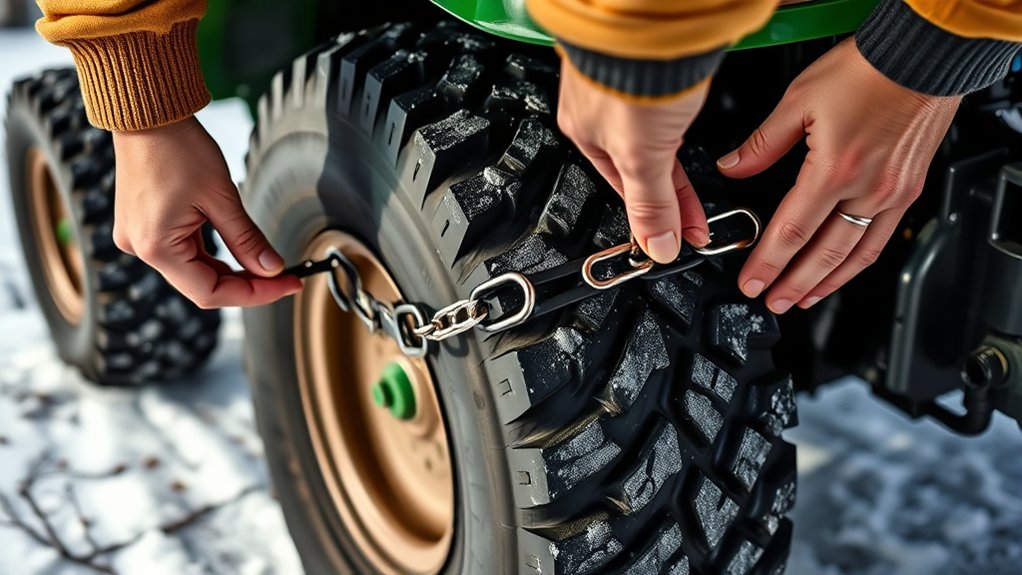
Before you install snow chains on your lawn tractor, you need to pick the right ones for your specific model and tire size. Start by checking your tractor’s manual or the tire sidewall to find the exact tire dimensions.
Snow chains come in various sizes and styles, so matching these numbers ensures a secure fit. Next, consider the type of terrain you’ll be working on—some chains provide better traction on icy surfaces, while others are designed for deep snow.
You’ll also want chains made from durable materials like manganese steel for longevity. Avoid generic chains that might slip or damage your tires.
Choosing the right snow chains not only improves safety but also protects your tractor’s tires and drivetrain from unnecessary wear.
Prepare Your Lawn Tractor for Snow Chain Installation
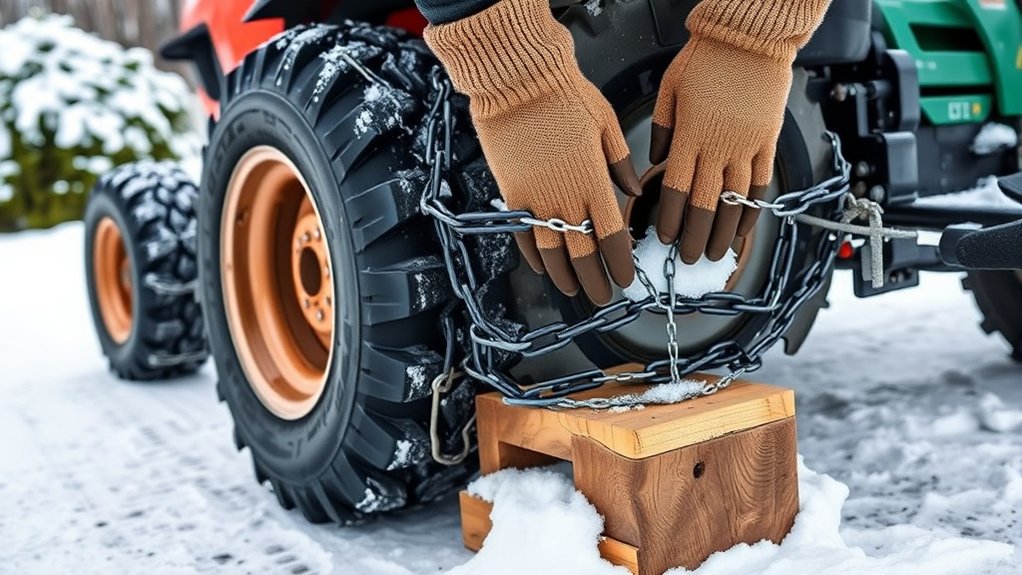
While preparing your lawn tractor for snow chain installation, you’ll want to park it on a flat, stable surface and engage the parking brake to prevent any movement. Next, turn off the engine and remove the key to guarantee safety while working.
Check your tractor’s tires for any debris, mud, or ice, and clean them thoroughly to help the chains fit properly. Inspect the tires for damage or excessive wear, as this can affect chain performance.
Gather your snow chains and lay them out flat to untangle any knots. Make sure you have any necessary tools nearby, such as gloves, to protect your hands during installation.
Taking these steps sets you up for a smooth and safe chain installation process.
Park Your Tractor Safely Before You Begin
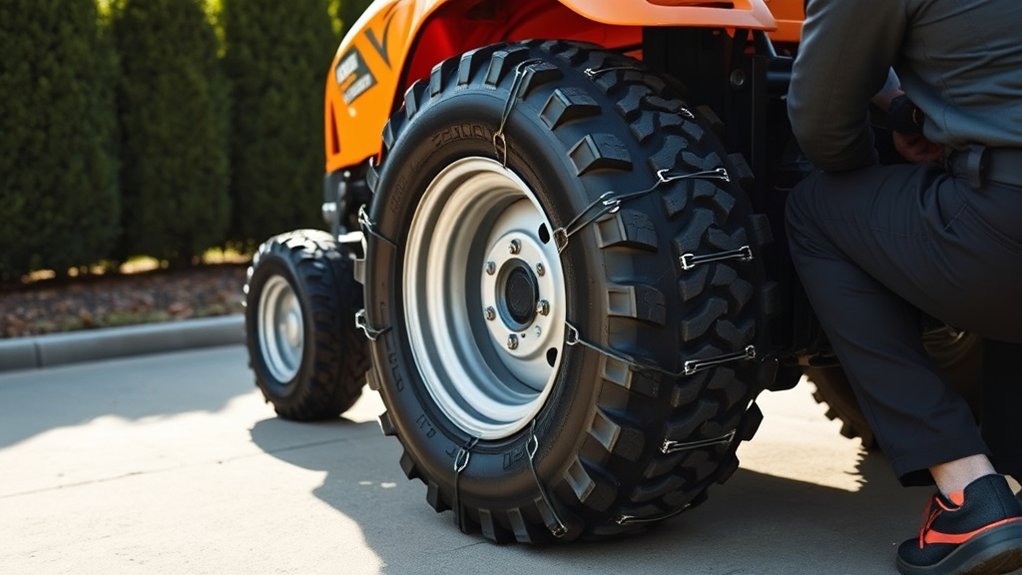
Before you start installing the snow chains, make certain to park your tractor on level ground to prevent any movement.
Always engage the parking brake to keep it securely in place.
This will help guarantee your safety throughout the process.
Choose Level Ground
Although it might be tempting to install snow chains wherever you park, choosing level ground guarantees your tractor stays stable and safe throughout the process.
Level terrain prevents the tractor from rolling or shifting, which is vital when you’re handling heavy chains. It also makes it easier to install the chains evenly and securely.
When selecting your spot, keep these points in mind:
- Avoid slopes or uneven surfaces that could cause instability.
- Look for firm ground to prevent the tires from sinking.
- Make certain there’s enough space around you to work safely.
- Pick a well-lit area to see clearly during installation.
Choosing the right ground sets the foundation for a smooth and safe snow chain installation.
Engage Parking Brake
How do you guarantee your lawn tractor stays put during the installation? The key is to engage the parking brake firmly before you start.
Once you’ve parked on level ground, pull the brake lever or press the pedal fully to lock the wheels in place. This prevents any rolling or shifting that could cause accidents or make the chains harder to install.
Double-check that the tractor is completely stationary by gently trying to move it. If it slides, readjust the brake until it holds tight.
Engaging the parking brake not only keeps you safe but also gives you a stable platform to work on. Don’t skip this step—it’s essential for a smooth, hassle-free snow chain installation.
Lay Chains Next to the Tires
Once you have the chains ready, position them carefully next to the lawn tractor’s tires to guarantee an easy and secure installation. Lay each chain flat on the ground beside the tire, making sure they’re untangled and oriented correctly. This step sets you up for a smooth process when you start draping the chains over the tires.
Remember to:
- Place chains on the side where you’ll start the installation.
- Keep the chains flat to avoid twists or knots.
- Make sure the hooks or fasteners are facing outward for accessibility.
- Double-check that the chains are the right size for your tires.
Drape the Chains Over the Tires
Before you start draping the chains over the tires, make sure the tractor is on a flat surface and the parking brake is engaged. This will keep the tractor steady and prevent any movement while you work.
Ensure the tractor is on level ground with the parking brake set for safety before draping chains.
Take the chain you laid next to the tire and lift it carefully. Drape it evenly over the top of the tire, ensuring that the chain links hang straight down on both sides. Avoid twisting or tangling the chains during this step.
Align the chain so it covers the tire tread completely, maximizing traction when you’re driving. Make sure the chains are centered and symmetrical on the tire.
Once the chains are draped properly, you’re ready to move on to securing them snugly around the tire in the next step.
Secure the Chains Around the Tires
Now that the chains are draped over the tires, make certain to align them properly before fastening the hooks securely.
You’ll want to double-check the tension to guarantee the chains fit snugly without being too tight.
This step keeps the chains in place and helps your lawn tractor maintain traction on snowy surfaces.
Align Chains Correctly
Although it might seem tricky at first, you’ll find it easier to align the snow chains properly if you take your time and position them evenly around each tire. Start by draping the chain over the tire, making sure the inside and outside sections are balanced. Adjust the chain so it sits flat against the tread without twisting or bunching. Proper alignment guarantees better traction and prevents damage.
Keep these points in mind:
- Chains must cover the tire tread uniformly.
- Avoid overlapping or loose sections.
- Check that side links are straight and not bent.
- Guarantee the chain fits snugly without gaps.
Taking these steps will help your lawn tractor handle snowy conditions safely and effectively.
Fasten Chain Hooks
Once you’ve aligned the chains properly, you’ll want to fasten the chain hooks securely around the tires to guarantee they stay in place during use.
Start by connecting the main hook on one end of the chain to the link on the opposite end, ensuring it’s tight but not overstretched.
Work your way around the tire, fastening all hooks evenly so the chain wraps snugly without gaps.
Make sure the hooks face outward to prevent damage to the tractor or injury.
After securing each hook, double-check that they’re locked firmly, and none of the links are twisted or caught on debris.
This will keep the chains stable as you operate your lawn tractor in snowy conditions.
Check Chain Tension
How tight should the chains be around your lawn tractor’s tires? You want them snug but not overly tight. Proper tension ensures the chains stay secure without damaging your tires or tractor.
After fastening the hooks, check the chain tension by pulling on the chains. They should have minimal slack but still allow some movement as the tire rotates. If they’re too loose, the chains could slip or come off. If they’re too tight, they may cause excessive wear.
Keep these points in mind:
- Chains must sit evenly around the tire tread.
- Avoid overtightening that stresses the sidewalls.
- Use tensioners or adjust hooks if needed.
- Recheck tension after driving a short distance.
This balance keeps your tractor safe and efficient on snowy terrain.
Tighten the Chains to Remove Slack
Before you finish installing the chains, you’ll need to tighten them to eliminate any slack. Start by pulling the chains snug around the tires, ensuring they sit evenly without loose sections.
Use the tensioning device or chain tightener provided—usually a rubber or metal adjuster—to draw the chains tighter. Secure the tensioner firmly so the chains won’t shift during use.
Check all connection points and fasteners, making sure nothing feels loose or weak. Tightening prevents the chains from slipping off or damaging your tractor’s tires.
Take your time here; a well-tightened chain improves traction and safety. If you notice slack after initial tightening, adjust the tensioner again until the chains feel firm and secure.
This step is vital for effective winter operation.
Check Snow Chains for Proper Fit and Clearance
Now that you’ve tightened the chains, it’s important to check their fit and clearance on your lawn tractor’s tires.
Measure your tire size carefully and inspect the chains to make sure they don’t rub against the tractor or get caught on anything.
Also, double-check the tension to make certain the chains stay snug without being too tight.
Measuring Tire Size
What size are your lawn tractor tires, and why does it matter when installing snow chains? Getting the right tire size guarantees your snow chains fit securely and function effectively. If the chains are too tight or too loose, they can cause damage or slip off.
To measure your tire size accurately, check the sidewall of the tire; it usually displays numbers indicating width, aspect ratio, and diameter.
Keep these points in mind when measuring:
- Note the tire width, aspect ratio, and rim diameter exactly as marked.
- Use a tape measure if the markings are worn or unclear.
- Match snow chains to these dimensions for a snug fit.
- Remember, precise measurement prevents safety hazards and equipment damage.
Inspecting Chain Clearance
Although you’ve measured your tire size carefully, you still need to inspect the chain clearance to guarantee the snow chains fit properly without rubbing against the tractor or tire.
Start by draping the chains over the tires and securing them loosely. Spin the tire slowly to check for any points where the chains might catch on the tractor’s body, wheel wells, or suspension components.
Look for ample space between the chains and any nearby parts to avoid damage or excessive wear. Pay special attention to areas where the chain links overlap or where the chain crosses the tire tread.
If you notice tight spots or rubbing, consider adjusting the chain size or selecting a different chain model to assure safe and effective operation in snowy conditions.
Ensuring Proper Chain Tension
Once you’ve confirmed the chains clear the tractor and tires, you’ll need to make certain they fit with the proper tension. Chains that are too loose can slip off or damage the tractor, while chains that are too tight may cause excessive wear or hinder movement. To guarantee the right fit, check that the chains sit snugly around the tire without sagging or stretching.
Keep these key points in mind:
- Adjust tension using built-in tensioners or by tightening the chain links.
- Leave a small gap for tire flex but avoid excess slack.
- Rotate the tire and re-check tension after initial fitting.
- Verify clearance around brake lines and steering components.
Proper tension ensures safety, traction, and prolongs chain life. Take your time to get it right.
Test Drive and Troubleshoot Common Chain Issues
Before you hit the snow-covered lawn, take your tractor for a slow test drive to make certain the chains are properly secured and functioning. Listen for any unusual noises and watch for slipping or uneven movement.
If you notice the chains shifting or coming loose, stop immediately and tighten the tension. Check for any links that might be bent or damaged, as these can cause problems during operation.
Also, verify the chains aren’t dragging excessively or catching on parts of the tractor. If you experience vibration or pulling, re-examine the installation and tension, adjusting as needed.
Regularly inspecting during the test drive helps catch issues early, keeping you safe and ensuring your chains perform effectively in snowy conditions.
Maintain and Store Your Snow Chains Properly
After you’ve confirmed the chains fit securely and function well during your test drive, it’s important to maintain them properly to guarantee they last through many winters.
First, clean the chains thoroughly to remove dirt, salt, and debris that can cause rust. Dry them completely before storing.
Inspect each link for wear or damage and replace any compromised parts immediately.
Store the chains in a cool, dry place away from direct sunlight to prevent corrosion.
Here’s what you should do:
- Wash off all grime and salt after each use
- Dry chains fully before storing
- Check regularly for broken or weakened links
- Keep chains in a sealed container or bag in a dry area
Proper care ensures your chains remain reliable when snow hits again.
Frequently Asked Questions
Can Snow Chains Damage My Lawn Tractor Tires?
Yes, snow chains can damage your lawn tractor tires if they’re too tight or improperly installed. You’ll want to guarantee they fit correctly and avoid driving on bare pavement to prevent unnecessary wear and tear.
Are Snow Chains Necessary for All Types of Snow Conditions?
You don’t need snow chains for every snow condition. They’re essential in deep, icy, or packed snow but overkill in light, fluffy snow. Use chains when traction is poor to stay safe and maintain control.
How Do I Choose Between Different Snow Chain Materials?
You should choose snow chain materials based on durability, traction needs, and terrain. Steel offers strength and grip on ice, while rubber or fabric chains provide lighter, quieter performance on packed snow or less harsh conditions.
Can I Install Snow Chains by Myself Safely?
Yes, you can safely install snow chains by yourself if you follow the instructions carefully, wear gloves, and verify the tractor is off and stable. Take your time, and double-check the tension before use.
Do Snow Chains Affect My Lawn Tractor’s Warranty?
Snow chains might void your lawn tractor’s warranty if they cause damage or aren’t approved by the manufacturer. Always check your warranty terms and consult the manual before installing chains to avoid any issues.
Conclusion
Installing snow chains on your lawn tractor might seem tricky, but it’s easier than you think. Once you’ve chosen the right chains and followed these steps, you’ll have better traction and safety in snowy conditions. Don’t worry about damaging your tires—properly fitted chains actually protect them by preventing slips and wear. With a little practice, you’ll be ready to tackle winter’s challenges confidently and keep your lawn tractor running smoothly all season long.