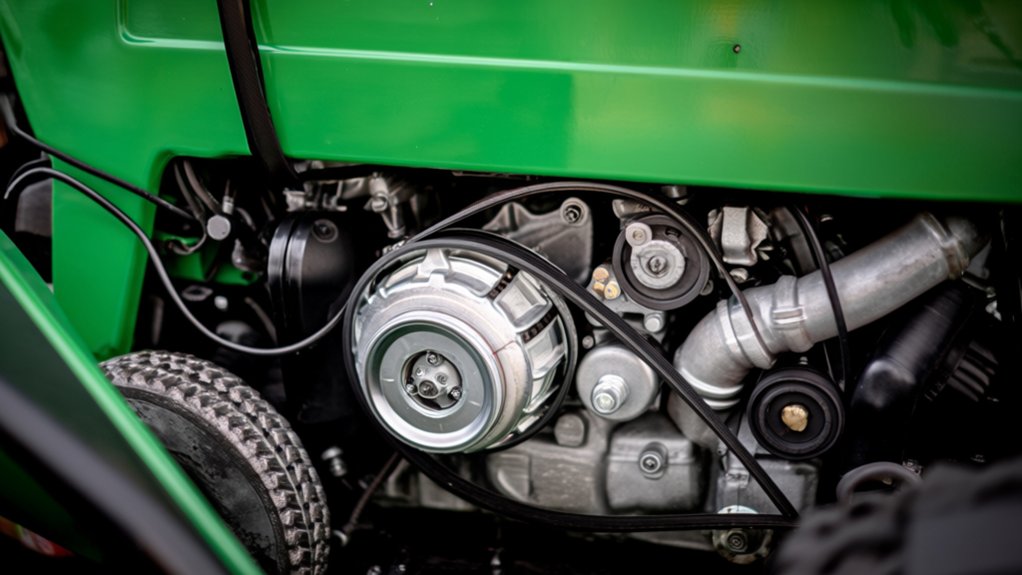
Do Lawn Tractors Have Alternators?
Yes, your lawn tractor most likely has an alternator if it’s a modern model. Alternators efficiently charge your battery and power electrical parts like lights and starters by converting engine energy into electricity. They offer steady voltage and prevent battery drain, unlike older generators. Keeping your alternator and battery in good shape is key to avoiding electrical issues. Keep going to discover how it all works and how to keep your tractor running smoothly.
Key Takeaways
- Most modern lawn tractors are equipped with alternators instead of older generators for more efficient battery charging.
- Alternators convert mechanical energy to electrical energy, supplying power to the battery and electrical components like lights and starters.
- They activate when the engine starts, maintaining battery charge and ensuring reliable operation of electrical systems.
- Alternators regulate voltage between 13.5 and 14.5 volts to prevent battery and electrical component damage.
- Essential for tractors with electrical features, alternators support continuous power and improve overall tractor functionality.
Do Lawn Tractors Have Alternators?
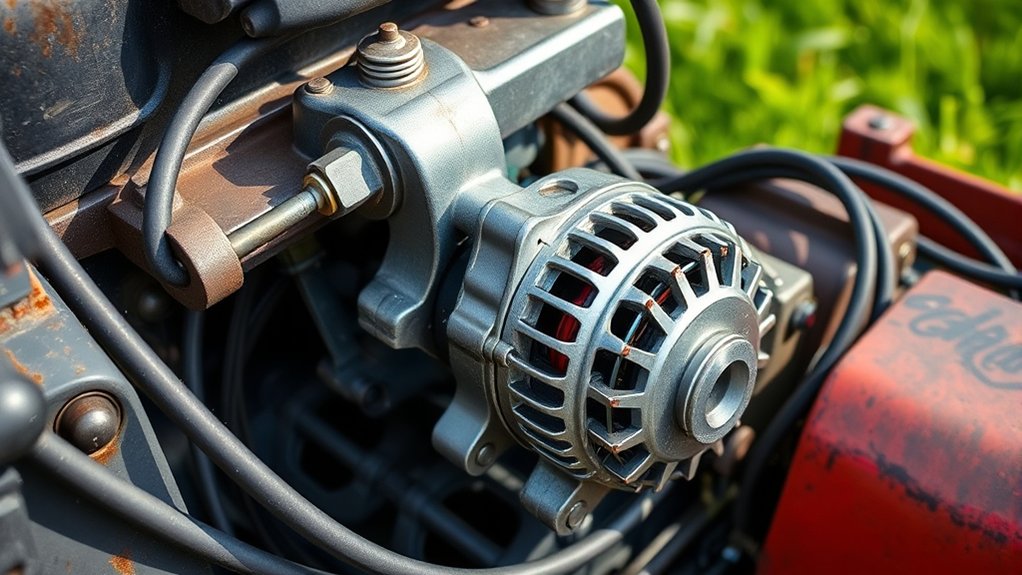
Wondering whether lawn tractors have alternators? Yes, most modern lawn tractors do have alternators. Unlike older models that relied on generators, alternators are now the standard because they’re more efficient at charging the battery and powering electrical components.
When you start your tractor, the alternator kicks in to maintain the battery’s charge while supplying electricity to things like headlights or ignition systems.
If your tractor has features that need consistent power, such as electric starters or lights, it almost certainly includes an alternator. However, some very basic or older lawn tractors might still use a generator or no charging system at all, meaning you’ll need to manually maintain the battery charge.
How Does an Alternator Work in Lawn Tractors and Vehicles?
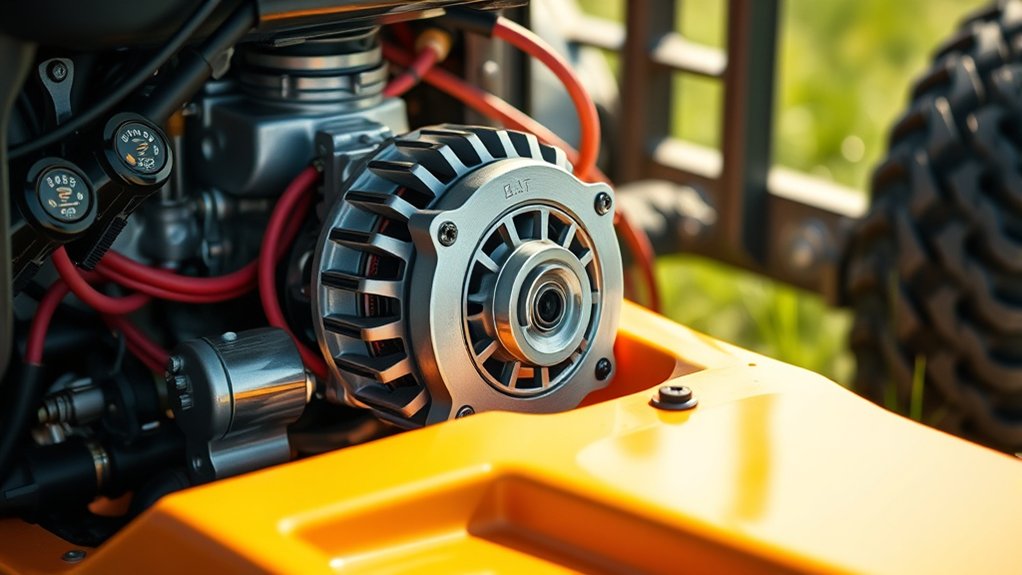
You rely on the alternator to keep your lawn tractor’s battery charged and power the electrical system while the engine runs. It converts mechanical energy into electrical energy through a spinning rotor and stationary stator, producing the current you need.
Understanding this process helps you see how the alternator fits seamlessly into your vehicle’s overall electrical system.
Alternator Function Basics
How exactly does an alternator work in lawn tractors and vehicles? When the engine runs, it spins the alternator’s rotor inside a coil of wire, creating a magnetic field. This movement generates alternating current (AC), which the alternator immediately converts to direct current (DC) using diodes.
The DC power then charges the battery and powers electrical components like lights and ignition systems. You don’t have to worry about the alternator’s speed; it adjusts output based on engine RPM to provide a steady voltage.
Without this process, your battery would drain quickly, and the electrical system wouldn’t function properly. So, the alternator fundamentally acts as your lawn tractor’s power generator, keeping everything running smoothly while the engine’s on.
Electrical System Integration
Although the alternator works quietly behind the scenes, it plays a crucial role in your lawn tractor’s electrical system by continuously supplying power to the battery and electrical components.
Without it, your tractor wouldn’t run smoothly or start reliably. Here’s how it integrates:
- It connects directly to the engine, spinning as the engine runs, ensuring steady electrical output.
- It charges the battery while powering essential components like headlights, ignition, and dashboard gauges.
- It regulates voltage to prevent electrical overload, protecting sensitive electronics and extending battery life.
Power Generation Process
Because the alternator converts mechanical energy into electrical power, it plays an essential role in keeping your lawn tractor running smoothly. When the engine runs, it spins the alternator’s rotor inside a stator, creating a magnetic field. This induces an alternating current (AC), which the rectifier converts to direct current (DC) to charge the battery and power electrical components. The voltage regulator controls output to prevent overcharging.
| Component | Function | Importance |
|---|---|---|
| Rotor | Spins to create magnetic field | Generates AC electricity |
| Stator | Stationary coils | Induces current |
| Rectifier | Converts AC to DC | Powers battery |
| Voltage Regulator | Controls voltage output | Protects electrical system |
Common Charging Systems in Lawn Tractors
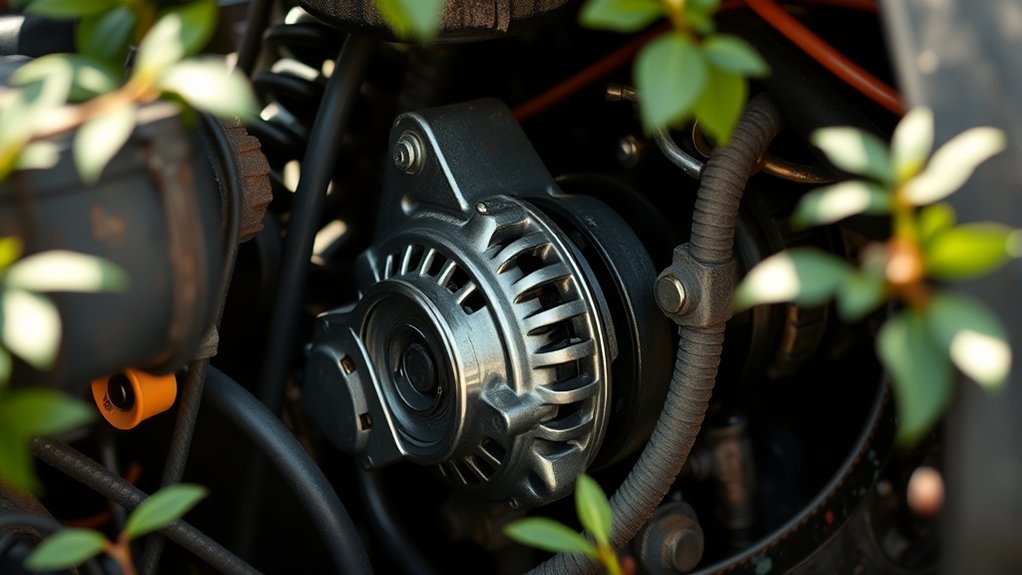
You’ll find different charging systems in lawn tractors, each with its own way of keeping your battery powered. Voltage regulators play a key role in managing the electrical flow to prevent overcharging.
Understanding battery maintenance and proper charging can help you extend your tractor’s life and performance.
Types Of Charging Systems
When maintaining your lawn tractor, understanding the types of charging systems it uses can save you time and frustration. Most lawn tractors rely on one of these three charging systems:
- Alternator System – This is the most common and efficient system. It generates AC power and converts it to DC, charging the battery while running your tractor’s electrical components.
- Generator System – Older models often use this. It produces DC power directly but is less efficient and requires more maintenance.
- Magneto System – Mostly found in small engines, it generates electricity for ignition but doesn’t charge the battery.
Knowing which system your tractor has helps you troubleshoot charging issues and maintain battery health effectively.
Role Of Voltage Regulators
How does your lawn tractor keep its electrical system from overcharging the battery? It relies on a voltage regulator, a vital component that controls the output from the alternator or generator. The regulator guarantees the voltage stays within a safe range, usually around 13.5 to 14.5 volts.
Without it, your battery could receive too much voltage, leading to damage or reduced lifespan. The voltage regulator constantly monitors the electrical system and adjusts the current flow accordingly, preventing spikes that can harm sensitive components.
Whether your tractor uses a mechanical or electronic regulator, its job is to maintain a steady voltage output. This balance keeps your battery healthy and powers the tractor’s electrical parts efficiently during operation.
Battery Maintenance And Charging
Why is regular battery maintenance essential for your lawn tractor’s performance? Without proper care, your battery can lose charge quickly, making it harder to start the engine. Most lawn tractors use alternators to recharge the battery while running, but you still need to maintain it for consistent power.
Here are three key steps to keep your battery in top shape:
- Clean the terminals regularly to prevent corrosion, which can block electrical flow.
- Check the electrolyte levels if you have a traditional lead-acid battery and top off with distilled water as needed.
- Charge the battery fully before long storage periods using a smart charger to avoid sulfation.
Following these steps ensures reliable starts and extends your battery’s lifespan.
How Does a Lawn Tractor Charge Its Battery Without an Alternator?
Although many vehicles rely on alternators to charge their batteries, lawn tractors use a different system that’s just as effective. Instead of an alternator, most lawn tractors have a magneto or a small generator attached to the engine.
When you start the engine and it runs, this device spins and produces electricity. That electricity flows through a voltage regulator, which controls the power sent to the battery. This way, your battery gets charged while the engine is running, keeping it ready for the next start.
You don’t have to worry about alternators here because the magneto or generator is designed specifically for the lower power needs and the simpler electrical systems of lawn tractors, ensuring reliable battery charging during operation.
How Can You Test Your Lawn Tractor’s Alternator?
You can test your lawn tractor’s alternator by first checking the voltage output with a multimeter to guarantee it’s charging the battery properly.
Next, inspect the alternator belt for any signs of wear or looseness that could affect performance.
These simple steps help you catch issues before they cause bigger problems.
Checking Voltage Output
Wondering how to check if your lawn tractor’s alternator is working properly? The best way is by measuring its voltage output. Here’s how you can do it:
- Prepare your multimeter – Set it to DC voltage and connect the leads to the battery terminals (red to positive, black to negative).
- Start the tractor – Let it run at a moderate speed, usually around half throttle, to activate the alternator.
- Read the voltage – A healthy alternator should produce between 13.5 and 14.5 volts.
If the reading stays below 12.5 volts, your alternator might be failing or not charging the battery properly.
This simple test gives you a clear indication of your lawn tractor’s charging system health.
Inspecting Alternator Belt
Before diving into electrical tests, start by inspecting the alternator belt, since a worn or loose belt can prevent the alternator from charging the battery properly.
First, check the belt’s tension by pressing down on it midway between the pulleys. It should feel firm with about half an inch of give. If it’s too loose or too tight, adjust it according to your tractor’s manual.
Next, examine the belt for cracks, fraying, or glazing—any signs mean it needs replacement. A damaged belt won’t transfer power effectively, causing charging issues even if the alternator itself is fine.
Common Warning Signs of a Failing Lawn Tractor Charging System
Although your lawn tractor might seem to run fine, subtle signs can indicate a failing charging system before it completely breaks down. Catching these early can save you from unexpected stalls or expensive repairs.
Here are three common warning signs to watch for:
- Dim or Flickering Lights – If your headlights or dashboard lights are dimmer than usual or flicker, it means your battery isn’t getting enough charge.
- Slow Engine Crank – When you try to start your tractor and the engine cranks slowly, it’s a sign the battery is weak due to insufficient charging.
- Battery Warning Light – Many lawn tractors have a battery or charging system warning light that illuminates when there’s an issue.
Noticing any of these signs means you should inspect the charging system promptly.
What’s the Difference Between Alternators and Generators in Lawn Tractors?
When you look under the hood of your lawn tractor, you’ll find either an alternator or a generator powering the electrical system. Both serve to charge your battery and run electrical components, but they work differently. Alternators produce AC current converted to DC, while generators create DC directly. Alternators are more efficient at higher speeds and lighter, but generators handle low-speed operation better.
| Feature | Alternator | Generator |
|---|---|---|
| Output Type | AC, converted to DC | Direct DC |
| Efficiency | Higher, especially at high RPM | Lower, consistent at low RPM |
| Weight | Lighter | Heavier |
| Maintenance | Less frequent | More frequent |
Knowing these differences helps you understand which system your tractor uses and how it affects performance.
Pros and Cons of Alternators in Lawn Tractors
An alternator in your lawn tractor offers several advantages, like better efficiency and lighter weight, which can enhance overall performance. If you’re considering one, here are the pros and cons to keep in mind:
- Pros: Alternators provide a steady electrical output even at low engine speeds, ensuring your battery stays charged during slow mowing. They’re also more durable and require less maintenance than generators.
- Cons: Alternators can be more expensive upfront and slightly more complex to repair if issues arise.
- Overall: You’ll benefit from improved reliability and efficiency, but the initial cost and repair complexity might be drawbacks.
Weigh these factors based on how often and where you use your tractor to decide if an alternator fits your needs.
How to Maintain Your Lawn Tractor’s Charging System
Keeping your lawn tractor’s charging system in good shape guarantees reliable starts and consistent power for your equipment.
Begin by regularly inspecting the alternator belt for cracks or wear, replacing it if necessary to maintain proper tension.
Regularly check the alternator belt for wear and replace it to ensure proper tension.
Clean the battery terminals and cable connections to prevent corrosion, which can disrupt charging.
Check the battery voltage with a multimeter to ensure the alternator is charging correctly—typically around 13.5 to 14.5 volts when the engine runs.
Keep the alternator itself free of dirt and debris, as buildup can cause overheating or damage.
Ultimately, schedule periodic professional inspections to catch issues early.
What to Do If Your Lawn Tractor Battery Keeps Dying
If your lawn tractor’s battery keeps dying despite regular maintenance of the charging system, it’s time to explore other potential causes.
First, check for parasitic drains—electrical components might be drawing power when the tractor is off.
Second, inspect the battery terminals and cables for corrosion or loose connections, which can prevent proper charging.
Third, consider the battery’s age; batteries typically last 3-5 years, so a failing battery may need replacement.
Addressing these issues can restore reliable power and prevent repeated battery failures.
If problems persist after these steps, it might be worth consulting a professional to diagnose deeper electrical faults or charging system malfunctions beyond routine maintenance.
Tips for Avoiding Battery Problems During Mowing
While mowing, you can prevent battery problems by regularly checking connections and avoiding excessive electrical loads. Make sure the battery terminals are clean and tight; loose or corroded connections reduce charging efficiency.
Don’t run accessories like headlights or radios longer than necessary, as they drain the battery. If your mower has an alternator, verify it’s functioning properly to keep the battery charged.
Avoid short mowing sessions that don’t allow the battery to recharge fully. After mowing, store the tractor in a dry, temperature-controlled area to prevent battery degradation.
Periodically inspect the battery’s water level if it’s not maintenance-free. Following these simple tips helps you keep your lawn tractor’s battery healthy and ready for the next job without unexpected failures.
Frequently Asked Questions
What Type of Fuel Do Most Lawn Tractors Use?
Most lawn tractors use regular unleaded gasoline as fuel. You’ll find some models running on diesel or even propane, but gasoline is the common choice because it’s easy to find, affordable, and works well for everyday mowing tasks.
How Often Should You Change the Oil in a Lawn Tractor?
You should change your lawn tractor’s oil every 50 hours or at least once per season—because apparently, your tractor doesn’t enjoy a spa day as often as you do. Keep it fresh, or it’ll sulk.
Can You Use a Car Battery in a Lawn Tractor?
You can use a car battery in a lawn tractor, but it’s usually bigger and heavier than needed. It might work temporarily, but selecting a battery designed for lawn tractors guarantees better fit, performance, and longevity.
What Safety Gear Is Recommended When Operating a Lawn Tractor?
When Jake ignored his goggles, debris hit his eye, causing injury. You should always wear safety goggles, sturdy boots, and hearing protection when operating a lawn tractor to protect yourself from flying debris, noise, and potential accidents.
How Do You Sharpen Lawn Tractor Blades?
You’ll remove the blades, clean them, then use a bench grinder or file to sharpen the edges evenly. Always wear gloves, keep the original blade angle, and rebalance the blades before reinstalling for smooth cutting.
Conclusion
So, do lawn tractors have alternators? Not always. Many use simple charging coils instead. For example, imagine you’re mowing your yard and notice the battery keeps dying. It might be because your tractor relies on a coil, not an alternator, which can struggle at low speeds. Knowing this helps you troubleshoot better and decide whether upgrading or maintaining your charging system is worth it to keep your tractor running smoothly.