
Back a Semi Tractor Trailer in 5 Simple Steps
To back a semi tractor trailer, first understand that the trailer moves opposite your steering—turn right, it swings left. Position your rig straight with enough space and clear views using mirrors. Steer gently with small adjustments, watching trailer movement carefully. In tight spots, slow down and anticipate trailer swings early. Finally, check alignment and safety features before finishing. Follow these basics, and you’ll gain confidence handling tricky backing maneuvers with precision and safety.
Key Takeaways
- Position the tractor and trailer straight and aligned with the backing spot, ensuring enough space and clear surroundings.
- Adjust mirrors for optimal visibility of the trailer’s rear and sides before starting to back up.
- Back up slowly using small, deliberate steering wheel adjustments, remembering the trailer moves opposite to the steering direction.
- Use mirrors frequently to monitor trailer position and make gradual steering corrections, especially in tight or angled spaces.
- Perform final checks for trailer alignment, clearances, and safety features before stopping and securing the trailer.
Understand Key Concepts Before Backing a Semi Tractor Trailer
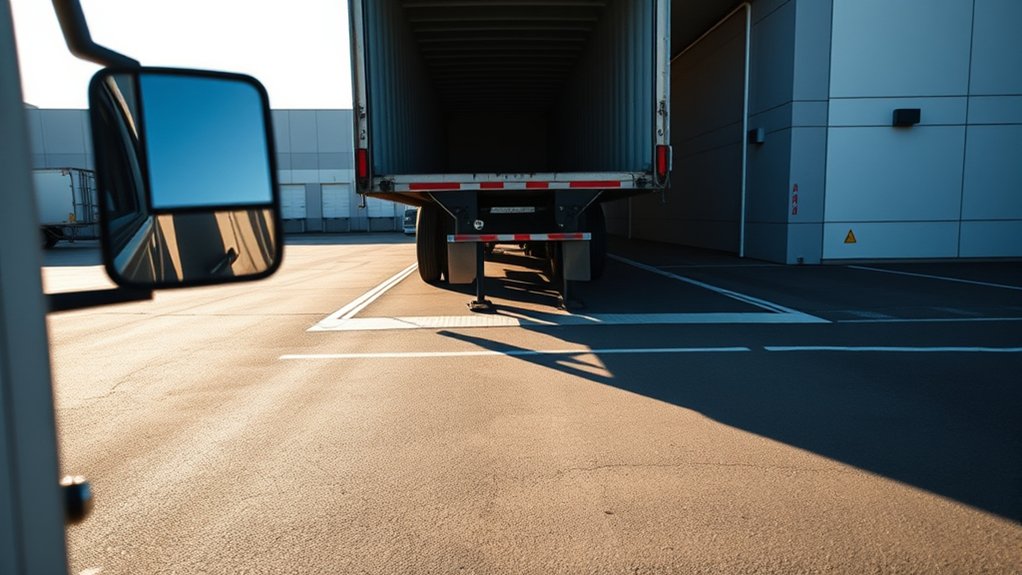
Before you start backing a semi tractor trailer, you need to grasp a few key concepts that make the process safer and easier.
First, remember that the trailer moves in the opposite direction of your steering input. If you turn the wheel right, the trailer’s rear swings left, so you’ll need to steer carefully to guide it correctly.
When you steer right, the trailer’s rear swings left—steer carefully to keep it on track.
Second, always back up slowly and use small steering adjustments to maintain control.
Third, understand your trailer’s pivot point—the connection between the tractor and trailer—which determines how sharply you can turn.
Finally, use your mirrors often to monitor the trailer’s position.
Position Your Semi Tractor Trailer for Straight Backing
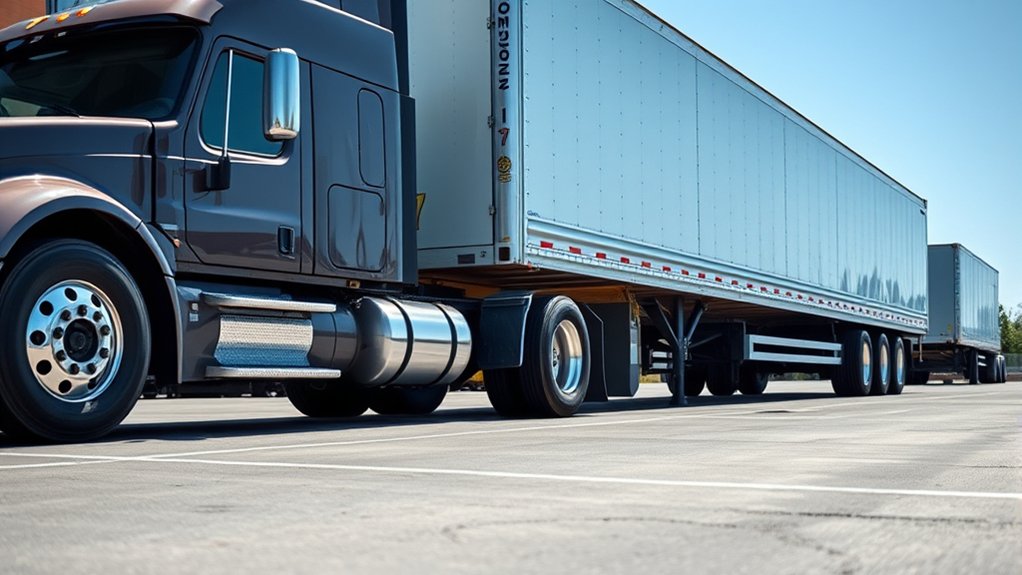
Although backing a semi tractor trailer can be challenging, positioning your vehicle correctly at the start makes straight backing much easier.
Begin by aligning your tractor trailer so the trailer is as straight as possible with the target backing spot. This reduces the need for complicated corrections later.
Next, check for ample space around your vehicle to avoid obstacles and give yourself room to maneuver.
Finally, use your mirrors to verify you have a clear view of the trailer’s rear and sides before you start moving.
Here’s a quick checklist:
- Align your tractor and trailer straight to the intended backing area.
- Confirm there’s enough clearance on all sides.
- Adjust mirrors for maximum visibility.
Proper positioning sets you up for a smooth, controlled backing maneuver.
Steer Your Semi Trailer Like a Pro
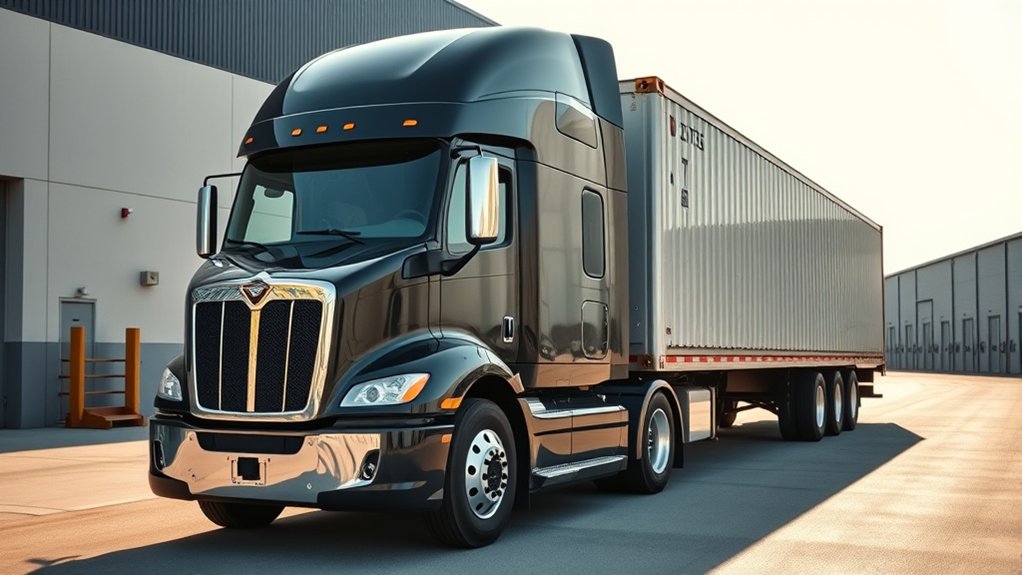
When you steer your semi trailer, small adjustments make a big difference in maintaining control. Focus on gentle, deliberate movements of the steering wheel rather than quick jerks.
Remember, turning the wheel right makes the trailer go left, and turning left makes it go right. Keep your hands steady and anticipate the trailer’s response to your inputs.
Use your mirrors frequently to track the trailer’s position and angle. If the trailer starts to jackknife, ease off the steering and straighten the wheels to regain control.
Stay calm and make corrections early—overcorrecting can worsen alignment. With practice, you’ll develop a feel for how much to turn the wheel to keep your trailer tracking smoothly behind the tractor.
Adjust Your Backing for Tight or Angled Spots
Moving through tight or angled spots demands careful adjustments to your backing technique to avoid collisions and maintain control. First, slow down to give yourself extra time to react and make precise steering corrections.
Second, use your mirrors frequently to monitor both the trailer’s position and surrounding obstacles, especially on the side closest to the angle.
Third, anticipate your trailer’s swing by steering slightly earlier or later than usual—this helps align the trailer smoothly without oversteering.
Remember, backing into angled spots often requires small, gradual movements rather than sharp turns. By staying patient and adjusting your steering input carefully, you’ll navigate these challenges confidently and avoid costly mistakes.
Mastering these tweaks makes tight or angled backing much safer and less stressful.
Perform Safety Checks and Final Alignment Tips
Before you complete the backing maneuver, perform thorough safety checks to verify everything is aligned properly and no hazards are present. Scan your mirrors and blind spots to ensure pedestrians, vehicles, or obstacles aren’t nearby.
Confirm your trailer is square and straight within the dock or parking space. If you notice any misalignment, make small, controlled adjustments to correct it.
Double-check that your trailer brakes and lights are functioning correctly before finalizing your position. Use wheel chocks if necessary to secure the vehicle once parked.
Take a moment to ensure the landing gear is lowered safely if you’re detaching. These final steps help prevent accidents and vehicle damage, leaving you confident that your semi tractor trailer is positioned safely and ready for the next operation.
Frequently Asked Questions
What Are the Best Weather Conditions for Backing a Semi Tractor Trailer?
You want clear, dry weather with good visibility when backing a semi tractor trailer. Avoid rain, fog, snow, or icy conditions since they reduce traction and sight. Calm winds also help you maintain control and precision.
How Can Technology Assist in Backing a Semi Tractor Trailer?
Technology turns you into a superhero, giving you 360-degree cameras, sensors, and GPS guidance that make backing a breeze. You’ll spot every obstacle instantly, avoid crashes, and park perfectly, even in the tightest spots with ease.
What Common Mistakes Do Beginners Make When Backing a Semi Tractor Trailer?
You often misjudge angles, turn the wheel too sharply, and forget to check blind spots. You might also rush, skip using spotters, and neglect proper mirror adjustments, making backing less precise and more stressful than it needs to be.
How Does Trailer Length Affect Backing Techniques?
Trailer length stretches your turning radius like a rubber band, so you’ll need gentler, wider arcs to avoid jackknifing. Longer trailers demand slower, more precise maneuvers, making your backing dance smoother and safer.
Are There Specific Licenses Required to Back a Semi Tractor Trailer?
Yes, you need a CDL with the appropriate endorsements to back a semi trailer legally. Without this license, you can’t operate or back a semi. Make sure your training covers backing skills too.
Conclusion
Backing a semi tractor trailer is like threading a needle—precision and patience matter. Just like a skilled tailor who adjusts each stitch carefully, you’ll learn to steer, position, and fine-tune your trailer with confidence. Remember, even seasoned drivers started where you are now. Trust the process, stay calm, and with each attempt, you’re threading your way to mastery, turning a challenging task into a smooth, reliable skill.