5 Easy Steps to Check Hydraulic Fluid Level on Your John Deere Tractor
You’ll want to keep your John Deere tractor running smoothly by checking the hydraulic fluid regularly. First, locate the reservoir near the engine, usually marked and translucent. Next, gather a rag, gloves, flashlight, and funnel, then park on level ground with the engine off and parking brake engaged. Clean the cap area, remove it or the dipstick to check fluid levels, and add fluid if needed without overfilling. Secure the cap, wipe spills, and stay proactive for best performance. Keep going to discover simple maintenance tips that save time and avoid costly repairs.
Key Takeaways
- Park the tractor on level ground, turn off the engine, engage the parking brake, and remove the key for safety.
- Locate the hydraulic fluid reservoir, usually near the engine, marked with a “Hydraulic Fluid” cap or oil icon.
- Clean the area around the reservoir cap to prevent contamination before opening it.
- Remove the dipstick or cap, check the fluid level, and add manufacturer-recommended hydraulic fluid if low using a funnel.
- Securely replace the cap, wipe up any spills, and regularly inspect fluid levels monthly to maintain proper hydraulic performance.
Understand Why Checking Hydraulic Fluid Matters
Why should you regularly check the hydraulic fluid on your John Deere tractor? Because it directly affects your tractor’s performance and longevity.
Hydraulic fluid powers critical components like the loader, steering, and brakes. If the fluid level drops too low or gets contaminated, these systems won’t work properly, risking damage and costly repairs.
Hydraulic fluid powers vital parts like the loader, steering, and brakes—low or dirty fluid risks damage and costly repairs.
By checking the fluid often, you catch leaks or issues early, ensuring smooth operation and preventing breakdowns.
Proper fluid levels also maintain the right pressure, so your tractor handles tasks efficiently.
Neglecting this simple step can lead to hydraulic system failure, downtime, and expensive maintenance.
Staying on top of hydraulic fluid means your tractor stays reliable and ready when you need it most.
Locate the Hydraulic Fluid Reservoir on Your John Deere Tractor
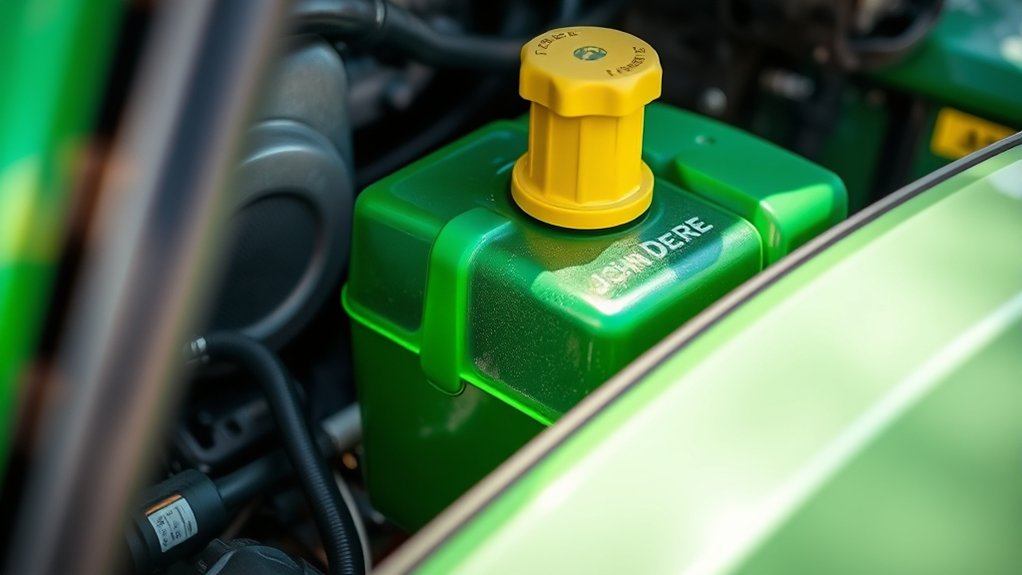
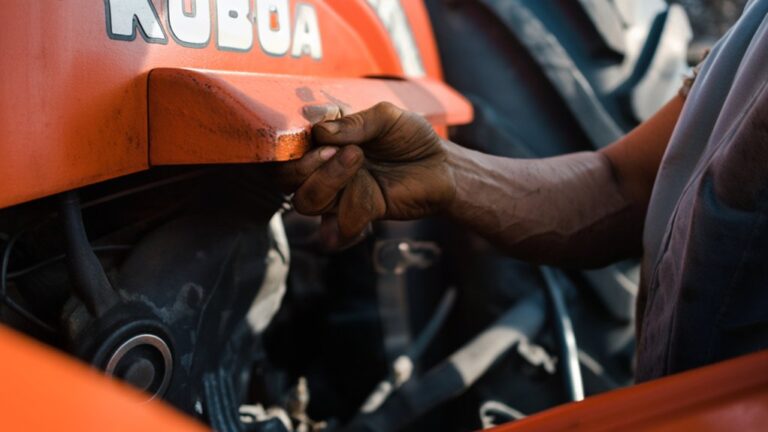
Finding the hydraulic fluid reservoir on your John Deere tractor is the first step to checking its fluid level. Typically, you’ll find the reservoir near the engine or under the hood, marked clearly with a cap labeled “Hydraulic Fluid” or an oil can icon.
Look for a translucent plastic or metal tank, often painted green or yellow to match John Deere’s signature colors. If you’re unsure, consult your tractor’s operator manual for the exact location.
Some models have the reservoir mounted on the side, while others place it closer to the rear. Make sure the tractor is parked on level ground so you can get an accurate reading once you access the reservoir.
Knowing where it’s located saves you time and helps you maintain your tractor properly.
Gather Tools and Prepare Your Tractor for Checking Hydraulic Fluid
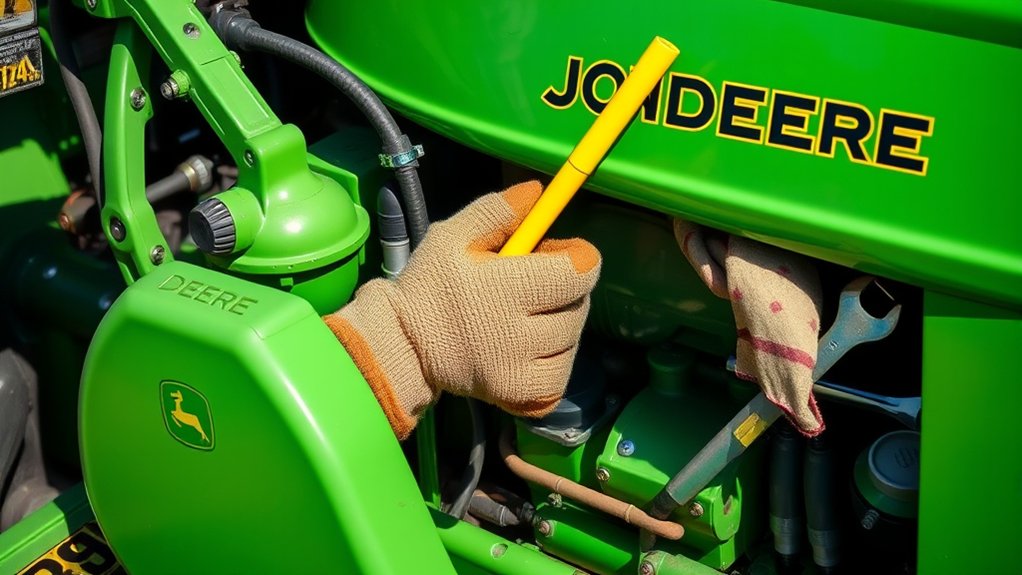
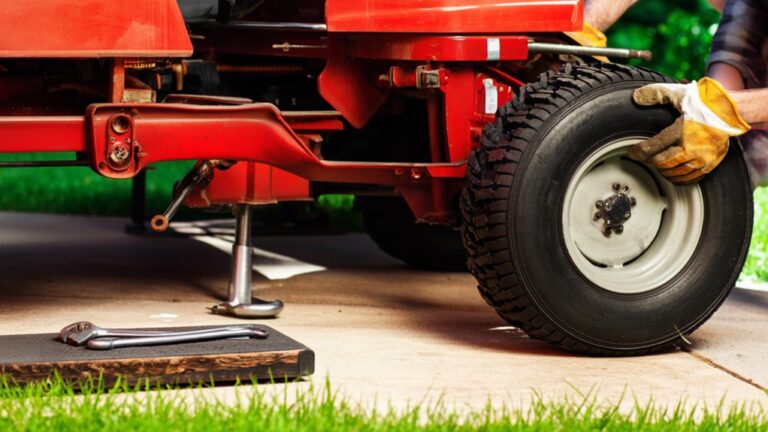
Once you’ve located the hydraulic fluid reservoir on your John Deere tractor, the next step is to gather the necessary tools and prepare your tractor for checking the fluid level. You’ll need a clean rag, gloves, a flashlight, and possibly a funnel for later. Make sure your tractor is parked on a level surface and the engine is off to get an accurate reading. Safety first—engage the parking brake and remove the key to avoid any accidental starts. Preparing properly helps you avoid mistakes and keeps you confident throughout the process.
| Tool Needed | Purpose | Emotion Evoked |
|---|---|---|
| Clean Rag | Wipe dipstick/reservoir | Confidence |
| Gloves | Protect hands | Safety |
| Flashlight | Improve visibility | Assurance |
| Funnel | Add fluid if needed | Preparedness |
| Parking Brake | Secure tractor | Peace of Mind |
How to Safely Check and Fix Hydraulic Fluid Levels
Before you check the hydraulic fluid level, make sure the tractor is turned off and on a flat surface to get an accurate reading.
Locate the hydraulic fluid reservoir and clean around the cap to prevent contamination.
Remove the dipstick or open the fill cap, depending on your model, and check the fluid level against the marked indicators.
If the level is low, use a clean funnel to add the recommended John Deere hydraulic fluid slowly, avoiding overfilling.
After topping off, replace the cap securely.
Always wear gloves to protect your hands and avoid spills by working carefully.
Once done, wipe off any spilled fluid and properly dispose of any used materials.
This guarantees your tractor operates smoothly and prevents damage to the hydraulic system.
Tips for Maintaining Proper Hydraulic Fluid Levels Year-Round
Although it’s easy to check your hydraulic fluid level, maintaining it consistently throughout the year requires a few simple habits. Keeping your John Deere tractor running smoothly means you’ve got to stay proactive about fluid care.
Here are three tips to help you maintain proper hydraulic fluid levels year-round:
- Regularly inspect for leaks – Spot any dripping or wet spots early to avoid fluid loss.
- Check fluid levels monthly – Even if the tractor isn’t used often, fluid can degrade or leak over time.
- Use the right hydraulic fluid – Stick to manufacturer recommendations to guarantee ideal performance and prevent damage.
Frequently Asked Questions
What Type of Hydraulic Fluid Is Best for John Deere Tractors?
You should use John Deere Hy-Gard hydraulic fluid for your tractor. It’s specially formulated to protect your system and guarantee peak performance. Avoid mixing fluids to keep your equipment running smoothly and prevent damage.
How Often Should Hydraulic Fluid Be Completely Replaced?
You should completely replace your hydraulic fluid every 1,000 to 2,000 hours of operation or every two years, whichever comes first. Regular replacement keeps your John Deere’s system running smoothly and prevents damage.
Can Using the Wrong Hydraulic Fluid Damage My Tractor?
Yes, using the wrong hydraulic fluid can damage seals, clog filters, and reduce efficiency. You’ll risk leaks, wear, and costly repairs. Always choose the correct fluid to keep your tractor running smoothly and avoid downtime.
What Are Common Signs of Hydraulic Fluid Leaks?
You’ll notice wet spots or puddles under your tractor, a drop in hydraulic fluid levels, sluggish or unresponsive hydraulics, and unusual noises. If you see any of these, you’ve likely got a hydraulic fluid leak.
How Do Temperature Changes Affect Hydraulic Fluid Performance?
Temperature changes affect hydraulic fluid by altering its viscosity; when it’s cold, the fluid thickens, slowing performance, and when hot, it thins, reducing lubrication. You’ll notice slower response or leaks if fluid isn’t suited for conditions.
Conclusion
Checking your John Deere’s hydraulic fluid is essential for consistent performance and preventing costly repairs. By confidently locating the reservoir, carefully collecting your tools, and consistently checking and correcting fluid levels, you’ll keep your tractor running smoothly. Remember, routine reminders and reliable maintenance routines are your best defense against damage. Stay sharp, stay safe, and stay successful with simple, steady steps that save your machine and maximize its might year-round.