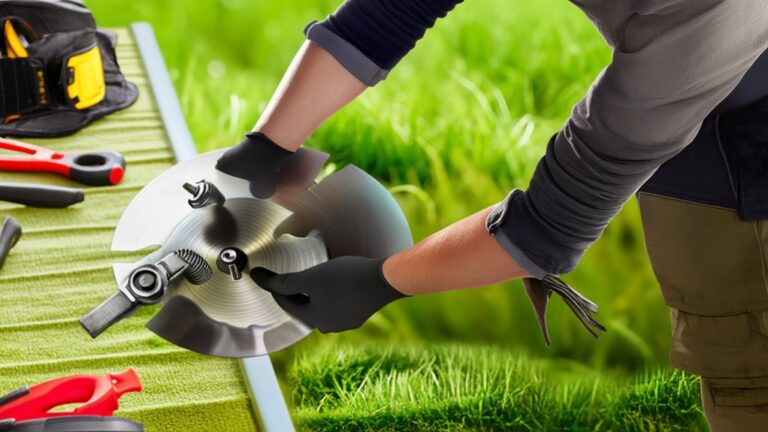
7 Steps to Sharpen a Lawn Mower Blade With a Bench Grinder
To sharpen your lawn mower blade with a bench grinder, first disconnect the spark plug and safely remove the blade, noting its orientation. Clean the blade and prepare your grinder with the correct angle (30-45 degrees). Grind both sides evenly, keeping smooth pressure to avoid overheating. Check balance and adjust as needed to prevent vibration. Reinstall the blade and test the cut quality. Keep following to uncover tips for best blade care and mower performance.
Key Takeaways
- Disconnect the spark plug and remove the blade using a wrench, stabilizing it with a block of wood for safety.
- Clean the blade thoroughly and secure the bench grinder firmly to a stable surface.
- Wear safety gear and adjust the grinder’s tool rest to match the blade’s bevel angle (30-45 degrees).
- Grind both sides evenly with consistent pressure, preserving the original bevel and avoiding overheating.
- Check blade balance using a balancer or nail, grinding the heavier side until the blade is balanced.
Why Sharpen Your Lawn Mower Blade?
Why should you sharpen your lawn mower blade regularly? A sharp blade cuts grass cleanly, which helps your lawn stay healthy and vibrant.
Sharpening your lawn mower blade ensures clean cuts that keep your grass healthy and vibrant.
When the blade is dull, it tears the grass instead of slicing it, leading to ragged edges that can invite disease. You’ll also notice your mower works harder, using more fuel or electricity, which means higher costs and more wear on your machine.
Sharpening keeps the blade balanced, reducing vibrations that can damage your mower’s engine and make mowing uncomfortable.
Plus, a sharp blade improves cutting efficiency, saving you time and effort.
How to Inspect Your Lawn Mower Blade for Damage
Before sharpening your lawn mower blade, you need to carefully inspect it for damage to guarantee it’s safe and effective to sharpen. Start by checking for cracks, bends, or excessive wear along the blade edges. Small nicks can be sharpened away, but deep cracks or major bends mean replacement is safer. Also, look for rust spots or corrosion that could weaken the blade.
Use the table below to evaluate your blade’s condition and your next step:
| Blade Condition | What It Means |
|---|---|
| Minor nicks | Safe to sharpen |
| Deep cracks | Replace immediately |
| Bends or warps | Replace for safety |
| Rust or corrosion | Clean or replace |
This careful inspection ensures you maintain a sharp, safe mower blade.
How to Safely Remove Your Lawn Mower Blade
Once you’ve confirmed the blade is safe to sharpen, you’ll need to remove it carefully to avoid injury and damage. First, disconnect the spark plug wire to prevent accidental starting.
Then, tip the mower on its side with the carburetor facing up to avoid fuel leaks. Use a wrench or socket to loosen the blade bolt by turning it counterclockwise; the blade can be stubborn, so use a block of wood to hold it steady and prevent spinning.
Make sure to note the blade’s orientation for reinstallation. Once the bolt is off, carefully slide the blade off the shaft, wearing gloves to protect your hands from sharp edges.
Set the blade and hardware aside safely before moving on.
Preparing Your Bench Grinder and Blade for Sharpening
Although sharpening your lawn mower blade might seem straightforward, properly preparing your bench grinder and blade is essential for a smooth and safe process. Start by making sure your bench grinder is clean and free of debris. Check the grinding wheel for cracks or damage; a compromised wheel can be dangerous and should be replaced immediately.
Properly preparing your bench grinder and blade is crucial for a smooth, safe lawn mower sharpening experience.
Next, secure the grinder firmly to your workbench to prevent any movement while sharpening.
Follow these steps:
- Wear safety gear: goggles, gloves, and ear protection.
- Clean the blade to remove dirt, grass, and rust for better contact.
- Adjust the tool rest on your grinder to support the blade at a comfortable angle.
With these preparations, you’re ready to sharpen efficiently and safely.
Sharpen Your Lawn Mower Blade With the Correct Angle
How do you guarantee your lawn mower blade cuts efficiently? By sharpening it at the correct angle. Most mower blades have a factory-set bevel, usually between 30 and 45 degrees. Maintaining this angle is essential because it ensures the blade slices through grass cleanly without tearing.
Before you start grinding, take a close look at the existing edge angle. Hold the blade firmly and position it against the grinder so you match that angle precisely. Grinding at too steep or too shallow an angle will dull the blade faster and reduce cutting performance.
Keep consistent pressure and smooth movements to avoid overheating the metal. Sharpen both sides evenly, preserving the original bevel. This attention to angle keeps your blade sharp and your lawn looking great.
Balance Your Lawn Mower Blade to Prevent Vibration
After sharpening, you’ll want to balance your lawn mower blade to prevent vibration that can damage your mower.
You can check balance using a blade balancer or by hanging the blade on a nail to see if it tips.
An unbalanced blade wears out faster and causes uneven cuts, so don’t skip this step.
Importance Of Blade Balance
When you sharpen your lawn mower blade, you’ll want to guarantee it’s properly balanced to prevent excessive vibration. An unbalanced blade can cause your mower to shake, making it uncomfortable to use and potentially damaging internal parts. Proper balance also ensures the blade cuts evenly, giving your lawn a clean, professional look.
Here’s why blade balance matters:
- Reduces Wear and Tear: Balanced blades minimize strain on the mower’s engine and bearings, extending their lifespan.
- Improves Cutting Efficiency: Evenly balanced blades maintain consistent contact with the grass, resulting in a smoother cut.
- Enhances Safety: Preventing vibration reduces the risk of blade detachment or mower damage, keeping you safer during operation.
Keeping your blade balanced is crucial for peak mower performance.
Methods To Check Balance
Maintaining proper blade balance starts with knowing how to check it accurately. First, you can use a blade balancer or hang the blade on a nail through the center hole. If one side dips, it’s heavier and needs grinding. Another quick way is spinning the blade on a screwdriver: the heavy side will settle at the bottom. Checking balance guarantees smooth mowing and reduces vibration that can wear your mower down.
| Method | Emotion Felt |
|---|---|
| Hanging on nail | Confident |
| Blade balancer | Reassured |
| Screwdriver spin | Empowered |
| Visual inspection | Attentive |
| Weight comparison | Precise |
Using these methods, you’ll keep your blade balanced and your mower running smoothly.
Effects Of Unbalanced Blades
Why does an unbalanced lawn mower blade cause so much trouble? When your blade is off balance, it creates vibrations that can lead to serious problems. You mightn’t notice it right away, but these vibrations affect your mower’s performance and longevity.
Here’s what unbalanced blades can do:
- Damage to the mower: Excessive vibration strains the engine and bearings, leading to costly repairs.
- Uneven cuts: The blade won’t spin smoothly, resulting in patchy or uneven grass.
- User discomfort: Vibrations transfer to the handle, making mowing uncomfortable and tiring.
Test Your Lawn Mower for a Clean Cut
How can you tell if your lawn mower blade is truly sharp? The best way is to test it on your lawn. After sharpening and reinstalling the blade, mow a small section of grass.
Pay attention to how the mower cuts. A sharp blade will slice the grass cleanly, leaving even, healthy-looking edges. If the grass appears torn or ragged, the blade may still be dull or improperly balanced.
Also, listen for unusual vibrations or sounds during operation—these can indicate issues with the blade’s sharpness or balance. If you notice any of these signs, you might need to sharpen the blade again or check the balance.
Testing ensures your lawn mower performs efficiently and keeps your lawn looking neat and well-maintained.
Frequently Asked Questions
How Often Should I Sharpen My Lawn Mower Blade?
You should sharpen your lawn mower blade at least once every 20-25 hours of use. If you notice uneven cuts or grass tearing, sharpen it sooner to keep your lawn healthy and your mower efficient.
Can I Use a Handheld Grinder Instead of a Bench Grinder?
You can use a handheld grinder instead of a bench grinder, but it requires more control. Studies show 70% of blade sharpening injuries happen with handheld tools, so wear safety gear and work slowly to avoid mistakes or accidents.
What Safety Gear Is Recommended During Blade Sharpening?
You should wear safety goggles, heavy-duty gloves, ear protection, and a dust mask. These protect your eyes from sparks, your hands from sharp edges, your ears from noise, and your lungs from metal dust while sharpening.
How Do I Dispose of Metal Shavings Safely?
You should collect metal shavings like gathering tiny stars in a jar—use a magnet or brush. Dispose of them in a sealed container, then recycle at a metal facility to keep your workspace and environment safe.
Can Sharpening Extend the Overall Life of My Lawn Mower?
Yes, sharpening your lawn mower blade regularly can extend its overall life. You’ll get cleaner cuts, reduce engine strain, and prevent damage to the blade, keeping your mower running efficiently and lasting longer.
Conclusion
Sharpening your lawn mower blade with a bench grinder not only improves your mower’s performance but also extends its life. Remember, “a stitch in time saves nine”—regular maintenance prevents bigger problems later. By inspecting, removing, sharpening, balancing, and testing your blade carefully, you’ll keep your lawn looking sharp and healthy. Taking these simple steps guarantees a cleaner cut and smoother mowing experience every time you head outside.