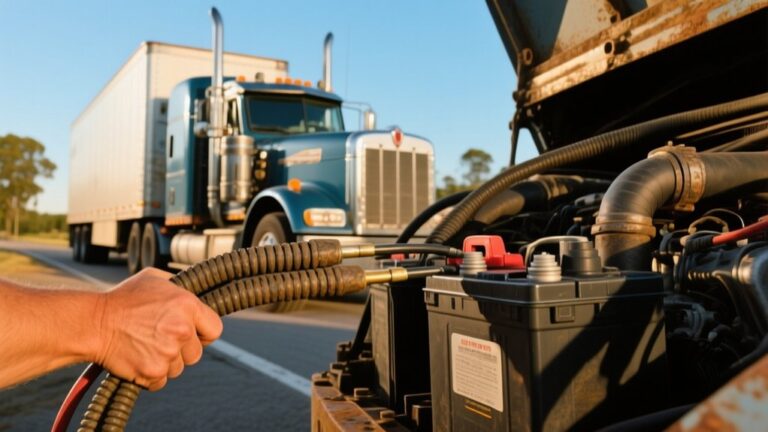

How to Drive a Tractor Trailer in 7 Essential Steps
To drive a tractor trailer safely, start with a thorough pre-trip inspection, checking tires, brakes, and lights. Get familiar with controls and practice smooth starts. Master gear shifting by finding the clutch’s friction point and listening to the engine. Maintain lane control, steer gently, and anticipate turns with careful signaling. Use mirrors and spotters to back up safely in tight spots. Finally, control your speed and braking to protect stability and safety. Keep going, and you’ll gain deeper skills for confident handling.
Key Takeaways
- Perform a thorough pre-trip inspection, checking tires, brakes, lights, fluids, and coupling devices before starting the engine.
- Master smooth clutch control and gear shifting by finding the friction point and anticipating terrain changes.
- Maintain calm, use gentle steering, and modulate brakes carefully to prevent skidding and jackknifing.
- Use mirrors frequently, signal early, and make wide turns while staying centered in your lane.
- Back up slowly with low gear, use a spotter if available, and make small steering adjustments for precision.
Do a Thorough Pre-Trip Inspection

Before you hit the road, you need to do a thorough pre-trip inspection to guarantee your tractor trailer is safe and ready to drive.
Start by checking the tires for proper inflation and any visible damage like cuts or bulges.
Begin your inspection by ensuring tires are properly inflated and free from cuts or bulges.
Inspect the brake system carefully, ensuring all components are in good condition.
Don’t forget to examine lights, reflectors, and signals to verify they’re working correctly.
Next, look under the hood to check fluid levels, including oil, coolant, and windshield washer fluid.
Make sure the coupling devices, such as the fifth wheel and kingpin, are secure and properly lubricated.
Finally, test the horn, windshield wipers, and mirrors.
Taking these steps helps prevent breakdowns and keeps you safe on the road.
Understand Basic Controls and Start Driving

Now that you’ve completed your pre-trip inspection, it’s time to get familiar with the key controls inside the cab. You’ll learn the basic starting procedures to get the engine running smoothly.
Once you’re set, we’ll cover simple maneuvering techniques to help you handle the tractor trailer confidently.
Key Tractor Trailer Controls
Although driving a tractor trailer might seem intimidating at first, mastering the key controls will quickly build your confidence. You’ll primarily work with the steering wheel, accelerator, brake pedals, clutch, and gear shift. Each control plays a crucial role in maneuvering safely and efficiently.
Here’s a quick overview:
| Control | Purpose | How It Feels |
|---|---|---|
| Steering Wheel | Directs the trailer | Responsive, demands focus |
| Accelerator | Controls speed | Smooth, gradual pressure |
| Brake Pedals | Slows or stops the truck | Firm, immediate reaction |
| Clutch | Changes gears | Requires timing, rhythm |
| Gear Shift | Selects gears | Precise, deliberate action |
Get comfortable with these controls, and you’ll handle the tractor trailer with ease and confidence.
Starting Procedures Overview
How do you get a massive tractor trailer moving smoothly from a standstill? First, guarantee the parking brake is engaged before starting the engine. Turn the key and listen for any unusual sounds as the engine comes to life.
Once running, check that all gauges read normal levels—fuel, oil pressure, and air pressure are critical. Disengage the parking brake only after you’re ready to move.
Slowly release the clutch while gently pressing the accelerator to avoid stalling. Remember, tractor trailers respond slower than cars, so gradual inputs matter.
Keep an eye on your mirrors and maintain control as you begin to roll forward. Mastering these starting procedures sets a solid foundation before you tackle basic maneuvering techniques.
Basic Maneuvering Techniques
Once you’ve mastered starting your tractor trailer, it’s essential to get comfortable with the basic controls to maneuver safely. You’ll need to familiarize yourself with steering, braking, and throttle control.
Smooth, deliberate movements help prevent accidents and protect your cargo. Pay attention to how the trailer reacts to your inputs; it takes practice to anticipate its behavior.
Remember these key points:
- Stay calm: Confidence reduces mistakes and keeps you in control.
- Use gentle steering: Sharp turns can cause jackknifing or loss of control.
- Modulate brakes carefully: Sudden stops risk skidding, especially with heavy loads.
Master Shifting Gears in a Tractor Trailer

To master shifting gears in a tractor trailer, you need to know the gear patterns inside and out.
You’ll also want to practice smooth clutch engagement to avoid jerking or stalling.
Timing your gear shifts right will keep your ride steady and efficient.
Understanding Gear Patterns
Why does mastering gear patterns matter when driving a tractor trailer? Because knowing the layout helps you shift confidently and avoid costly mistakes. Each tractor trailer has a specific gear pattern, often an “H” or “double H” shape, that you need to memorize.
When you understand these patterns, you’ll shift gears smoothly and keep the engine running efficiently.
Getting the pattern down means:
- Reducing stress during tight maneuvers or on busy roads
- Preventing gear grinding that can damage the transmission
- Boosting your confidence behind the wheel, knowing exactly where each gear is
Practice visualizing and tracing the pattern with your hand before shifting. This muscle memory makes driving safer and less tiring.
Master the gear pattern, and you’re one step closer to becoming a skilled pro.
Smooth Clutch Engagement
Mastering gear patterns sets the foundation, but smoothly engaging the clutch truly brings your shifting skills to life.
When you press the clutch pedal, do it gradually—avoid sudden movements that can jerk the trailer or stall the engine.
As you release the clutch, find the friction point where the engine begins to connect with the transmission.
Holding the pedal steady here lets you ease the power transfer, preventing rough shifts.
Pay close attention to your foot pressure; too fast or too slow can cause wear or damage.
Practicing smooth clutch engagement reduces strain on your drivetrain and ensures a safer, more comfortable ride.
Timing Gear Shifts
When should you shift gears to keep your tractor trailer running smoothly and efficiently? You want to listen to the engine’s sound and watch the tachometer. Shift before the engine struggles or revs too high. Timing is key—too early, and you bog down; too late, and you waste fuel and strain the engine. Mastering this rhythm builds confidence and control.
Remember these essentials:
- Feel the power: Shift when the engine’s torque shifts, not just by speed.
- Anticipate terrain: Gear up before hills or slow down early to maintain momentum.
- Stay calm: Hesitation can cause jerky shifts; trust your instincts and practice.
Perfect timing means less wear on your truck and a safer, smoother ride you can be proud of.
Drive Straight and Maintain Lane Control
Although driving a tractor trailer requires constant attention, you can maintain lane control by keeping your eyes focused well ahead and making small, steady steering adjustments. Avoid sudden or large movements on the wheel, as these can cause instability.
Use the mirrors frequently to monitor your trailer’s position relative to lane markings and nearby vehicles. Stay centered in your lane, especially on highways, and anticipate any changes in road conditions like curves or wind gusts.
Regularly check mirrors to keep your trailer centered and anticipate road changes for safer driving.
Keep a relaxed grip on the steering wheel to respond smoothly. If you feel the trailer swaying or drifting, gently correct your course without oversteering.
Consistent, controlled inputs help you drive straight safely and reduce fatigue during long hauls.
Navigate Turns Safely in a Tractor Trailer
Since tractor trailers have a longer length and wider turning radius than regular vehicles, you’ll need to plan your turns carefully to avoid hitting curbs, signs, or other obstacles. Approach turns slowly, using your mirrors to monitor clearance on both sides. Signal early to alert other drivers of your intentions.
When turning right, swing wide to give your trailer room. When turning left, watch for vehicles or pedestrians that might enter your path. Remember, sharp turns require extra caution.
- Feel the confidence as you master each turn without stress.
- Experience the pride of keeping your cargo and others safe.
- Enjoy the calm knowing you’re in full control of your rig.
Stay patient and focused; safe turns keep your journey smooth.
Practice Safe Backing Techniques in Tight Spaces
Backing a tractor trailer in tight spaces demands sharp attention and steady control to avoid accidents or damage. Always use your mirrors and take it slow, checking your surroundings frequently. If possible, have a spotter guide you. Practice small steering adjustments and avoid rushing. Here’s a quick reference for safe backing:
| Technique | Description | Tip |
|---|---|---|
| Mirror Use | Constantly monitor side mirrors | Adjust mirrors before backing |
| Spotter Guidance | Use a spotter for blind spots | Communicate clearly |
| Steering Control | Make gentle, slow steering inputs | Avoid sharp turns |
| Speed Management | Back up slowly | Use low gear |
| Positioning | Align trailer before backing | Plan your path in advance |
Stay patient and methodical to master backing in tight spots safely.
Control Speed and Braking in a Tractor Trailer
When you drive a tractor trailer, controlling your speed and braking effectively is essential for safety and vehicle stability. You must anticipate stops early and ease off the accelerator to avoid sudden braking, which can cause jackknifing or cargo shifts.
Use engine braking and downshifting on declines to help maintain control without overheating your brakes. Always keep a safe following distance, allowing enough room to stop smoothly.
- Feel confident knowing your careful speed control protects you and others on the road.
- Experience peace of mind when your braking technique prevents dangerous skids.
- Trust your skills to keep the heavy load steady, even on challenging terrain.
Mastering speed and braking control helps you drive safely and responsibly every mile.
Frequently Asked Questions
What Are the Licensing Requirements for Driving a Tractor Trailer?
You need a Commercial Driver’s License (CDL), usually Class A, which requires passing written and skills tests. You’ll also need a medical exam and possibly endorsements for specific cargo or trailers, depending on your state’s regulations.
How Do Weather Conditions Affect Tractor Trailer Driving?
When weather turns into a wild beast—rain, snow, or fog—you’ll need to slow down and stay alert. Slippery roads and poor visibility make controlling your tractor trailer much tougher, so you’ve got to drive with extra caution.
What Is the Average Fuel Efficiency of a Tractor Trailer?
You can expect a tractor trailer’s average fuel efficiency to be around 6 to 8 miles per gallon. Factors like load weight, speed, and terrain will affect how efficiently you’ll use fuel on your trips.
How to Handle Emergency Situations on the Road?
You should stay calm, quickly assess the situation, and use your hazard lights to warn others. Brake smoothly, avoid sudden maneuvers, and pull over safely if possible. Always call for help immediately if needed.
What Are Common Maintenance Tips for Tractor Trailers?
You’ll want to regularly check tire pressure, inspect brakes, change engine oil, and monitor fluid levels. Don’t forget to test lights and signals, clean filters, and tighten bolts. Staying proactive keeps your trailer safe and reliable.
Conclusion
By following these seven essential steps, you’ll build confidence and safety behind the wheel of a tractor trailer. Imagine Jake, a new driver who struggled with backing into tight docks. After practicing safe backing techniques and mastering gear shifts, he now maneuvers smoothly and avoids costly mistakes. With patience and consistent practice, you’ll handle your tractor trailer like a pro, keeping yourself and others safe on the road every time you drive.